“In the end, it’s about ethics”: an interview with Isabel Arrate Fernandez
.
VERDICT: IDFA's new Artistic Director on running the world's biggest documentary festival, the dangers of AI, and a controversial new ban on state-funded Israeli films.
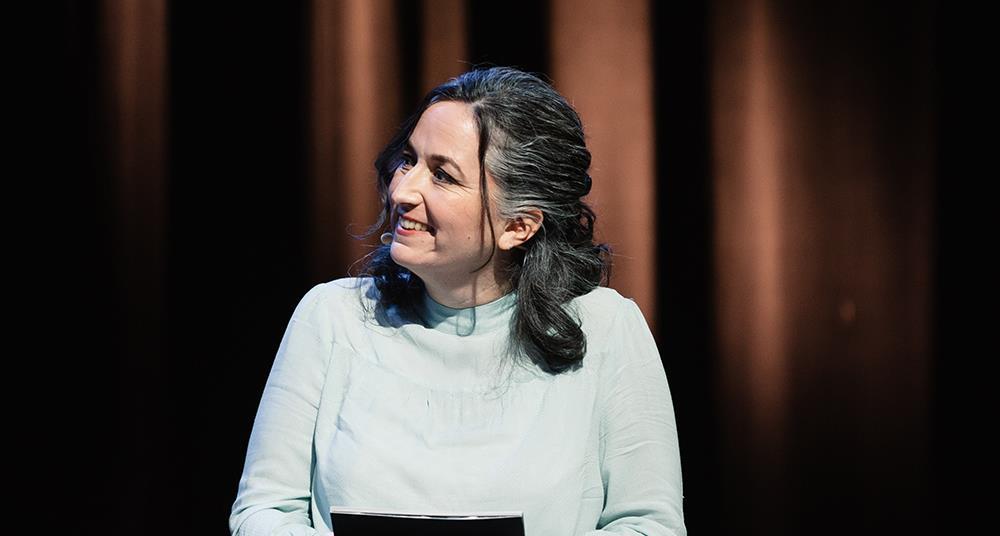
May you live in interesting times, the old saying goes, which has always been more curse than blessing. Isabel Arrate Fernandez, new Artistic Director of the International Documentary Festival Amsterdam (IDFA), is certainly taking over the world’s biggest documentary event at a very interesting time for non-fiction cinema. With the explosion in fake news, lethally dangerous reporting from the world’s political hot spots, and growing threats to reality itself from AI, the stakes have never been higher for films which speak truth to power.
The child of Chilean political exiles raised in the Netherlands, Fernandez has been an IDFA insider for more than 20 years. She takes over the top job after a long period heading the festival’s Bertha Fund, which supports documentary film-makers from Africa, Asia, Eastern Europe, Latin America, the Caribbean and Oceania. Is her new role a significant change?
“Yes, of course,” she tells The Film Verdict. “The Bertha Fund was a is a specific domain with one specific goal and mission. So in that sense, it is more simple than what I’m doing now. I mean, the festival comprises so many different elements. There are so many interests at stake that we need to balance without losing sight of what we think is important. The politics, the funding is much bigger. All these things obviously make it very different.”
Even before her official debut this week, the politics of IDFA have already become headline news for Fernandez. She takes over as Artistic Director from Orwa Nyrabia, who was criticised for appearing to endorse a controversial pro-Palestinian protest in 2023. Now IDFA has raised the stakes by becoming the first major festival to officially deny accreditation to films and industry guests with ties to Israeli government bodies.
IDFA bosses recently made this decision transparent in its newly drafted Principles and Guidelines, drawn up in partnership with the Paris-based NGO Reporters Without Borders, which rates countries according to press freedom, editorial independence and danger to journalists. Currently ranked 112 in the 2025 Index, lower than Haiti and Zimbabwe, Israel is in the group’s “very serious” category following the killing of at least 200 reporters in Gaza by the Israeli military.
“We’ve always been dealing with film-makers risking their lives, working under pressure, working under repression,” Fernandez says. “At the same time, it has also been been a case that from these same countries where these film-makers are, despite all this, trying to make their films, we have official government organisations or official delegations also trying to attend the festival, because culture and film is also seen as a promotional tool. This is something that we’ve had to balance and deal with for many years. And what we decided to do this year was to be more transparent about that. That is why we wrote these these principles and guidelines. So where freedom of expression is under serious threat, we don’t accredit organisations that have funding from the government.”
Any partisan statement touching on Israel and Palestine is likely to be inflammatory in the current climate, of course, but so far the backlash to IDFA’s decision has been relatively minor. Ukrainian director Alexander Rodnyansky withdrew his film Notes of a True Criminal from the program, calling the ban “duplicitous” and “hypocritical”. But Fernandez is careful to stress this is not a blanket boycott, more of a carefully balanced case-by-case policy.
“We’re not restricting by nationality,” she explains. “Last year, for example, we had two Israeli films that had funds from the Israeli state, but we selected those films because we felt there was a place for them at IDFA. So it’s not a rigid thing. And I think what has caused a lot of misinterpretation or confusion is the fact that it’s a nuanced approach. It’s not black and white. People don’t like that.”
With more than 250 films screening across four major competition strands, Fernandez is wary of playing favourites from the 2025 IDFA program. But she shares a handful of personal highlights. One is Past Future Continuous by Morteza Ahmadvand and Firouzeh Khosrovani, about the homesick yearning of an exiled Iranian woman living in the US. “This is very personal to me,” Fernandez nods. “They really managed to grasp what it is when you are exiled and when you live far away from your family. And it’s a feeling that they were able to express in images.”
Another recommendation is Trillion, the latest meditative visual poem by Russian director Victor Kossakovsky, who previously made Gunda (2020) and Architecton (2024). As on Gunda, Hollywood start Joaquin Phoenix is once again serving as executive producer. “Probably there are people who are going to be totally mesmerised, and there are people that are not going to like this,” Fernandez says. “But he’s an artist, and it’s a very special film.”
Fernandez also highlights Silent Flood by Ukrainian director Dmytro Sukholytkyy-Sobchuk, a immersive portrait of a pacifist religious community living in the shadow of Russian invasion. “Yes, Ukraine is at war, and there’s war in this film,” she says. “But this film is about so much more. It really focuses on this religious community that live on the side of what is happening in the country.”
In recent years, IDFA has also been at the forefront of debates about the use of AI in film-making. The 2024 program even opened with a partly AI-scripted docudrama, Piotr Winiewicz’s audacious About a Hero. This year the festival is hosting an industry talk entitled Documentary, AI and Ownership of the Image, while the international competition section includes the world premiere of Synthetic Sincerity by Marc Isaacs, a playful hybrid documentary about the quest to create AI performers on screen. In contrast to many industry doom-sayers, Fernandez has mixed feelings about the impact this fast-evolving new technology will have on cinema.
“I’ve been to several other festivals in the last year, panels talking about this, which are mostly scary,” she laughs. “At the same time, I also know from conversations with producers and film-makers that AI as a tool within their vision of storytelling is helpful. Like, in working through archives, or creating certain things that they could not shoot. So of course, there is a huge danger, but that danger has to do also with the world in which we live, where it’s about fake news, what is real, what is not real. But I also think there’s an option to look at AI as one other tool that can enhance and can support a film-maker in crafting his creative vision. In the end, it’s about ethics.”