
Habibi Hussein
Habibi Hussein
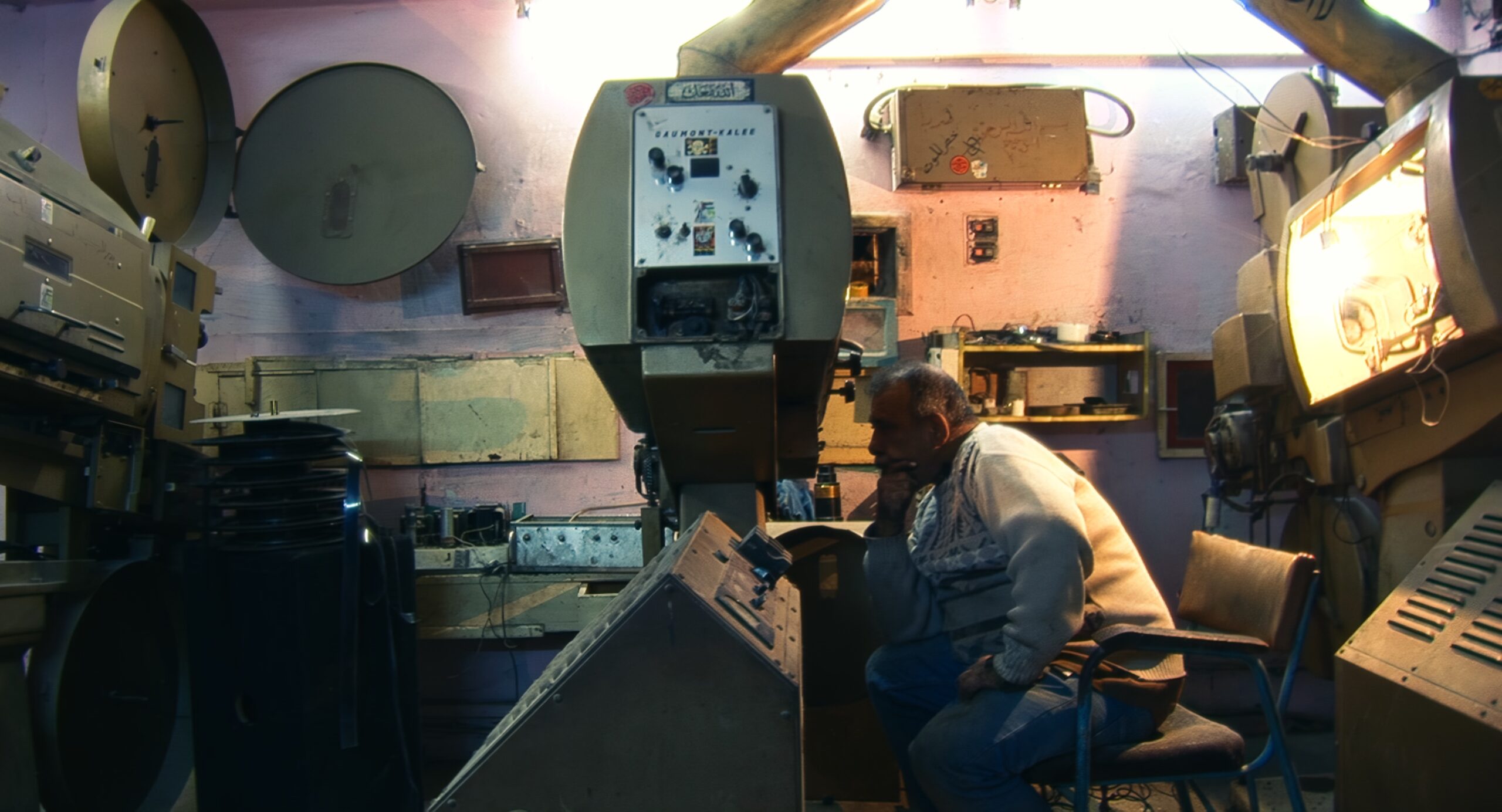
VERDICT: Alex Bakri’s power-conscious documentary 'Habibi Hussein' dismantles the feel-good façade of “development work,” revealing the power imbalances, condescension and erasure that underpin a German-led attempt to revive Jenin’s cinema.
In its MENA premiere in Cairo’s International Critics Week, Alex Bakri’s critical and power-conscious documentary, Habibi Hussein, about the restoration of Cinema Jenin, starts out looking like a modest NGO triumph to pump life into a long-shuttered movie house in the occupied West Bank.
However, as the project unfolds, and we see the German-funded cultural intervention led by filmmaker Marcus Vetter, the film shifts into something far more revealing: a committed study of power, race, and hierarchy disguised as charity and development in war-torn areas. Taking place in 2008, the center of Bakri’s sensitive film is 59-year-old Hussein Darby, the last projectionist of Jenin Cinema, a man who has spent 43 years tending film reels and coaxing projectors to life.
When residents of the militarised and often brutalised Jenin refugee camp hear that the ‘cinema people’ are coming, they think of actors. It is not just realising a dream of restoring the cinema but also the possibility of a job in the camp, which he describes as a place where one “cannot find bread.” The renovation project is spearheaded by Marcus Vetter (director of Cinema Jenin: The Story of a Dream) and Fakhri Hamad. Bakri captures a critical backstage take of Vetter’s film.
Alex problematises “white man saviour” syndromes in cinema, and highlights the imbalanced power dynamics that the German team and NGO carry when operating, and how this dynamic has affected Hussein. Bakri’s direction is brilliantly marked by deliberate absence. He rarely intervenes, allowing awkward and tense conversations, cringeworthy exchanges, small victories, and quiet humiliations to speak for themselves. This restraint is not passive, allowing for empowering storytelling. Through editing and careful framing, Bakri constructs a portrait of a man trying to navigate a sphere where he is both needed and discarded.
Enters Hussein, who has been working as a machinist from the age of twelve and spent decades projecting kung-fu films and Bollywood melodramas for Jenin’s audiences. He knows the craft intimately and the cinema by heart. He is assigned to fix the old 50-year-old carbon-arc projector, and he embarks on a determined quest across the West Bank: visiting shuttered cinemas, abandoned shops, and the homes of retired projectionists. He knocks on doors, asks for spare carbon rods, scavenges lenses and reels. He even goes to the heirs of the owners of the old cinemas and finally heads to a café on the sixth floor called “The Godfather” to meet a ‘guy who knows a guy’ who can hook him up. He returns, triumphant, carrying the needed pieces in plastic bags, and eventually fixes the machine.
In one of the film’s most moving scenes, Hussein cleans the dusty projection booth and brings the carbon arc back to life. The flicker, the whir, the beam slicing through the dusty darkness spark magic and hope in his eyes, not as a cinema lover but as an old Palestinian man, the resident of a refugee camp. Despite the initial success, the German team, part of its ‘development’ plan, is to introduce a projection workshop under the leadership of Franz, a young projectionist flown in from Germany to “train the locals.” Bakri uses this dynamic to problematize a familiar pattern: the Western expert imported to teach what the local already knows.
Franz, for all his formal education, sometimes cannot fix what Hussein repairs right away. Still, the hierarchy remains present, and other forms of imbalance as well, through simple dialogue which Bakri captures. While fixing a machine together, Franz praises Hussein’s taste in music when he hears The Beatles playing in the background — “Beatles, habibi, Beatles super good” — adding that he would never have guessed Hussein had “good taste.” This casual condescension is thoroughly documented by Bakri’s camera. When Oum Kulthum begins playing, Franz jokingly asks, “Oh Huessin, habibi. Where did the Beatles go?”
In this film, language is another field of imbalance. In one scene, a facilitator and Franz discuss, in English, which parts of their conversation should be interpreted for Hussein, specifically whether Hussein will be paid or merely volunteer “until the cinema opens.” Arabs working in Europe or the U.S. are often criticized for imperfect language skills, yet Westerners in the Arab world can pass through interactions with phrases like “habibi,” “shokran,” and “ma’ al-salamah.” In the film, “habibi” becomes a term that marks not intimacy but hierarchy. Originally a term of endearment for Arabic speakers, it turns into a box that limits “the other.” This othering is present in conversations by Vetter and the German team.
During an interview, Marcus acknowledges the difference between his people and others. “And then comes the realization that these are simply different kinds of talents. We… Germans, international Europeans; maybe we’re more structured,” he says, adding, “we write more things down. Here, not much is written down. And Palestinians, like many others, are always in the position of recipients. Everything they get, they receive from someone else. And so they sit and wait for something to happen. And if nothing comes from us, not much happens from here either.”
This shocking soundbite, which fails to interrogate why Palestinians are positioned as recipients in the first place, a symptom of the very dynamic the film critiques, extends beyond cultural presumptions. When the team fails to find the proper lenses, Hussein embarks on another shopping trip, attempting to reach Israel to procure a particular lens for the projector. It becomes a portrait of humiliation. He stands at the checkpoint with broken Hebrew, papers in hand, surrounded by soldiers. His permit is rejected. The equipment never arrives. The project moves on without him. Later, everyone involved receives a certificate of participation except Hussein. The German team celebrates their achievement, Palestinian Authority officials arrive in suits for photo ops, and Hussein, the man who kept Jenin’s cinematic memory alive, stands in the projection booth, unacknowledged.
The success of Cinema Jenin was short-lived due to the economy and the continuous raids on the city by Israeli forces, and seven years later the cinema was shut down. In this film, Bakri decentralises cinema from being a Western idea where the white saviour arrives to teach the locals. Despite the challenges, Hussein, who passed away months after the closure, was able to momentarily triumph. The film is a tribute to the worth of the person who understood the cinema best.
Director, screenwriter, cinematography, and editing: Alex Bakri
Cast: Hussein Darby
Producer: May Odeh
Production: Odeh Films, kaske film
Venue: The Cairo Film Festival (International Critics Week)
In Arabic, English, German
96 minutes