
Director Anselm Chan Discusses ‘The Last Dance’
.
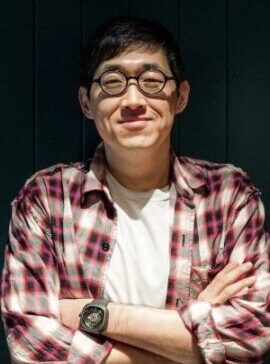
VERDICT: Writer and director Anselm Chan talks about his year of researching the funeral business for his career-changing film 'The Last Dance', Hong Kong's Oscar submission, and the importance of telling local stories.
Acclaimed Hong Kong screenwriter Anselm Chan (a.k.a. Anselm Chan Mou Yin) takes a big leap forward from directing comedy to the thought-provoking drama about the meaning of life and death, ‘The Last Dance‘.
The Film Verdict: The Last Dance, chosen by Hong Kong as its submission to the 2026 Academy Awards, has just had a fantastic year touring Asia and racking up awards. I much appreciated the film’s unusual setting in the world of funeral parlors and funeral rites, where the material meets the spiritual in sending off the departed. Were you surprised when it became Hong Kong’s highest grossing Chinese film of all time?
Anselm Chan: Of course, I am very surprised. In fact, when I first created this script, I simply wanted to search for the meaning of existence and express my views on the subject of life and death. I never expected it would become the highest-grossing Chinese-language film in Hong Kong history. This is all because I had a very professional production team who dedicated their best work to The Last Dance within limited time and conditions, as well as my cast who gave their all without reservation. Finally, I would also like to especially thank my publicity and distribution team, because no matter how hard my production team and actors worked to make the film well, everything would be in vain without them bringing The Last Dance to every audience member, and later, to every part of the world. For The Last Dance to become the highest-grossing Chinese-language film in Hong Kong history, in addition to thanking the audience, I must also thank all of the above for their contributions to this film.
TFV: As one of Hong Kong’s most renowned screenwriters, you have written many TV dramas but shown a marked preference for film comedy. Many of the films you have written have been box office hits and Chinese New Year’s smashes. How did you approach THE LAST DANCE screenplay, which to my eye is a fast and light drama?
Anselm Chan: Although I have written many comedy films as a screenwriter, and my first two directorial features, Ready o/r Knot and Ready o/r Rot also leaned towards comedy, what I truly like and want to do is not exclusively comedy.
Of course, I love comedy, too; it’s a timeless genre, and bringing joy to the audience is a virtue. However, as a filmmaker, I am more inclined to create those movies that share my feelings, understanding, and thoughts with the audience. The inspiration for The Last Dance came about because my beloved grandmother passed away during the pandemic. For a long time, I was immersed in grief. It is like the film says: life is a countdown, but the affection between people increases day by day. So why exactly are we here in this world? What is our meaning?
It occurred to me that the only proof of our existence in this world might be our physical bodies. Yet, when our bodies return to nature, our existence relies entirely on those who remember us. And if those who remember me eventually pass away as well, wouldn’t it be as if I never existed in this world at all? Thinking of this, I found life quite bleak, and I wanted to express this feeling, which led to the idea for the script of The Last Dance.
Later, having participated in and organized many funerals, I discovered that in Hong Kong, if the deceased does not have a specific religion, the Taoist ‘Breaking the Gates of Hell’ ritual is often used. This traditional custom involves many taboos and carries some discrimination against women. I thus hoped to use this specific funeral ceremony to explore the meaning of existence.
For this subject, I conducted over a year of research. I was extremely lucky to meet an excellent funeral consultant who guided me through various cases. With the family’s permission, I would follow the consultant throughout their work, from handling the body to organizing a funeral in detail. I recorded case after case, added creative elements, and arranged them within the script
Naturally, while The Last Dance is a film that stems from my personal feelings, I hoped to tell a universal story about all beings. The writing process was challenging because there was so much to express within a limited runtime. Would the audience feel that things were merely glossed over? These were my initial concerns.
This story originates from very private experiences and feelings, and it touches upon sensitive issues related to religion and traditional rituals. For a long time, I kept asking myself: Do I have the right to put these things out there? Is my perspective too personal for others to empathize with? I also worried that I might unintentionally offend certain viewers or beliefs. During that period, I repeatedly revised the script and had candid discussions with colleagues in different roles. Everyone was very respectful and gave me honest feedback.
Ultimately, I decided to preserve my original intention—to use the utmost sincerity and respect to tell a story I believe is worth telling. I am very fortunate that the actors and the team chose to trust me and helped me maintain this balance together. Overcoming these internal hurdles is more valuable to me than any external difficulties.
TFV: There is a fascinating background in the film highlighting local traditions that seem to exist only in Hong Kong: the Taoist priest and the Breaking Hell’s Gates ritual, etc. We know the film has met with acclaim all over Asia, but its local flavor seems to me one of its strongest points. Was this your intention?
Anselm Chan: This is a very local film, so it possesses very strong regional characteristics, and the content revolves around the typical Asian family dynamic of being reserved in expressing affection. That is why it received widespread and high recognition across Asia.
However, I later took The Last Dance to various film festivals around the world. It turned out that beyond Asian audiences, everyone shared a strong resonance and fondness for the film. I think this is probably because The Last Dance tells a story about human relationships and directly confronts the subject of ‘death.’ ‘Death’ is something that is close to every single one of us; it knows no nationality, race, or culture—it is absolutely fair. As long as one exists on this Earth, they must experience and face it.
Film is an excellent medium for exchange. As a Hong Kong director, I believe I have a responsibility to diligently seek out the people and events in the place where I was born to use as my subject matter. I sincerely hope that I can continue to use local themes to showcase universal values and topics, using film to promote Hong Kong’s culture and history, allowing all of Asia, and even the world, to come to know Hong Kong.
TFV: Another point of interest are the carefully drawn characters who come across as highly individualized, very Hong Kong, each with their own face, issues and personalities. When did you know you were going to cast Michael Hui, Dayo Wong, Michelle Wai and Tommy Chu? I think they have been showered with acting awards.
Anselm Chan: When I was at the initial stage of writing the script, I had already decided that Michael Hui, Dayo Wong, Michelle Wai, and Tommy Chu would join the cast. Every single one of them put their heart and soul into this film, learning many funeral techniques and knowledge.
Mr. Dayo Wong, in order to truly embody the role of a funeral agent, followed me and the funeral consultant around Hung Hom, an area full of funeral businesses, and observed many different cases, spending three months learning professional skills like cleaning and dressing bodies.
Michael Hui, at over 80 years old, in addition to the basic ‘Breaking the Gates of Hell’ ritual, also learned to sing Nanyin (Southern music) and play the erhu (Chinese two-stringed fiddle).
As for Tommy Chu, he brought his character to life so convincingly that he felt indistinguishable from a real Taoist priest (Nam-mo master). When we were filming on location in Hung Hom, an industry professional actually mistook Tommy for a real Nam-mo master.
Finally, there is Michelle Wai. She was the very first actor I identified from the beginning of writing this script because I already envisioned an ending where a woman performs the ‘Breaking the Gates of Hell’ ritual. Michelle herself is a rising star; she was the female lead in my previous two films, Ready o/r Knot and Ready o/r Rot. Sometimes, an actor just needs the right role to shine and be seen by the audience.
I am very grateful that she turned down all other work for the role in The Last Dance, dedicated herself entirely to the character, practiced the ritual for a year, and continuously trained her physical fitness and first-aid skills during that time. This is because her character, Kwok Man-yuet, is one of the very few female paramedics—in reality, there are only five in Hong Kong.”