
28 Years Later: The Bone Temple
28 Years Later: The Bone Temple
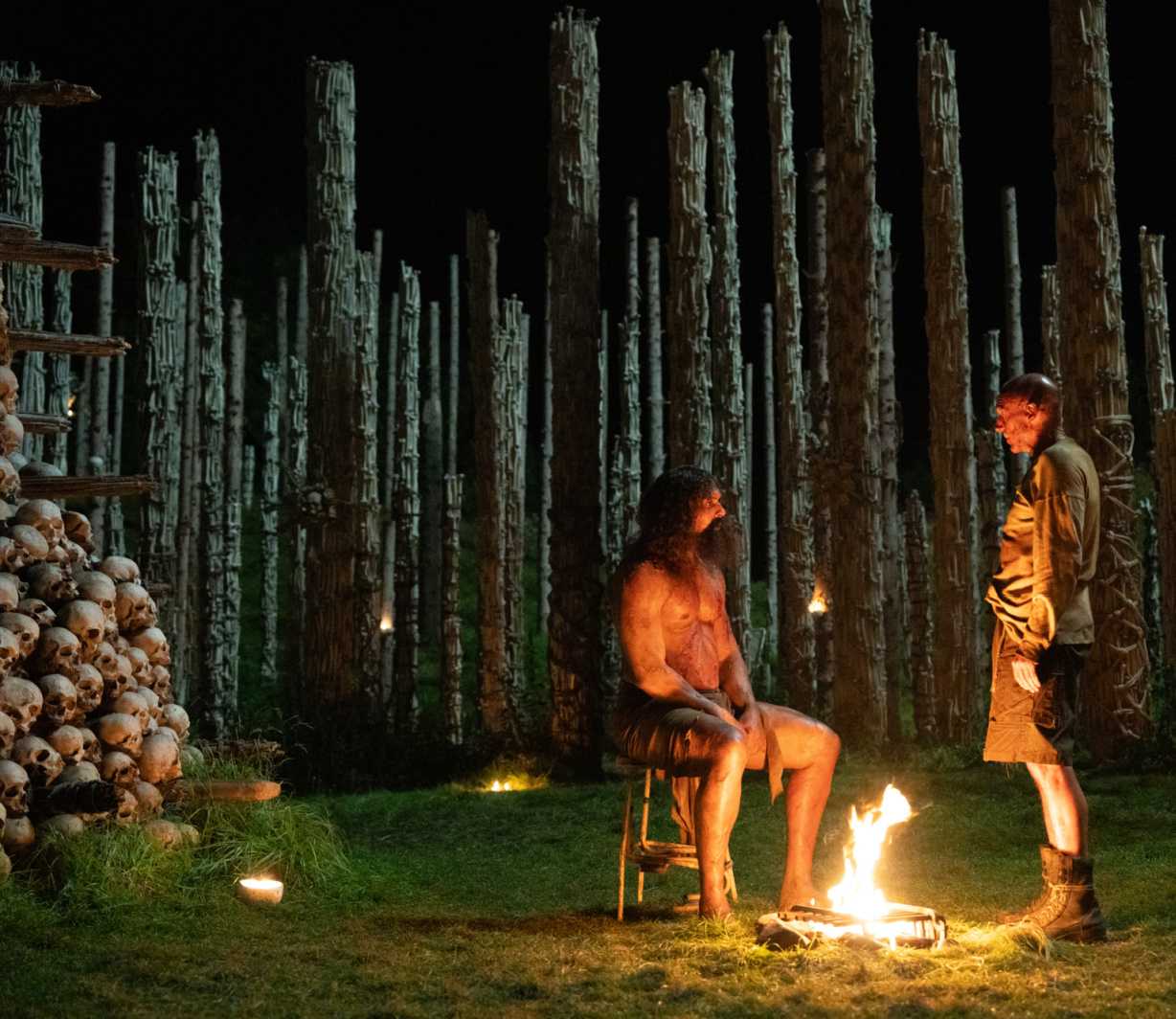
VERDICT: The human beings are just as bloodthirsty as the zombies in this latest entry, directed by Nia DaCosta with both delicacy and verve.
I’ve probably never left a gruesome and unsettling horror film thinking, “I’d love to see that director tackle a musical,” but that’s how I felt about Nia DaCosta the moment the lights came up after 28 Years Later: The Bone Temple, which sees the Hedda director stepping in for Danny Boyle in the latest chapter of Boyle and Alex Garland’s saga of a world plagued by virus-crazed zombies.
This chapter sees returning screenwriter Garland finding as much (if not more) horror in the bloodthirsty behavior of sadistic human beings than that of the undead — although the blood-puking rage-zombies are still very much present — and DaCosta’s vision includes both hope and horror, the bleakness of solitude and the joy of music. With this much choreography and theatricality on display, and the exuberant fluidity of Hedda, it’s now even more frustrating that DaCosta was so reined in on The Marvels. She walked out on that butchered superhero saga, but even in its compromised form, one can sense the moments where it’s a Bollywood musical waiting to happen; shame on Disney for depriving us of that vision.
Those energetic instincts serve her well on The Bone Temple, a follow-up to last year’s 28 Years Later and the fourth film in the series overall. Garland seems to have been inspired by watching Fiennes move like Jagger in Luca Guadagnino’s A Bigger Splash and set out to incorporate another opportunity for the actor’s karaoke chops; this time, Fiennes is literally lip-synching for his life, but to say more would ruin the fun.
Two parallel storylines pick up from the previous film: Dr. Ian Kelson (Fiennes) discovers that the tranquilizing drugs he uses for his blowgun needles bring a calm to the otherwise raging “alpha” zombie whom the doctor names “Samson” (Chi Lewis-Parry). Introduced in the previous movie, “alphas” are bigger and stronger than their counterparts, able to yank entire spinal columns out of their human and animal prey. Ian finds a chill Samson to be pleasant company, and theorizes on how his medicinal skills might actually undo the damage of the zombie-creating virus.
Meanwhile, young Spike (Alfie Williams) is jumped into the vicious “Jimmy” gang led by Sir Lord Jimmy Crystal (Jack O’Connell, Sinners). (While it’s never spelled out explicitly, these gang members, all referred to as “Jimmy,” sport blond wigs, gold chains, and track suits, patterning themselves after British TV presenter and sex offender Jimmy Savile.) Spike survives his initiation and unwillingly joins their ranks, and as the Jimmys take over a farm and set out to torture its residents, it’s clear that Sir Jimmy’s conscious thirst for blood far outstrips any zombie’s mindless pursuit of slaughter.
Re-teaming with cinematographer Sean Bobbitt (Judas and the Black Messiah, 12 Years a Slave), DaCosta fits into the groove established by previous films, from forbidding purple sunsets to disorienting tracking shots of a staggering zombie. With editor Jake Roberts (Alien: Romulus), they create a mood of dread in which the eventual meeting of Sir Jimmy and Dr. Ian feels even more foreboding than a knot of the hungry undead suddenly bursting forth from a thicket of trees. (Not that those moments aren’t terrifying as well.)
O’Connell’s Sir Jimmy plays like a cousin to the literal bloodsucker the actor plays in Sinners; even when he turns on the charm, the menace never completely dissipates, and when he goes into full fury mode, it’s genuinely unsettling. Williams isn’t given as much to do as in the previous film, spending most of it fearing for his life, but this is ultimately Fiennes’ show. Whether he’s teaching Samson to dance to the hits of the 1980s or crafting a larger-than-life spectacle on Sir Jimmy’s behalf, it’s a riveting performance, encompassing humanity and barbarism, much like the film itself.
28 Years Later: The Bone Temple looks at vicious mobs (be they zombies or zombie-killers) and the difficulty of extricating oneself from them, and at keeping scientific inquiry alive in a world dominated by religious superstition. But juggling big ideas and white-knuckle scares has always been the currency of the 28 Days Later saga, and Nia DaCosta does right by the franchise’s legacy.
Director: Nia DaCosta
Screenwriter: Alex Garland
Cast: Ralph Fiennes, Jack O’Connell, Alfie Williams, Erin Kellyman, Chi Lewis-Parry
Producers: Andrew Macdonald, Peter Rice, Bernard Bellew, Danny Boyle, Alex Garland
Executive producer: Cillian Murphy
Director of photography: Sean Bobbitt
Production design: Carson McColl, Gareth Pugh
Editing: Jake Roberts
Music: Hildur Guðnadóttir
Sound design: Glenn Freemantle, sound designer/supervising sound editor
Production companies: Columbia Pictures, DNA Films, Decibel Films
In English
109 minutes