
Shame and Money
Hatixhja dhe Shabani
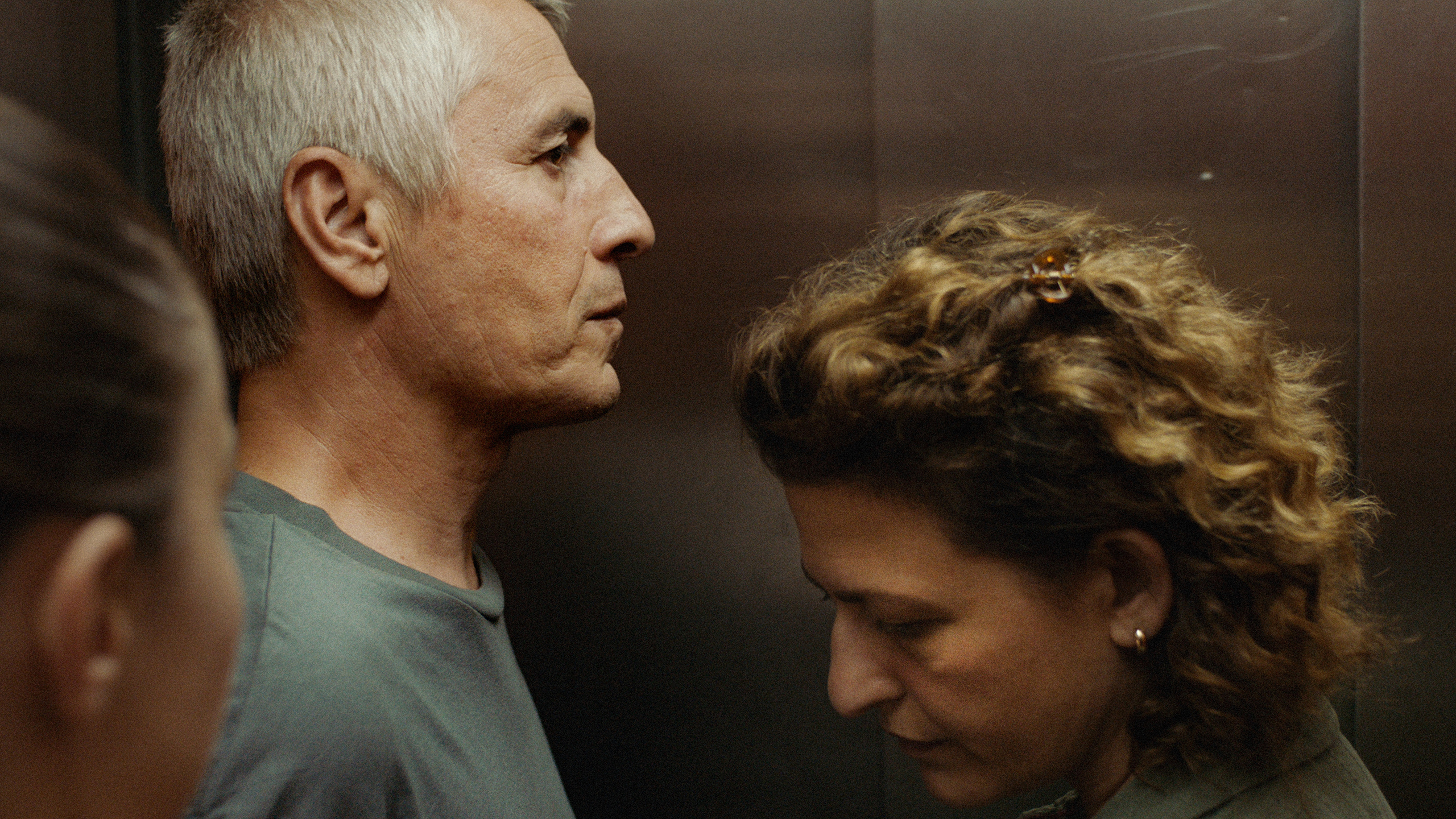
VERDICT: The fragile independence of a nation is refracted through a working couple in the observant drama 'Shame and Money'.
Two thousand euros is all that stands between stability and precarity in Visar Morina’s Shame and Money, an observant look at lives suddenly caught in the merciless grip of late stage capitalism. The compelling drama explores the trenches of the widening wealth gap, but instead of a blunt polemic, it makes its point with a quiet, sobering realism.
Shaban (Astrit Kabashi) runs a dairy film in Kosovo’s gorgeous rolling countryside with his wife Hatixhe (Flonje Kodheli) and their young children. The work is hard, honest, and though it’s not lucrative, they play an important role within their small community and carry themselves honorably. Shaban’s mother (Kumrije Hoxha) presides over the family both financially and authoritatively. The elderly woman’s savings are a necessary reserve, and she brokers the peace between the fractious relationships of Shaban and his siblings. But when Shaban’s desperate brother Liridon (Tristan Halilaj) steals some of his mother’s money, and absconds to Germany, it’s the spiteful act of letting the farm’s cows out of the pen that deals the final, irrevocable blow. Their livelihood snatched away in an instant, Shaban, his mother, wife, and children pack up for the capital of Pristina where they hope to start over.
Hatixhe’s sister Lina (Fiona Gllavica) and her husband Alban (Alban Ukaj) help them find an apartment and some temporary work. But when living at the apartment becomes untenable, the family moves into the tiny guest house behind Alban and Lina’s large, imposing, and impressive modern home. Though Alban makes it clear to his brother-in-law his home has plenty of space for them, Shaban is too proud to be a burden. Regardless, he needs to feed his family, and when the part-time gig cleaning a nightclub doesn’t make ends meet, Shaban lines up with on the street with the day labourers each morning, hoping — begging — to get selected for backbreaking work in exchange for ten or twenty euros. This irks Alban, who worries about his reputation should his neighbors see his own family putting their hand out, but as Hatixhe tells Lina, shame is a luxury they’re able to afford.
In the countryside, Shaban or Hatixhe may not have made much money, but their work played a vital function in their community, and was carried by a measurable rhythm from dawn to dusk. The screenplay by Morina and Doruntina Basha subtly but effectively illustrates what happens when one’s living is provided from the sputtering tap of the gig economy. With no source of steady income, Shaban and Hatixhe’s visits to rental apartments are fruitless exercises. When Alban tells Shaban to put together CV, it’s a laughable request, for what is someone who has worked all their life on a farm supposed to put on a resume?
Shame and Money gets to the cold heart of the punishment the dignity of the working class endures. The way low wage workers must feel grateful not only for the few shifts they’re allotted, but for the pittance they receive. How they must shrivel themselves when any momentary light of kindness is shined upon them by their benefactors. In short, they must be thankful for their very exploitation and should they dare to complain, there’s someone to waiting to replace them.
The picture slowly builds toward a conclusion both shocking and enigmatic that doesn’t quite support the frankness of the film that came before. Nonetheless, the haunting nature of Shame and Money lingers in two unforgettable shots. The first comes as Shaban and Hatixhe walk by the Newborn monument celebrating Kosovo’s independence as they go in and out of shops looking for work. The other is a winding tracking shot that ends gazing up at a statue of Bill Clinton, built to commemorate his allyship with Albanians in Kosovo against the Yugoslav government. The choices by Morina suggest that in gaining their independence, Kosovo — granted membership in institutions like the International Monetary Fund and the World Bank — have bought into a system that threatens its people with a new danger: the ruthless cruelty and machinery of the modern economy.
Director: Visar Morina
Screenplay: Visar Morina, Doruntina Basha
Cast: Astrit Kabashi, Flonja Kodheli, Kumrije Hoxha, Fiona Gllavica, Alban Ukaj
Producers: Fabian Altenried, Sophie Ahrens, Kristof Gerega, Pia Hellenthal, Visar Morina
Cinematography: Janis Mazuch
Production design: Burim Arifi
Costume design: Desantila Lika
Editing: Joelle Alexis
Music: Mario Batkovic
Sound: Igor Popovski
Production companies: Vicky Bane (Germany), Schuldenberg Films (Germany), Eagle Eye Films (Kosovo), Vertigo (Slovenia), On Film (Albania), List Production (North Macedonia), Quetzalcoatl (Belgium)
World Sales: The Yellow Affair
Venue: Sundance Film Festival (World Cinema Dramatic Competition)
In Albanian
130 minutes