
Elements Of(f) Balance
Elements Of(f) Balance
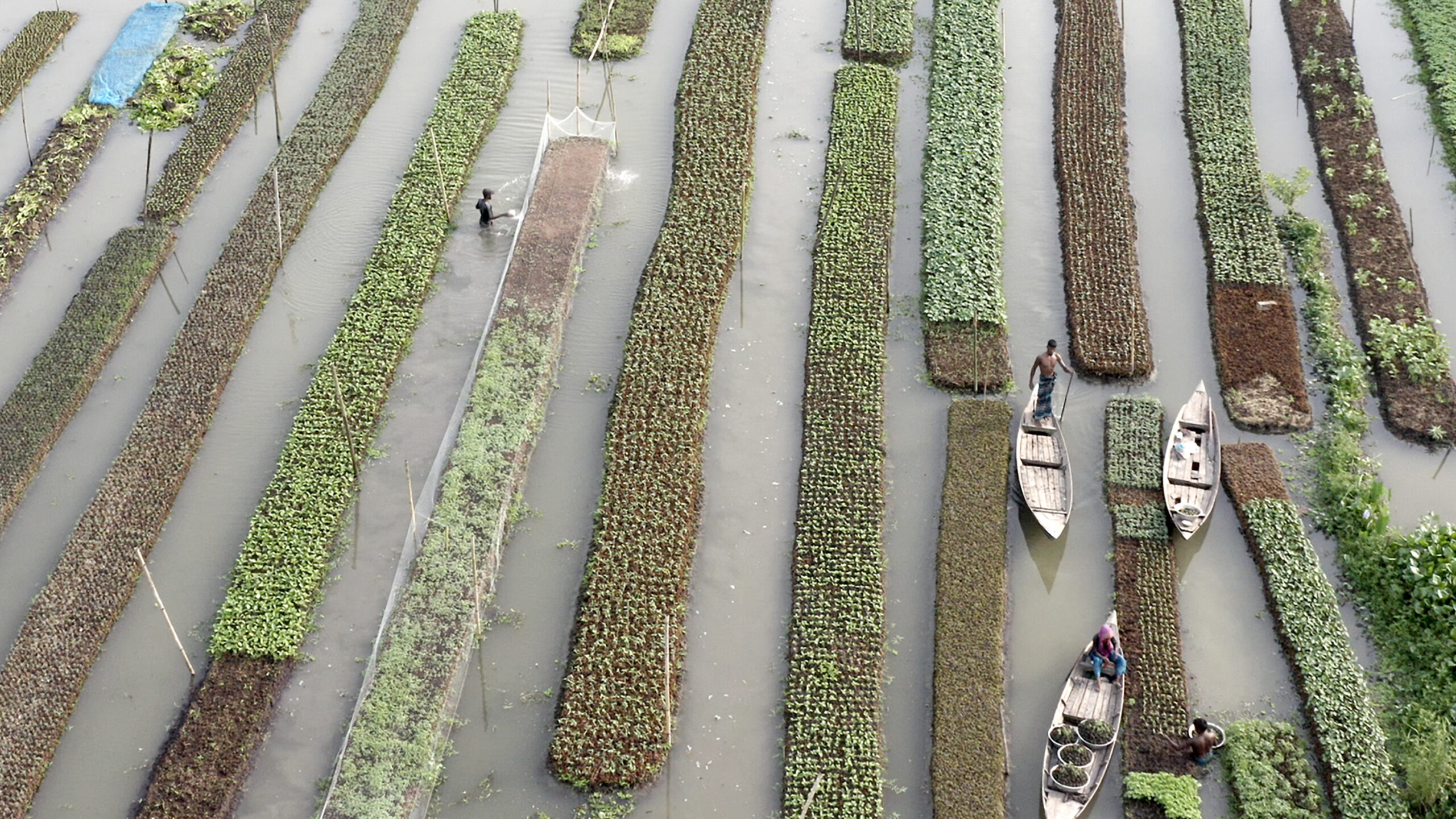
VERDICT: Like a delicately composed ecosystem, Othmar Schmiderer’s documentary is a patchwork of finely tuned vignettes that together form a thoughtful meditation on our relationship with the planet.
There is almost a hands-off feeling to Elements Of(f) Balance.
Of course, this is far from the case – this is a fastidiously researched work of nonfiction that takes many locations and dozens of interviewees across at least eight countries. However, the filmmaking is unobtrusive, giving this gentle but probing look at humanity’s evolving relationship with the environment the same sort of non-interventionist sensibility as a nature documentary. This is far from a didactic screed and yet Othmar Schmiderer’s film – conceived in collaboration with Stephan Settele – carries with it a powerful and increasingly apposite message. One that audiences at the International Film Festival Rotterdam will be exposed to when the film receives its international premiere in the event’s Harbour section this week.
The film opens with a text that describes a reimagining of the ancient myth of Athena and Arachne – in this case presenting a world in which Athena destroyed the tapestry of Arachne in a jealous rage, only to realise the weave’s power in holding the natural world together and so, filled with remorse, sought to remedy her destructive act. It’s a generous analogy to humanity – placing us in the role of the goddess of wisdom – but one that foregrounds the optimistic lens through which the filmmakers wish us to receive the piece. This film is a depiction of the ways in which individual pockets of humans are attempting to piece back together the ecological tapestry we’ve mindlessly ripped apart.
Elements Of(f) Balance is not a film primarily about conservation or recent trends to rewild habitats previously destroyed by industrial expansion, though. Instead, Schmiderer and Settele have opted for an even more expansive lens than this, travelling to various places in Europe and further afield to Asia, to see the sometimes very different ways that people are attempting to work in concert with nature. In some cases, this is about environmental protection and upkeep and in others it is about intentional farming for biodiversity. However, there are also various elements that discuss ways of harnessing expanding knowledge of the natural world to work more smartly alongside it – whether that is in the cutting-edge harnessing of the structural potential of fungi or reflecting on the inherent benefits of traditional water farming methods in rural Bangladesh.
These topics elide in an organic way. Schmiderer eschews onscreen text telling us the names of research facilities or village locales – though these are diligently laid out at the beginning of the credits – instead allowing the film to drift from place to place, topic to topic, following tangents where they will lead. This means that a comment from a scientist in Italy concerning marine sustainability can follow on to some research about jellyfish blooms exploding in the Adriatic due to offshore mining facilities, then go to a discussion of the evolutionary history of jellyfish (“God is a jellyfish!”) and their potential scientific applications. Meanwhile, the film’s opening section sees the filmmakers observe and speak to permaculture farmers in Langau, Austria about the importance of considering the environment to improve the resilience of their ongoing productivity. It is then able to quite intuitively explore the benefits of ‘strip cropping’ in Wageningen (The Netherlands) in making mass production more beneficial for biodiversity and soil health.
This approach means that the film has a meandering quality, but it belies the film’s fundamental thesis. As pelicans stalk through the shallows and oystercatchers soar across the water, a voice reminds us that the Danube Delta is a fragile ecosystem that will disappear if we’re not careful. In the Thuringia forest in Germany, workers explain the difference between a ‘woodland’ (where living things choose their place) and a ‘forest’ (a plantation) and how vital it is we replace the latter with the former. In the Gobi Desert, farmers carry bales of straw on their backs to create a straw grid in the sand – like a net cast over the dunes – intended to stabilise the ground and allow vegetation to grow. These comments and images are a striking reminder of the work that is needed.
Fortunately, as Elements Of(f) Balance makes evident, that work has begun to happen. Through its collection of small stories filled with fascinating scientific observations, nuggets of traditional wisdom, and various images of exquisite landscapes, the film is that rare thing in today’s nonfiction landscape – a positively-skewed environmental film. It acts as a love letter to what people are already trying to do – one that hopefully serves in inspiration to others to follow suit.
Director, producer: Othmar Schmiderer
Screenplay: Stephan Settele, Othmar Schmiderer
Cinematography: Siri Klug
Editing: Arthur Summereder
Music: Christian Fennesz
Sound: Andreas Hamza
Production companies: Othmar Schmiderer Filmproduktion (Austria)
Venue: International Film Festival Rotterdam (IFFR) (Harbour)
In German, English, French, Chinese, Bengali, Romanian
98 minutes