
La belle année
La belle année
VERDICT: Documentary and fiction are interwoven in this contemplative self-portrait that connects contemporary grief and teenage romantic obsession to tantalising effect.
Angelica Ruffier has described La belle année as autofiction.
It is a useful word to keep in mind when considering the Stockholm-based filmmaker’s feature debut which premiered as part of the Tiger Competition in Rotterdam this year. Autofiction is the blending of autobiography and fiction – typically in the world of literature – and La belle année does precisely this. It is an intimate film that constantly elides the boundaries of documentary in a way more specific than the term ‘hybrid’ might denote. Featuring Ruffier herself as the film’s protagonist, it is an evocative and multi-faceted portrait of self, shot while settling the affairs of her recently deceased but long-estranged father.
Ruffier’s father passed away in 2021 and La belle année follows the director as she gradually clears out his house – and her childhood home – in France along with the intermittent help of her brother, Tom. Along the way, as she sifts through piles and piles of accumulated things, the debris of an entire life, she is forced to confront some of the painful memories that come with a violent history. While struggling through this, she also comes across old diaries that remind her of an intense infatuation she felt as a teenager with a woman who taught her history for a single year in school; Mademoiselle Bresson. As then, Ruffier finds release in this foundational emotional connection, her crush re-emerging amidst the flotsam of her youth.
Ruffier is playing herself in the film, but this feels very far from a typical documentary. The film might be littered with dream sequences and archival images, but it is even in the everyday observation that it is distanced from our typical visual expectations of nonfiction. It sounds somewhat convoluted but La belle année has the feel of a fiction film that is using the tropes of documentary to foreground its authenticity. Simon Averin Markstrom’s cinematography presents us not with the sensation of a fly-on-the-wall portrait, but that of a scripted drama. Some of the scenes evidently are pre-planned but others are much more véritè, though the delicately managed tone and sympathetic edit mean we’re not spending our times wondering at the distinction.
In this way, Ruffier is absolutely right to describe the film as autofiction as the way the film elides the real and the constructed, helped in large part by editor Anna Eborn is deft. While it is easy to understand why Ruffier would cite the name of Annie Ernaux as an inspiration – the film has a similar quality to some of Ernaux’s writing – there is also headiness to Ruffier’s work, the way it leans into its nostalgia and the trappings of its flights of fancy that feels distinct from that form of writing.
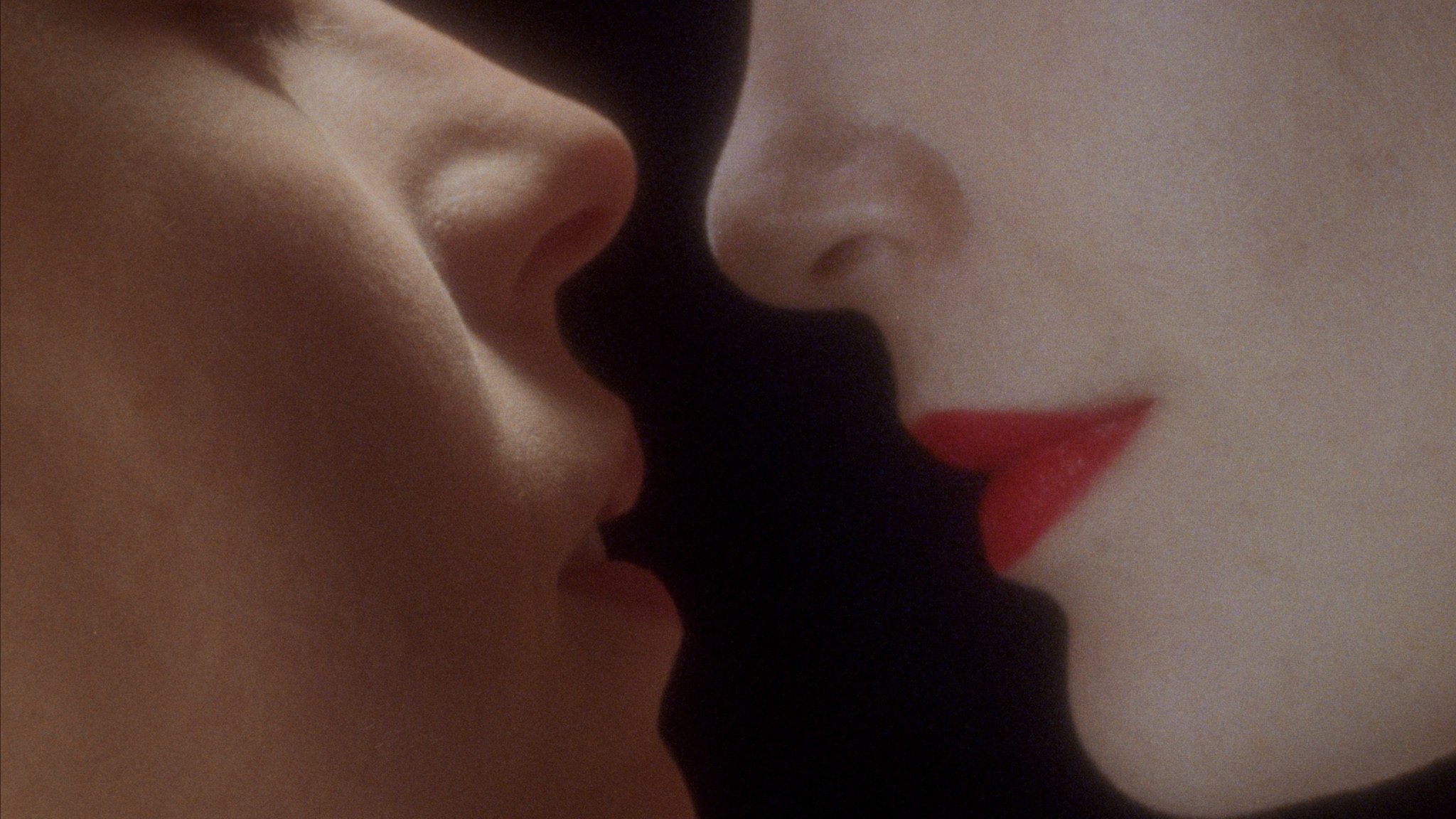
The vernacular of old movies is part of that process. At one point in the film, Ruffier, while reliving the passionate affection she felt as a 16-year-old goes to a cinema to see a screening of Harry Kumel’s Daughters of Darkness and there are various cutaway interjections representing imagined, remembered, or dreamed interactions with Mlle. Bresson that use the same visual language and carry the same potent eroticism. She is equally enamoured with the style of Louise Brooks who was a favourite of her teacher and whose aura her memories and visions of Mlle. Bresson evidently channel. However, La belle année is not just a film a film of nostalgic reverie. Ruffier’s idea of this blended approach allows genuine scenes of interaction with family and friends to sit alongside her internal reflections.
The ‘beautiful year’ of the title perhaps most evidently refers to her year of learning history at sixteen, but the film itself follows a similar timescale and across this time Ruffier is able to not only process some of trauma of her youth, but find some solace in who she has become and, perhaps offered the chance to reconnect with Mlle. Bresson two decades later and thank her for the role she played. Like part-documentary, part-indie drama, part-archival essay, La belle année is at once an intoxicating, sad, thought-provoking and affirming; an admirable, considered self-portrait and an ode to the power of love.
Director, screenplay: Angelica Ruffier
Cast: Angelica Ruffier, Tom Ruffier, Henrik Ruffier, Sylvie Bresson
Producers: Marta Dauliute, Brynhildur Thorarinsdottir
Cinematography: Simon Averin Markstrom
Editing: Anna Eborn
Music: Leo Svenson Sander
Sound: Thomas Endresen
Production company: MDEMC (Sweden)
Venue: International Film Festival Rotterdam (IFFR) (Tiger Competition)
In French, Swedish, English
95 minutes