
Master
Master
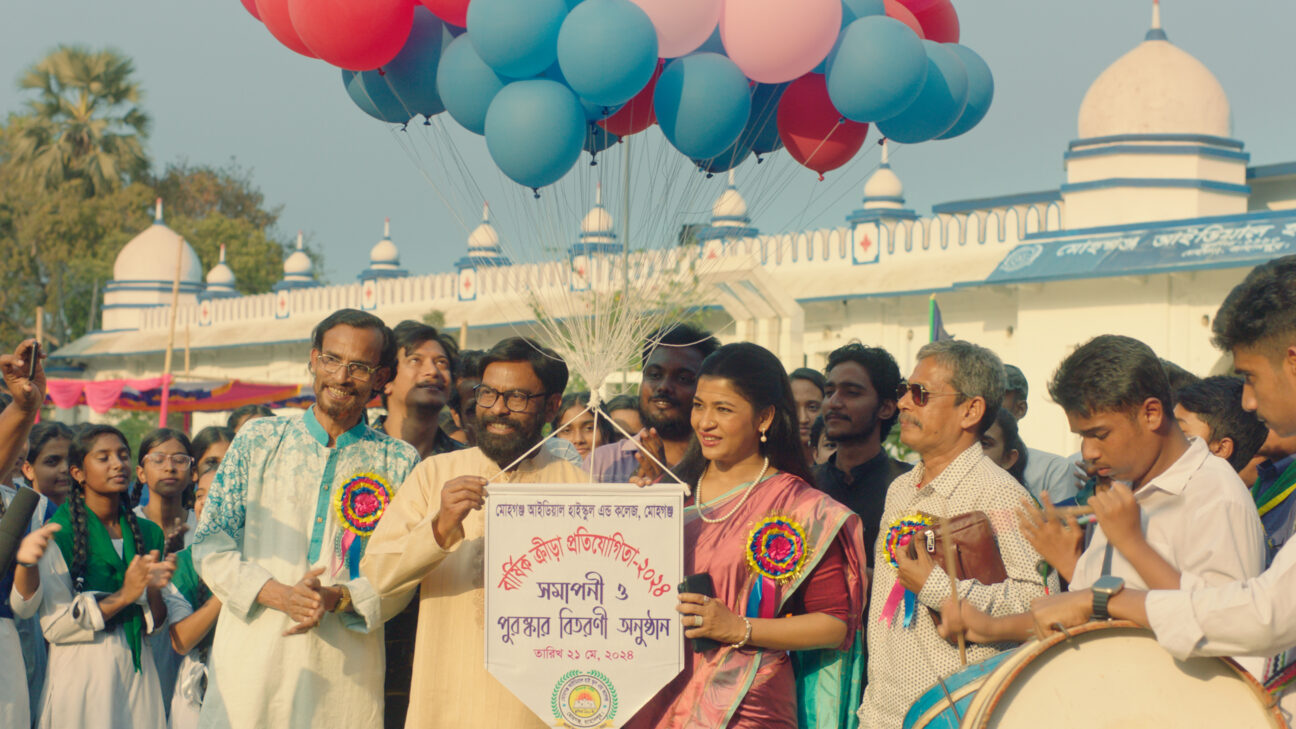
VERDICT: An idealistic politician is seduced by the dark side of power in Rezwan Shahriar Simut's polished but predictable drama, which took home one of the main prizes in Rotterdam.
Fresh from winning the Big Screen competition prize in Rotterdam, Master is a rare and welcome example of a Bangladeshi production making a high-profile splash on the international film festival circuit. Remarkably, writer-director Rezwan Shahriar Simut’s sober political drama about power, corruption and lies in a rural community is actually one of three Bengali premieres in the official IFFR program thus year, alongside Mejbaur Rahman Sumon’s Tiger competition contender Roid and Mohammad Tauqir Islam’s debut Delupi in the Bright Future section.
Full of echoes of the real-life crimes, shady deals and human rights abuses that brought down Sheikh Hasina’s authoritarian government in the “July Revolution” of 2024, Master tells a familiar but well-crafted story about the rise of an idealistic politician who is inexorably drawn into a murky world of bribery, brutality and betrayal. The film’s key take-home message is that power corrupts: hard to refute, but a somewhat banal and well-worn conclusion in modern cinema. Post-Awards buzz from Rotterdam will help open doors internationally, but Sumit’s second feature is ultimately a pretty creaky, old-school morality play at heart. Indeed, with a different backdrop and late 19th century clothes, the story would work as a classic social drama by Ibsen or Strindberg.
As the son of a former government minister himself, Sumit clearly knows this volatile political terrain well. Master opens with the small-town election campaign of Jahir (Nasir Uddin Khan), a much-loved schoolteacher with outwardly progressive liberal values and a flair for inspirational rhetoric. He is running to become a Chairman, the local representative for a national political party, in a remote rural community surrounded by protected forest land. Against the odds, including some thuggish interference from his main rival, Jahir is swept into power as the people’s champion. But soon afterwards, inevitably, his problems begin to mount up when lofty campaign promises come into contact with cold reality.
Jahir soon finds himself up against numerous vested interests: well-connected businessmen, ethically shady police chiefs, and old friends expecting payback favours for campaign support. An even more tricky prospect is the local UNO (Azmeri Haque Badhon), a high-ranking civil servant responsible for the wider region. Glamorous and alluring enough to make Jahir’s wife Jharna (Zakia Bari Mamo) suspicious, she also has self-serving designs on an eco-tourist hotel and prestige bridge-building project. This grand scheme would require bulldozing the Millgate shanty town, whose impoverished residents have invested their hopes in Jahir.
Scrambling to find a pragmatic balance, Jahir begins striking Faustian deals in a bid to deliver at least some of his campaign promises to prioritise jobs, womens’ rights and better conditions for poorer voters. But eventually he is forced to concede that treachery, bribery and dirty deals are the price of power, tacitly agreeing to forced evictions to clear the Millgate slum. Violent street protests erupt. old friends becomes enemies, and Jahir clashes with his fiery former lieutenant Ayub (Sharif Siraj).
To its credit, Master boasts generally strong performances, polished production design, and some well-staged action sequences. Khan is a quietly magnetic presence on screen, his flickering eyes hinting at panicky soul-searching behind a facade of soft-spoken, unflustered charm. Then again, his character development from humble hero to fatally compromised anti-hero is too broadly sketched, with no room for the kind of psychological shading that might have given these ethical dilemmas more dramatic heft.
Similarly, the film’s dialogue (or the English subtitle translation at least) is jammed with on-the-nose sermons and glib homilies: “It’s ironic, Jahir, that a history teacher like you has learned so little from the past,” Jharna scolds. “The poor do not ave many ambitions, they are pretty harmless,” Ayub sighs. “However, those chasing wealth can cause a lot of harm.” Too much of this sullen sermonising makes for a pretty flat story overall, pitching Master firmly at the superior soap opera level, entertaining enough as earnest melodrama but not the fresh, biting insider critique of contemporary Bangladeshi politics that it might have been.
Director, producer: Rezwan Shahriar Sumit
Screenwriters: Rezwan Shahriar Sumit, Sabbir Hossain Shovon
Cast: Nasir Uddin Khan, Azmeri Haque Badhon, Zakia Bari Mamo, Fazlur Rahman Babu, Sharif Siraj, Tasnova Tamanna
Cinematography: Tuhin Tamijul
Editing: Kristan Sprague
Production design: Jonaki Bhattacharya
Music: Hao-Ting Shih
Production company, world sales: Mypixelstory (Bangladesh)
Venue: International Film Festival Rotterdam (Big Screen Competition)
In Bengali
126 minutes