
I Can Only Imagine 2
I Can Only Imagine 2
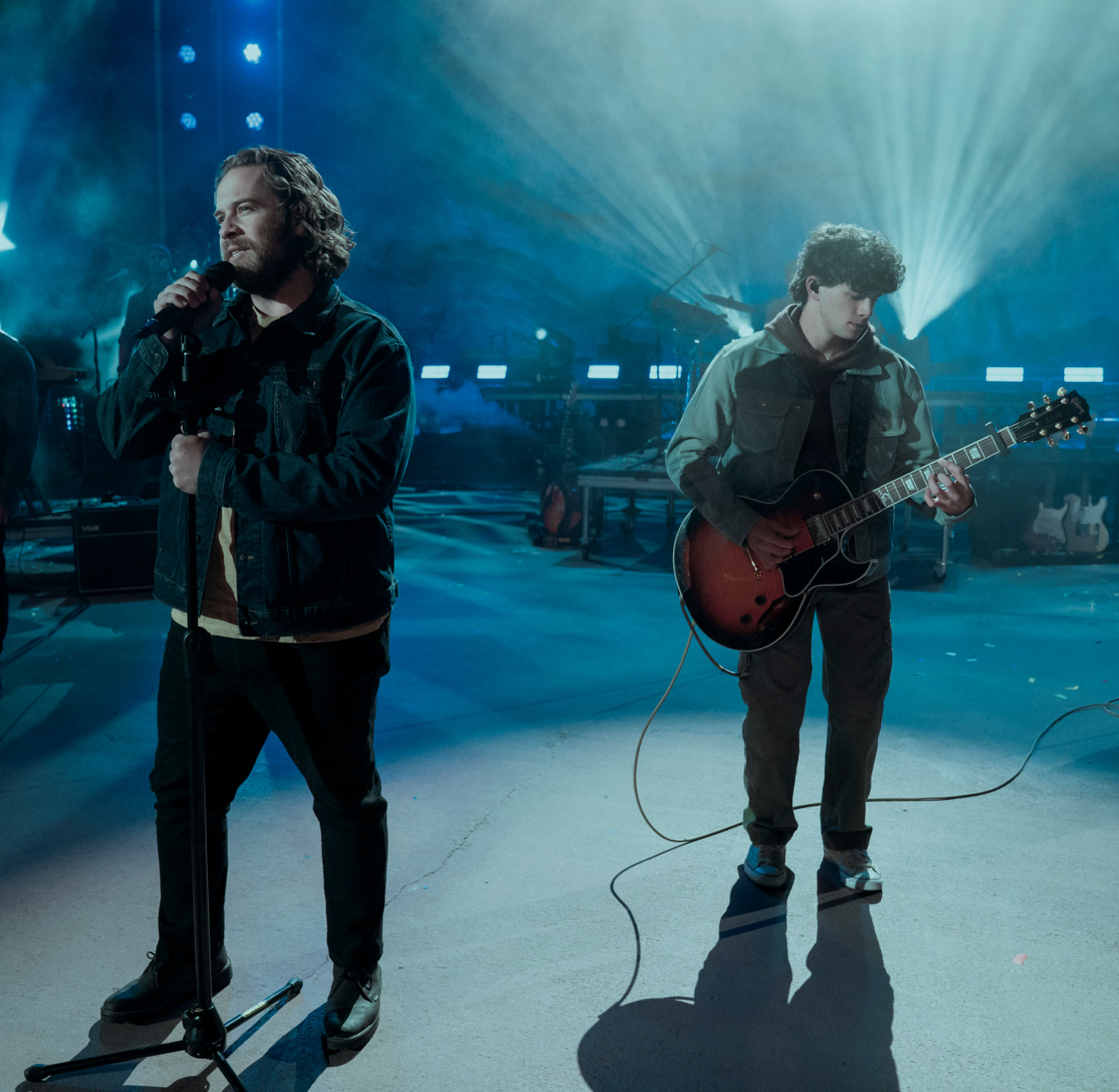
VERDICT: Extracting more drama from the life of MercyMe frontman Bart Millard proves difficult for this unnecessary sequel.
How do you build on a big hit? That’s the premise of I Can Only Imagine 2, which tries to explore the complications of what happens after “happily ever after.” In the first film, musician Bart Millard (John Michael Finley) channels emotional and physical abuse from his father (Dennis Quaid) into artistry, forming the contemporary Christian rock band MercyMe and scoring a huge crossover hit with the song “I Can Only Imagine.”
This sequel wants to examine how an artist moves forward after a breakthrough, but directors Andrew Erwin and Brent McCorkle find themselves in a similar bind as their protagonist, attempting – and stumbling in the process — to rekindle the heartfelt, realistic, musical drama that made the movie I Can Only Imagine (which grossed $83 million in the US off a $7 million budget) such a success.
Returning screenwriter McCorkle, who replaces Jon Erwin as Andrew Erwin’s co-director, crafts a parallel storyline, one featuring plenty of flashbacks to the first film, in which Bart’s unresolved trauma from his own childhood manifests itself in the way he fathers his own oldest son, Sam (Sammy Dell). One problem: being a helicopter dad with a sometimes overbearing concern with your child’s well-being isn’t the same as being a violent, alcoholic dad, no matter how strenuously the script attempts to present them as roughly equivalent.
Bart’s constant concern over Sam’s Type 1 Diabetes diagnosis, and his teenage son’s seeming disinterest in keeping up with blood-sugar tests and insulin shots, has driven a wedge between them. In an attempt to bond and fend off increasing estrangement, Bart brings Sam on the road with MercyMe during a tricky period for the band — they’ve just graduated from opening act to headliner, and Bart is dealing with writer’s block in his attempt to craft a follow-up to “I Can Only Imagine.” On the road, Sam bonds with the band’s new opener, singer-songwriter Tim Timmons (Milo Ventimiglia), who takes the kid under his wing even as he’s dealing with health issues of his own.
Recent sequels like Coming 2 America and Happy Gilmore 2, both turning up more than a decade after their respective predecessors, have padded out their running times with extensive clips from the first movie, and even though the first I Can Only Imagine came out in 2018, McCorkle falls back on this practice with some frequency. Bart’s insecurity about parenting summons memories of his own childhood, again and again, although the film does at least bring back Quaid to create a new flashback involving the kinder, gentler, post-conversion version of Bart’s dad.
Thankfully, Finley isn’t called upon to portray Bart as a teenager again, as he was in the previous movie. The actor has a new hurdle placed upon him, however, to convey anxiety and depression in a film that refuses to use the words “anxiety” or “depression.” Often, the results just look like grumpy petulance. Millard’s wife Shannon (Sophie Skelton, taking over for Madeline Carroll) tries to nudge him into counseling — “therapy” is also never spoken — but never too hard, since the character mainly exists to provide support and childcare.
It’s telling that, when Bart finally seeks the help he needs, it’s from a grief support group comprised solely of men. Couches are for sissies, I Can Only Imagine 2 seems to imply, but it’s OK for bros to talk about their feelings as long they’re in a circle of folding chairs in a high-school gym.
The Erwins, to their credit as directors and producers, have cannily crafted a rare subgenre of faith-based movie, the kind that not only delivers a level of professional sheen not usually seen in the genre, but that is also deeply nestled in a kindhearted, gentle approach to the world around it. In a landscape littered with freakishly cruel Evangelical films like the God’s Not Dead franchise, that’s something not to be dismissed.
But while they’re good at hiring talented craftspeople and actors, they (and McCorkle) can’t resist the vacuous uplift that limit these films to the literally converted and easily moved. Spiritual-minded art at its best challenges audiences, be they believers or not, but these movies are often hamstrung by a suffocating spiritual coziness. Viewers not already tuned into the world of contemporary Christian music may find themselves unimpressed with “Even If,” the climactic Timmons-Millard composition that the whole film builds toward.
I Can Only Imagine 2 is a Marvel movie for Evangelicals, but not in a good way: it rehashes the emotional beats of its predecessor to sell audiences an exercise in diminished results. With its reliance on familiar tropes and story clichés, it’s a movie that, even if you haven’t seen it yet, you can probably imagine.
Directors: Andrew Erwin and Brent McCorkle
Screenwriter: Brent McCorkle
Cast: John Michael Finley, Milo Ventimiglia, Sophie Skelton, Arielle Kebbel, Trace Adkins, Dennis Quaid
Executive producers: Tony Young, Bernie Stern, Brent McCorkle, Scott Brickell, Dylan Bond
Producers: Kevin Downes, Andrew Erwin, Cindy Bond, Bart Millard, Daryl Lefever, Joshua Walsh
Director of photography: Johnny Derango
Production design: Aimee Holmberg
Editing: John Puckett
Music: Brent McCorkle
Sound design: Mathew Waters, re-recording mixer/sound supervisor
Production companies: Lionsgate, Kingdom Story Company, Mission Pictures International, Thirty Gallon Think Tank
In English
110 minutes