
The Ballad of Judas Priest
The Ballad of Judas Priest
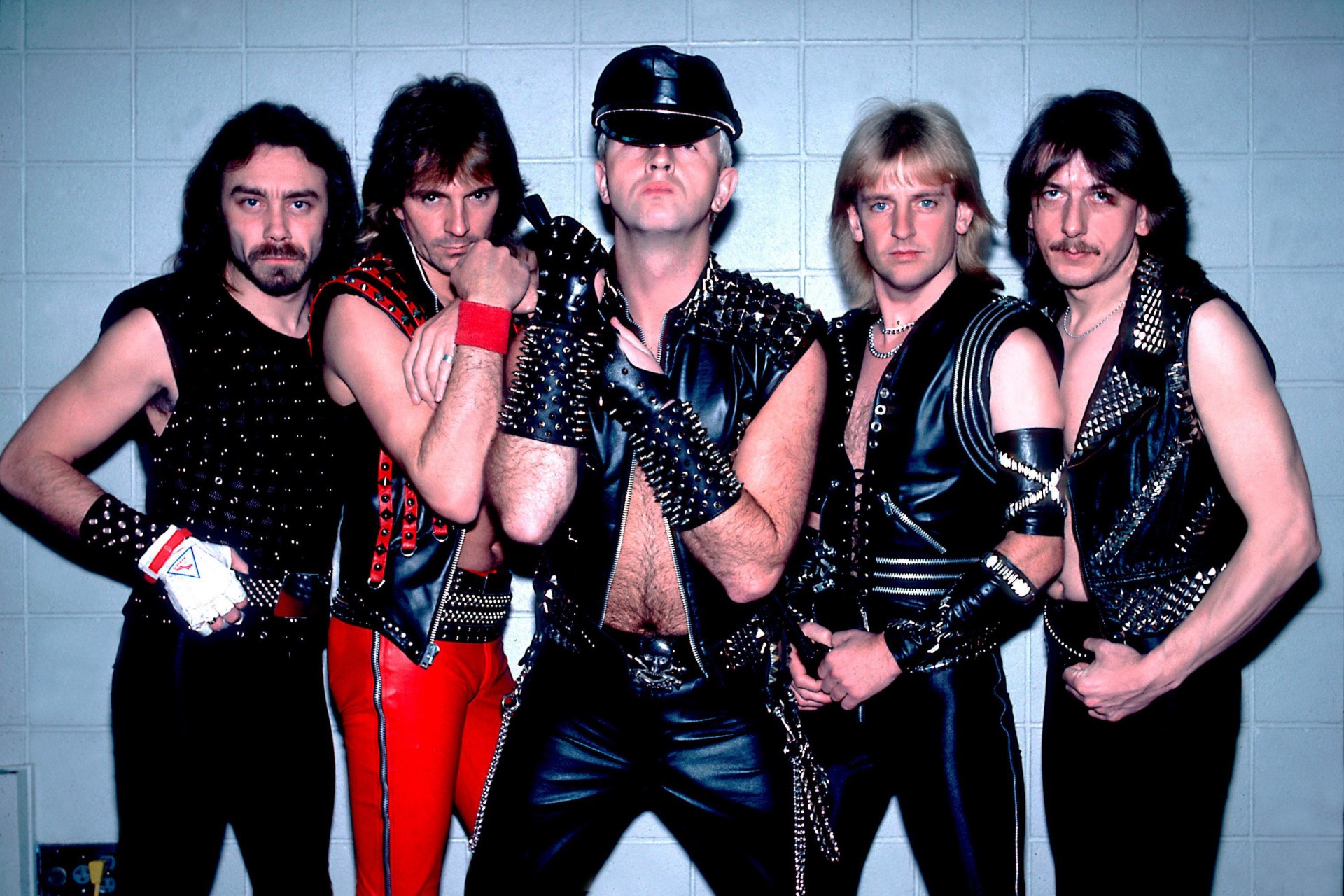
VERDICT: Rage Against the Machine's Tom Morello co-directs this polite but warm-hearted rockucumentary about one of heavy metal's foundational bands, aided by Jack Black, Ozzy Osbourne, Dave Grohl and other famous fans.
British hard rock pioneers Judas Priest have an undisputed claim on being among the founding fathers of heavy metal music, second only to their Birmingham neighbours and fellow headbanging legends Black Sabbath. A retrospective documentary spanning more than 50 years, The Ballad of Judas Priest chronicles their evolution from working-class blues band in Britain’s industrial heartlands, to arena-filling metal superstars on classic blockbuster albums like British Steel and Painkiller, to whiskery old road warriors still touring and recording in their seventies. Along the way they have weathered the usual tragicomic Spinal Tap issues that afflict all long-serving bands: break-ups and breakdowns, ego clashes and personnel changes, friction and addiction.
World premiering in Berlin this week, The Ballad of Judas Priest reveals little that any casual fan will not already know. All the same, their supercharged music and Wagnerian biker pageantry are never less than entertaining. In droll tonal contrast, the band members are deadpan, self-effacing and unpretentious interview subjects. Scoring his first directing credit alongside seasoned rockumentary maker Sam Dunn, musician Tom Morello of Rage Against the Machine and Audioslave fame is another strong selling point, framing Priest’s legacy within his own personal and political worldview as a long-term fan.
Officially endorsed by the band and their record label, The Ballad of Judas Priest is a fairly standard promotional film at heart. The message is celebratory, the anecdotes familiar, and many of the usual suspects are here. Dave Grohl of Foo Fighters, contractually obliged to appear in every heavy rock documentary, pays warm fan-boy homage alongside Metallica’s Kirk Hammett, Smashing Pumpkins singer Billy Corgan, Lzzy Hale of Halestorm and more.
Then again, Darryl “DMC” McDaniels of veteran rap trio Run DMC is a welcome left-field inclusion, drawing parallels between heavy metal and hip-hop as related forms of underclass rebel music. Hollywood star Jack Black delivers value for money too, riffing joyously on Judas Priest’s inherently hilarious baroque’n’roll excess. Poignantly, the late Ozzy Osbourne also gives of one his last interviews, saluting his fellow metal trailblazers. “Judas Priest were just about a week behind Sabbath,” he says.
The formula may be familiar, but various elements elevate The Ballad of Judas Priest above stock rock-doc tropes. As an outspoken left-wing intellectual from an African-American family, Morello’s input as both presenter and co-director is arguably the defining factor here. He gives the band a wider socio-political context, stressing metal’s roots in the working-class communities of the West Midlands, an English region nicknamed the “Black Country” for its heavy industrial pollution. Morello also gently highlights this globalised subculture’s underrated role as a unifying force across race, gender and sexuality.
The Ballad of Judas Priest also touches on wider cultural issues beyond mere musical fashion. Most infamously, the band faced a civil lawsuit in Nevada in 1990, accused of planting subliminal messages in their songs which caused the suicide of two Texas teenagers in 1985, Raymond Belknap and James Vance. The case was dismissed, and has been well covered in previous documentaries, but it is worth revisiting. Decades later, the band’s defence attorney Bill Peterson now frames the trial as an early skirmish in the “culture wars” which have come to dominate the post-Trump, post-truth discourse. Also, as Halford reiterates here, the allegations had a crucial logical flaw: “why would you tell your fans to fucking kill themselves?”
Another key subplot is Halford’s homosexuality, always known to his bandmates but concealed from the public for decades for fear of alienating more conservative fans, particularly in the US. Despite heavily signalling his queerness via his clothes and lyrics, dressing in leather clone gear and penning innuendo-laden songs like “Raw Deal” and “Jawbreaker”, Halford officially remained in the closet, anguished and repressed but fearful of sabotaging his career. And yet, when he finally came out during an MTV interview in 1998, fan reaction was overwhelmingly supportive. “An amazing thing happened next,” says Corgan. “Nothing!”
There is a coyness to The Ballad of Judas Priest that sometimes rankles. Halford tells the film-makers he is “the most vanilla of gay guys,” but anyone who has read his gloriously explicit, emotionally raw 2020 autobiography Confess might form a different view. The singer’s struggles with drink and drug addiction are also downplayed, completely bypassing his violent, cocaine-fuelled relationship with an ex-boyfriend who ended up taking his own life. Arguably these matters are too personal and specific for a full-band documentary, but there are more general omissions too. The internal tensions that led to guitarist Ken “K.K.” Downing’s departure in 2011, for example, are never fully explained.
That said, these are minor irritations in an otherwise entertaining, big-hearted film about a likeable bunch of grizzled hard-rocking survivors. There are moving hints of mortality here, notably in guitarist Glenn Tipton’s retirement from the band in 2018 due to a Parkinson’s diagnosis, but he is still fully present here both in archive footage and as a stoic interviewee. Climaxing with Priest’s induction into the Rock and Roll Hall of Fame in 2022, which briefly reunited them with both Tipton and Downing, The Ballad of Judas Priest celebrates not just one band but also the evergreen adolescent thrill of heavy metal, and the wider global community that keeps it alive.
Directors: Sam Dunn, Tom Morello
Cast: Rob Halford, K.K. Downing, Glenn Tipton, Ian Hill, Scott Travis, Richie Faulkner, Tom Morello, Jack Black, Darryl McDaniels, Dave Grohl, Lzzy Hale, Billy Corgan, Scott Ian, Kirk Hammett, Ozzy Osbourne, Ray Brown, Sue Halford
Cinematography: Martin Hawkes
Editing: Nick Taylor, Dave McMahon
Music: Ramachandra Borcar
Producers: Sam Dunn, Scot McFadyen
Production company: Banger Films (US)
World sales: Sony Music Vision
Venue: Berlin Film Festival (Special Midnight)
In English
98 minutes