
Prosecution
Staatsschutz
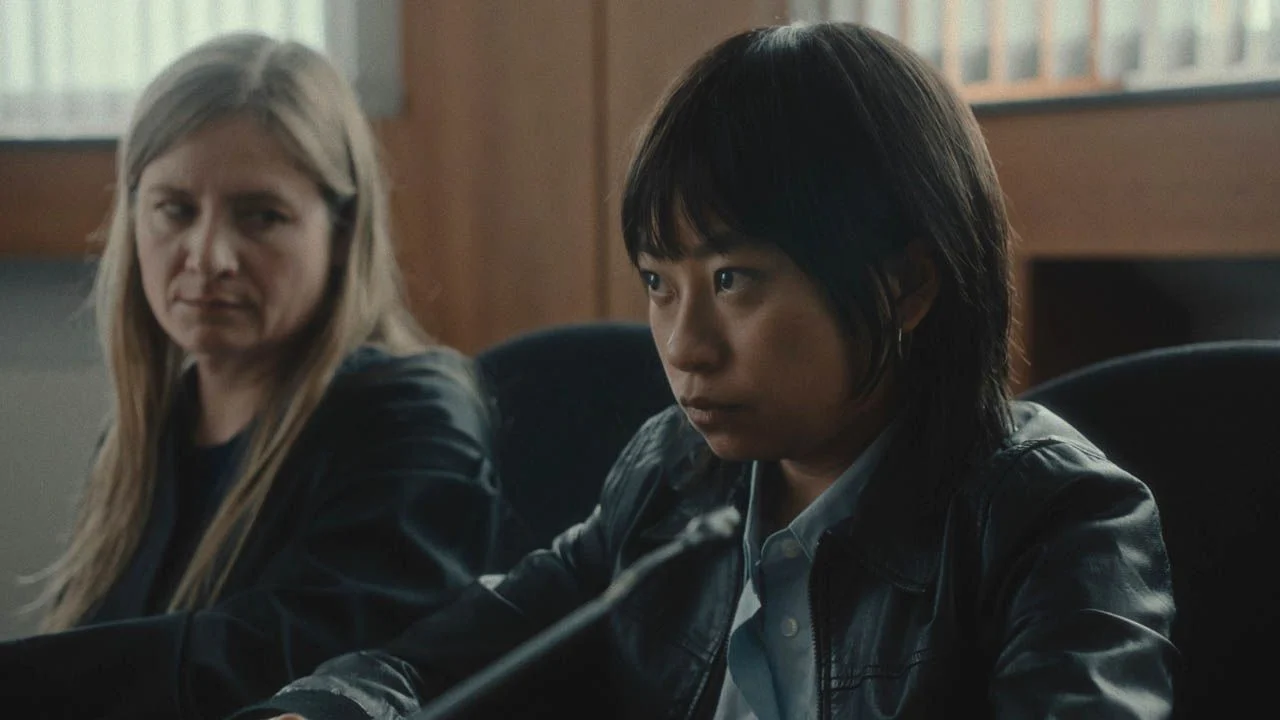
VERDICT: Faraz Shariat's second feature is a slickly packaged, politically charged crime thriller about a young German-Korean state prosecutor targeted by neo-Nazi racists.
Rowdy cheers greeted the sold-out Berlinale world premiere of anti-racist thriller Prosecution, particularly when the festival screening host expressed her view that “political urgency and artistic vision go hand in hand.” Most of the audience took this as a pointed rebuttal of last week’s contentious claims by Jury president Wim Wenders about cinema being “the opposite of politics.” Director Faraz Shariat’s second feature certainly has plenty of critical points to make about power, corruption and anti-immigrant hostility in contemporary Germany. Crucially, it is also a gripping, fast-paced crime drama with a kick-ass heroine, a strong ensemble cast and a keen sense of style.
Fariat returns to the Berlinale program six years after launching his prize-winning debut at the festival, Future Drei (No Hard Feelings) (2020). In the interim he has directed and produced various TV projects, some through his production company Jünglinge Film, which specialises in framing feminist, queer and post-migration stories in a glossy “activist popcorn” package. Prosecution ticks all those boxes and more, never forgetting its primary duty to entertain. Deluxe genre elements and timely themes should help it hook more festival slots and wider audiences following its buzzy Berlin launch.
Prosecution centres on Seyo Kim (Chen Emilie Yan), an ambitious young German-Korean state prosecutor currently on workplace probation in a small East German town. Bound by strict legal definitions of neutrality, her work often involves defending violent extremists who brazenly wear Nazi symbols in court. But such is the price of working for “the most objective system in the world,” as the office mantra goes. This blind justice approach frequently brings her into conflict with campaigning lawyers like Alexandra Tiedemann (Julia Jentsch), who approaches her job from a more overtly left-leaning social-justice angle.
But Seyo’s faith in her lofty principles start to unravel after she is targeted in a potentially lethal racist attack, knocked off her bicycle then set ablaze with a flaming Molotov cocktail. Fariat stages this set-piece sequence with aplomb, using kinetic camerawork, rumbling sound design and menacing music for extra dramatic impact. Burned, battered but unbowed, Seyo begins by entrusting the case to local police and her fellow prosecutors. When they appear to be dragging their feet, she takes on the hunt for the attackers herself, risking her career by defying strict office protocol and stealing classified files. As an extra precaution, she also begins firearms training and buys a jet-black bulletproof car, which nudges Prosecution teasingly close to The Girl with the Dragon Tattoo territory.
Enlisting her former courtroom sparring partner Tiedemann as her lawyer, Seyo initially brings charges against a single far-right extremist, Pascal Röder (Max Krause). But as the trial progresses, she starts to unearth disquieting connections between police, public officials and a wider network of neo-Nazis linked to attacks on immigrants and asylum seekers. Legal dramas tend towards dry procedurals, but Fariat milks these scenes for maximum tension, amplified by Seyo’s growing awareness of lurking threats and a disturbing, Kafka-eque clash with racist traffic cops.
Around this central legal drama, Fariat and his screenwriters give Seyo a skimpy back story, including an underwritten relationship with a girlfriend, Min-Su (Kotbong Yang), which could have more narrative weight. The neo-Nazi characters and their entourage are little more than one-dimensional cyphers too. Nobody coming to see Prosecution will want to empathise with racist thugs, of course, but some psychological insight into their hateful motivation might at least have deepened the dramatic waters. All the same, this is a glossy, gripping, good-looking thriller overall. Yan proves especially impressive in her debut screen role, smoothing out the occasional bumpy plot wobble with her magnetic ninja-level intensity.
Prosecution is not directly based on real events but it does draw on numerous true crimes over the past 25 years, including a series of nationwide murders committed by fascist terror group National Socialist Underground between 2000 and 2007. In the subsequent trial, several police and intelligence officers were exposed as far-right sympathisers. Fariat ends this saga of karmic justice on a cautiously hopeful note, but makes it clear this is just one battle in a never-ending war. Indeed, his open-ended finale seems to signpost a possible sequel or TV series spin-off, with Seyo as a relentless angel of vengeance in the Lisbeth Salander mode.
Director: Faraz Shariat
Screenwriters: Claudia Schaefer, Jee-Un Kim, Dr. Sun-Ju Choi
Cast: Chen Emilie Yan, Julia Jentsch, Alev Irmak, Arnd Klawitter, Sebastian Urzendowsky, Kathrin Angerer, Max Krause, Kotbong Yang
Cinematography: Lotta Kilian
Editing: Friederike Hohmuth
Music: Gabríel Ólafs
Sound Design: Henning Hein
Production Design: Dario Mendez Acosta
Producers: Paulina Lorenz, Jorgo Narjes, Faraz Shariat
Production company: Jünglinge Film (Germany)
World sales: New Europe Film Sales
In German, Korean
113 minutes