Molly Kim Joins JEONJU’s Programming Team
.
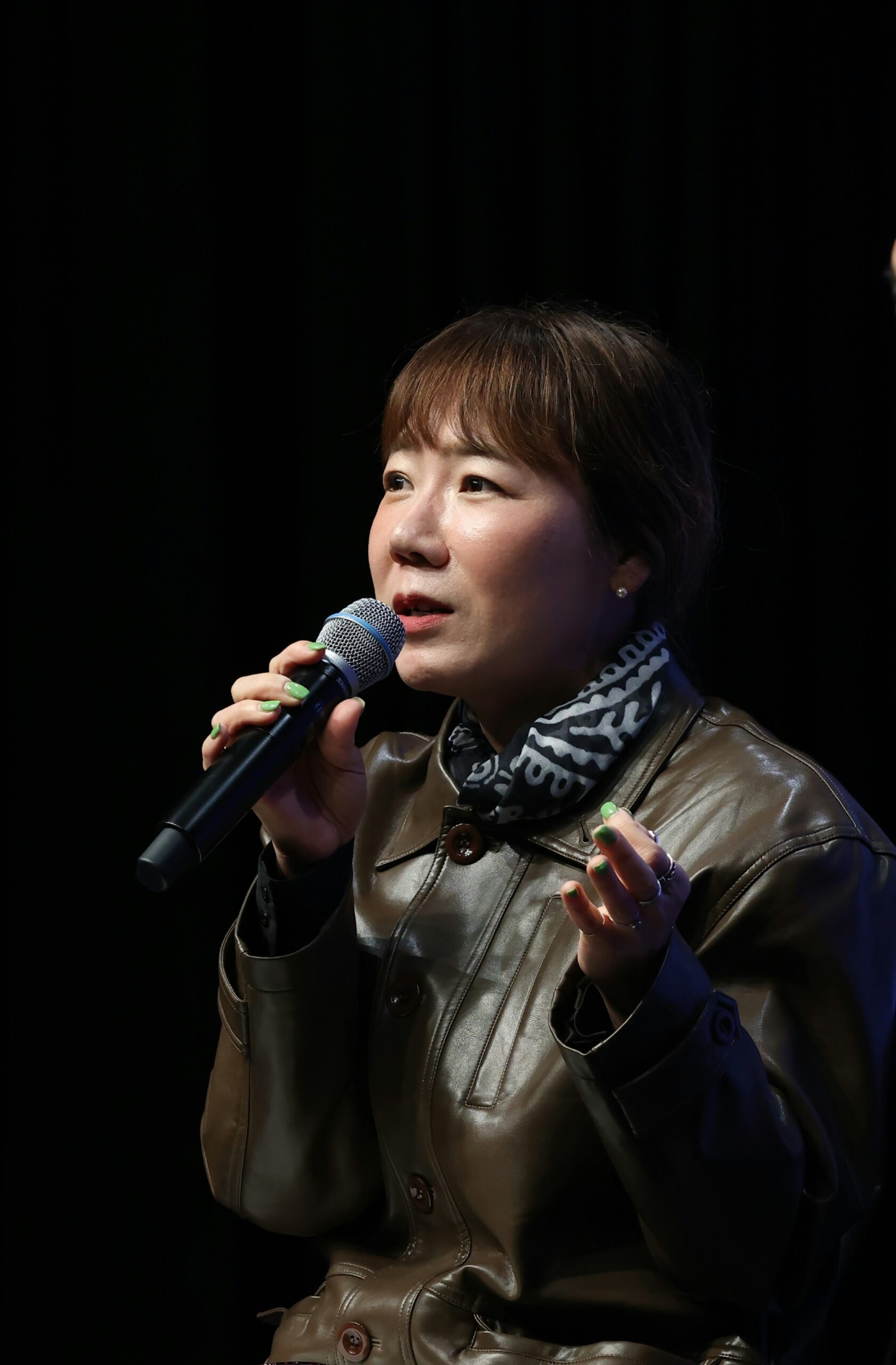
VERDICT: New JEONJU programmer Molly Kim reflects on what it means today to select films for one of Korea's top festivals.
The city of Jeonju will welcome guests and visitors for the upcoming edition of the JEONJU International Film Festival (JEONJU IFF), running from April 29th to May 8th. Molly Kim, a new programmer on the team, spoke with The Film Verdict about her first year on the job, her thoughts on the current state of the film industry, and offered a role model for the 27-year-old festival.
Interview by Cho Hyo-jin.
The Film Verdict: When did you begin your tenure as a new programmer at the JEONJU International Film Festival? How was your start?
Molly Kim: I officially started last November, which wasn’t very long ago. I expected to be incredibly busy from the get-go, but it turned out to be a relatively slow season as it fell between major film festivals abroad, during which I actively seek out films to invite. What I did was to contact all the friends I had made along my decade-long career as a film critic and festival programmer and ask for any current projects that I should know about. I ended up inviting a few titles this way. Purehearted is a film I learned about through an actor friend. Of course, it has its own cinematic merit, but inviting it felt especially meaningful because it taught me the fulfilling sense of making something happen by working with my friends and their networks, as opposed to working as a critic, which is largely a solitary practice.
TFV: What was your experience as a festival programmer before JEONJU IFF and what does it feel like to work for this festival in particular?
MK: I have done around five festivals. Some of them are small and local; some no longer exist. JEONJU IFF is one of the three major film festivals in South Korea and the biggest one I have ever worked on. Plus, it has a very distinct legacy and identity built over its 26 years of history. So, I feel like I am myself debuting on a stage where my selections will be judged, like a mackerel on a cutting board, which is intimidating. But there are aspects that I’m very proud to be a part of, including the festival’s commitment to protecting programmers’ autonomy in making decisions.
TFV: What did you notice watching the submissions? Were there any noticeable trends in filmmaking in South Korea and around the world?
MK: In the Korean submissions, I noticed a growing number of films about filmmaking itself, often focusing on the hardships and conflicts of the process. At first, I found this entertaining, as I’m part of that community too. But this year, nearly a third of the Korean submissions I watched fell into that category, making the overall entries feel less diverse. It may reflect the current state of film education in Korea. Increasingly, I find works by filmmakers without formal film school backgrounds more interesting, the number of which has grown as filmmaking becomes more and more accessible.
Many international submissions address on-going wars. But because independent productions often lack the resources to depict large-scale conflicts directly, they tend to opt for more intimate approaches; how one’s little corner in the world has been affected in the face of such big forces. For example, one film in our program, How to Divorce During the War, follows a Lithuanian couple navigating their divorce amid the Russia-Ukraine war. I expect to see more films using this personal lens to explore overwhelming crises.
TFV: While a big part of festival programming is identifying great cinema, it’s also about expressing what the festival stands for. What is your approach to making selections?
MK: Programming can be very powerful, especially on a platform of this scale. Championing certain works is a political statement in a way. I have always aimed to use that power to support diversity, which was a key focus for me this time, not only in terms of sexuality, ethnicity, and gender but across a wide range of perspectives. So, we are playing Barbara Forever, a documentary about the legendary filmmaker and queer activist Barbara Hammer. I also curated the special program, “Special Focus: New York Underground – The Mavericks”, which includes works by Robert Downey, Sr., Jack Smith, and Carolee Schneemann. These films emerged from a period of radical changes and display such diverse voices, charged with possibilities of revolution. Securing screening rights for the titles was harder than I thought, but it was worth the effort. Most of these titles have been previously screened in Hong Kong or in Japan, but not in Korea. I wanted to help bring more diversity to our program.
TFV: Are there any sections you hope will attract more audience attention this year?
MK: Aside from the Special Focus I just mentioned, I would highlight Cinema Fest, which may sound surprising. I’ve heard that the section has been less central to the festival identity, given its audience-friendly and family-oriented nature, which is not what JEONJU IFF is typically known for. I wanted this section to be more interesting while keeping it accessible, so I started working on it early. I’m happy to screen films like Tow and Derek vs Derek that are not overly complex but genuinely enjoyable while offering us things to think about.
TFV: What are some of the events during the festival that you are most looking forward to?
MK: There is a documentary title, She, by filmmaker and anthropologist Parsifal Reparato, about Vietnamese female workers at a Samsung manufacturing plant. The focus on women reflects a difficult reality: they are often perceived as more vulnerable and thus easier to exploit. The director will visit Jeonju for post-screening talks, and we have arranged a special conversation between him and a Korean documentary filmmaker. Her documentary, Colorless, Odorless, screened at JEONJU IFF last year. It examines the health risks and grave illnesses imposed on the workers at Samsung’s semiconductor factories. It’s a rare and exciting opportunity to bring together two documentarians exploring closely related issues in different contexts, and to hear them engage directly with one another.
TFV: In the press release announcing your appointment, you stated that it is a crucial time when film festivals, the industry, and generations of artists are experiencing dynamic changes. What did you mean by that, and what do you see as the role of a programmer or festival in this age?
MK: I was referring mostly to the changing landscape of the medium. We are presenting Special Focus: New York Underground with films from the 60s and 70s, a period when the film industry was challenged by the success of television. In many ways, today feels similar. Cinema is reshaped not just by streaming platforms but also by YouTube and other alternative media. Accordingly, some core characteristics of the industry are shifting. Most prominently, budgets have decreased significantly. The upside is a generational shift, allowing younger filmmakers more opportunities. Even in our Competition sections, there is a strong presence of emerging talents. More people of diverse backgrounds also get to create as the conditions of filmmaking have been made more accessible. At this time of transition, festivals should reflect and respond to these changes. That is why we are introducing a new section, Possible Cinemas, which looks at possible filmmaking approaches under limited resources.
TFV: Do you have a festival role model for JEONJU IFF?
MK: The Udine Far East Film Festival. It’s the one festival I look forward to attending every year and always wish I could stay a little longer. Like JEONJU IFF, during the week or so of the festival, all you do is watch films and connect with other guests. One thing they do especially well is bringing people together. The festival regularly hosts shared meals where we get to meet someone we didn’t know before, and those encounters can lead to a new friendship and a new collaboration. That is, in my opinion, the true asset and the greatest strength of the festival. You go to the festival and come back enriched with new relationships. I believe JEONJU IFF has the resources and charms to offer that kind of experience. It can become such a friendly place that you just want to visit for the joy of it.