John Lennon: The Last Interview
John Lennon: The Last Interview
VERDICT: Well crafted but inevitably low on surprises, Steven Soderbergh's controversial AI-enhanced documentary is based on a familiar radio interview the legendary ex-Beatle recorded just hours before his murder.
One of the most hotly anticipated films to premiere in Cannes this week, and also one of the most contentious, Steven Soderbergh’s AI-enhanced documentary John Lennon: The Last Interview wraps some very familiar material in a slick audio-visual package. Of course, anything related to the Fab Four is sure to attract a healthy audience, backed up by plenty of generous, uncritical reviews from pre-existing fans. All the same, once the hype dies down, this is a slender, pretty superfluous addition to the Beatles Cinematic Universe, a minor film from a major film-maker.
Soderbergh’s film is built around a lengthy audio interview that Lennon and Yoko Ono recorded in their Dakota Building apartment in Manhattan on January 8, 1980. It was conducted by San Francisco radio station KFRC’s Laurie Kaye, Dave Sholin and Ron Hummel, who all share their memories in contemporary interviews here. A fourth member of the delegation, record label executive Bert Keane, died during this film’s production.
After a long break away from music, chiefly for Lennon to play domestic homebody and bond with his new son Sean, he and Ono granted this rare interview to promote their new album, Double Fantasy. The 40-year-old rocker talks up this comeback in gushing terms, as a full-blooded creative rebirth, with more studio sessions and live dates in the pipeline.
The interview team were warned not to mention the Beatles, but Lennon brings up his former band unprompted, speaking with rare warmth about his close bond and creative chemistry with Paul McCartney. He also raves about the joys of fatherhood, his undimmed love for Elvis Presley and Little Richard, his open-minded enthusiasm for disco and New Wave music, and more. In addition, he and Ono discuss their shy early courtship, their shared love of conceptual art, the highly personal man-woman dialogue that runs through Double Fantasy, their 18-month “failed separation” in 1973-74, which came to be known as Lennon’s “Lost Weekend”, and other topics. They come across as endearingly frank, self-effacing and blissfully contented.
Of course, just hours later, Lennon was murdered outside the Dakota by Mark Chapman. The radio team even shared a few words with the killer as they left the building, which they reflect on here. Soderbergh does not dwell on this tragedy, keeping it to a brief coda, but it inevitably casts a doleful shadow over a wide-ranging interview that otherwise fizzes with so much renewed optimism and lust for life.
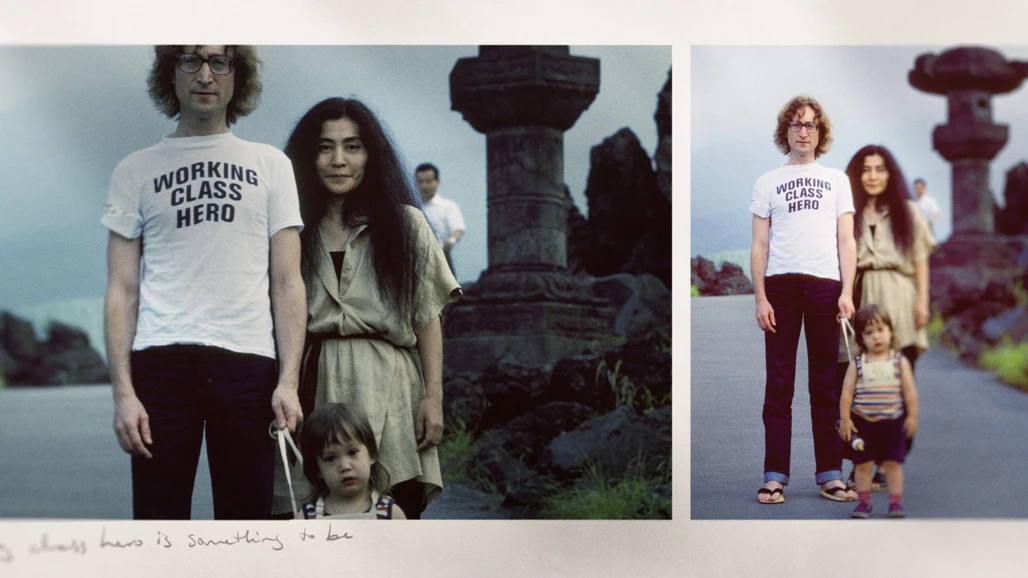
Serving as his own cinematographer under his regular alias Peter Andrews, Soderbergh frames a carefully filleted collage of interview clips in a rich visual backdrop featuring thousands of archive photos, mixing familiar publicity images with charmingly informal family snapshots, many of them enhanced with psychedelic colour splashes and sparing bursts of digital animation. The audio track also includes vintage Beatles songs alongside Lennon’s solo work, an impressive mixtape of 64 titles that never feels too cluttered or intrusive.
The Last Interview is fully endorsed by Lennon’s surviving family, although Ono and Sean Lennon only appear in archive clips and photos, not in contemporary footage. It plays like a polished memorial to the late Beatles legend, but inevitably lacks fresh twists or new insights. After all, the original radio interview is already well known to even casual fans, having been widely reproduced in books, articles and documentaries. In addition, the full three-hour version can be heard on social media. Soderbergh’s distilled cinematic remix will doubtless play well with Lennon’s huge global fanbase, but it has no pressing reason to exist beyond adding more cash to the multi-billion-dollar Beatles nostalgia industry.
The most controversial aspect of The Last Interview in the build-up to Cannes has been Soderbergh’s use of Meta’s AI software to generate extra visual material to supplement the audio clips, specifically his detours into “thematic surrealism” for sections in which Lennon and Ono discuss more abstract subjects like love and peace, spirituality and gender politics. Mindful of how divisive this new technology is, the director has downplayed its role, insisting that AI only features in barely 10% of the film’s running time, with no digital simulations of Lennon himself.
Soderbergh’s defensive claims prove accurate, and yet these hallucinatory tableaux still feel jarringly superfluous and gaudy, from super-sized flowers to gleaming sci-fi cityscapes to arm-wrestling cavemen. Arguably, if the Beatles were active today, they might well embrace this new cutting-edge creative technology just as they pushed the envelope of studio experimentation in the 1960s. Even so, these sequences are a distraction at best, an annoying gimmick at worse, and perilously close to kind of deluxe AI slop that floods social media every day. They do not wholly negate the modest charms of The Last Interview, but they do feel like an oddly clumsy inclusion, and a rare misstep from such a style-conscious film-maker.
Director: Steven Soderbergh
Cinematographer: Peter Andrews
Editor: Nancy Main
Creative director: Carolyn Carmines
Archival producer: Lindsay Kelliher
Motion graphics and design: BigStar Motion Design
Producer: Nancy Saslow
Supervising producer: Jeremy Powers
Executive producers: Michael Sugar, David Hillman, Nancy Saslow, David Hudson
Production companies, world sales: Mishpookah Entertainment Group (US), Sugar23 (US)
Technology partner: Meta
Venue: Cannes Film Festival (Special Screenings)
In English
100 minutes