
Backrooms
Backrooms
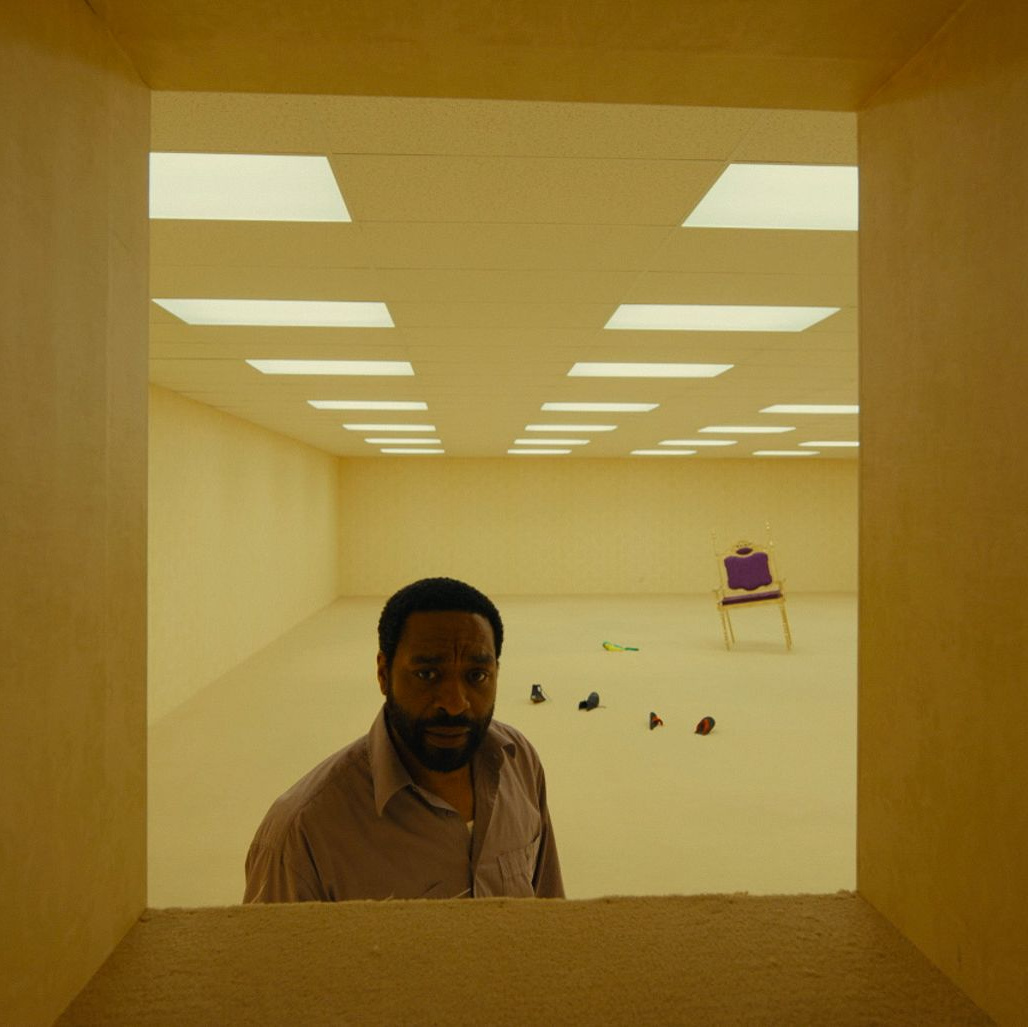
VERDICT: Adapting his viral online short, director Kane Parsons has crafted an unsettling nightmare set within the architectural confines of a troubled psyche.
It’s a dream we’ve all had: You’re somewhere that’s both familiar and off-putting, a location that at first makes sense but then reveals itself to be a labyrinth to nowhere, with hallways and doorways seemingly leading you onward but eventually trapping you someplace that is no place. That unsettling sensation is perfectly captured in Backrooms, an impressive directorial debut for Kane Parsons, a filmmaker barely old enough to buy himself a beer. Expanding from his viral online series, he demonstrates that set design and color scheme can be as disturbing as gore or mayhem.
Granted, even the film’s “real” world of 1990 is off-putting enough, particularly since one of the main settings is a cut-rate furniture store that seems to specialize in the cheapest, tackiest, and most hideous living-room sets imaginable. Working there is enough to send Clark (Chiwetel Ejiofor) into a tailspin, although he’s got other problems; his rage and his drinking drove his wife to kick him out of his house, and his sessions with therapist Mary (Renate Reinsve) don’t seem to be helping all that much.
One night, Clark sees light coming through what seems like a seam in an otherwise solid wall in the store’s basement, and he discovers that he can walk through the wall into an alternate dimension, one designed with nauseatingly yellow accents and architecture that grows more and more illogical. (“Imagine describing a dog to someone who’s never seen a dog,” he tells Mary, “and then asking them to draw you one.”)
Is this dimension real or imagined? Is Clark its creator or its victim? Can Mary save Clark from this dimension, or from himself? And what does scientist Mark Duplass, lurking at the edges, have to do with any of this?
The less viewers know going into Backrooms, the better, and director Parsons and screenwriter Will Soodik (Ash vs. Evil Dead) nail one of the toughest assignments of the horror film by providing just the right amount of exposition. (Telling audiences too little can leave us baffled, while overexplaining takes away the nightmare logic and chilly mystery.) Matching their storytelling craft is the extraordinary design work of Danny Vermette, a frequent collaborator of Osgood Perkins (one of this film’s producers). If you never thought you’d be frightened by furniture placement or the slope of a ceiling, Backrooms may well change your mind.
Ejiofor manages to make Clark both relatable and frustrating, and while Reinsve plays Mary as something of a blank herself at first, we come to understand her background, her own troubles, and the reasons why she might not necessarily be a role model in the world of mental health. The actors feel at home in their 1990 costuming, and they respond to the bizarre confines of this mirror dimension with fully human empathy, sorrow, and fear.
With connective tissue linking it to both Skinamarink and Synecdoche, New York, Backrooms is a chillingly ambitious debut that finds the terror in enclosed spaces and echoing silences. It’s a screen nightmare that could easily work its way into viewers’ real ones.
Director: Kane Parsons
Screenwriter: Will Soodik
Cast: Chiwetel Ejiofor, Renate Reinsve, Mark Duplass, Finn Bennett, Lukita Maxwell
Executive producers: Alayna Glasthal, Jesse Savath, Judson Scott, Chris White
Producers: James Wan, Michael Clear, Roberto Patino, Shawn Levy, Dan Cohen, Dan Levine, Osgood Perkins, Chris Ferguson, Peter Chernin, Jenno Topping, Kori Adelson
Director of photography: Jeremy Cox
Production design: Danny Vermette
Editing: Greg Ng
Music: Edo Van Breemen
Sound design: Eugenio Battaglia, re-recording mixer/sound designer/supervising sound editor
Production companies: A24, Chernin Entertainment
In English
110 minutes