
Yunan
Yunan
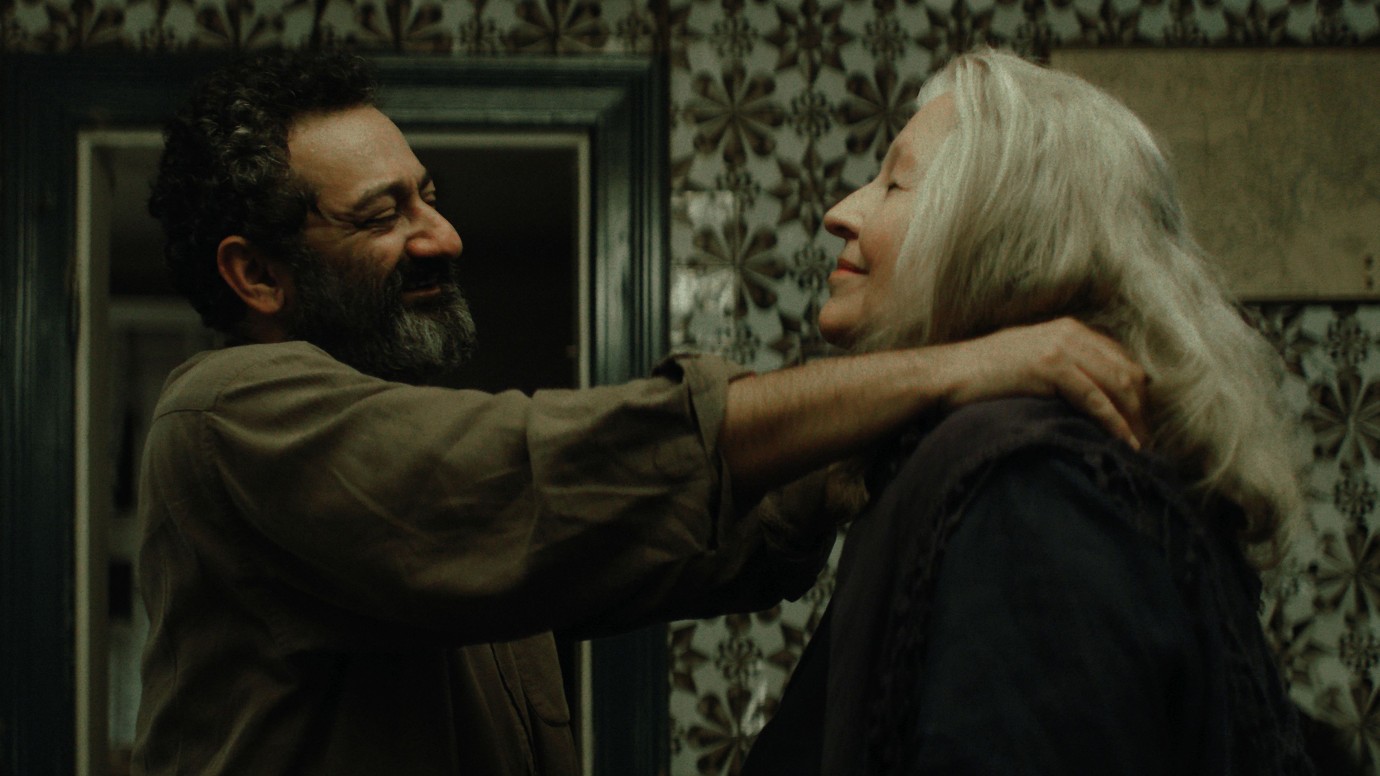
VERDICT: Georges Khabbaz and Hanna Schygulla bring a quiet yet powerful emotional force to 'Yunan', Ameer Fakher Eldin’s striking meditation on depression, trauma, and exile.
Syrian filmmaker Ameer Fakher Eldin deconstructs exile with a simple question: what happens to a person when going back home is no longer an option, yet resettlement elsewhere does not really feel like truly living? Yunan, which will have its Jordanian premiere at the Amman Intl. Film Festival – Awal Film, poetically explores Arab displacement but does not turn its characters into political spokespersons.
Yunan is part of the “Homeland” trilogy which Fakher Eldin began with The Stranger in 2021. Rather than returning to the occupied Golan Heights, the plot takes shape in the vast landscape of northern Germany. Munir (Georges Khabbaz) is an Arab writer living in Hamburg. After consulting with a doctor whom he visits to complain that he cannot breathe, medical tests show no apparent problem. But the source of his suffering lies somewhere, so he decides to travel to a North Sea island in Germany, and to stay in a guesthouse with apparently serious intentions of self-harm and even self-destruction.
The guesthouse he stays in is managed by Valeska (Hanna Schygulla) and her son Karl (Tom Wlaschiha). Valeska’s kindness at first is met with coldness and silence, while Karl becomes suspicious about the new guest who takes long walks across the island and by the sea. Little is revealed about Munir’s history. He is the survivor of a conflict that only he knows. He speaks to his aging mother on the phone several times, but also notices that she is slowly losing her memory. She is the last thread to home that Munir hangs on to.
The absence of details about Munir’s life is initially frustrating, as it fails to clarify what kind of trauma this man has gone through, other than being a writer in the Arab world, maybe. And yet, it also avoids presenting one particular migration story, but draws a broad-stroked sketch of displacement and exile, where survival is sustained through stories, language and memories, all of which he is gradually losing touch with.
With over 25 years of directing and writing for original Lebanese theater, actor Georges Khabbaz describes the very emptiness that through silence and repressed feelings tells a lot about a person’s journey, one that every viewer will make in their mind. The character delivers much of his communication through body language: awkward pauses, the heaviness of his steps, his defeated gaze, building a convincing picture of depression. In many ways, the film embraces the diversity of Arab migration stories, refusing to center around war and conflict, but rather opening the door to many possibilities. Its mysterious quality is not there to add thriller vibes or conventional suspense, but rather gives Yunan a poetic quality.
The imagery on occasion replaces deeper back-and-forth conversations. For this reason, Ronald Plante’s cinematography plays a crucial part in asserting Fakher Eldin’s vision of exile. Often, Munir is placed on the edge of the wide frame, reducing his existence to a solitary figure aganist the sea, mud, and sky. The film’s aesthetic plays a role in preventing visual monotony, and hence it contrasts breath-taking nature and the protagonist’s deep desire to disappear, allowing viewers to observe bodies and landscapes without a Netflix-like constant explanation.
Interestingly, Munir still cannot breathe freely despite being surrounded by all this fresh air. Despite living in a beautiful setting, depression continues to weigh on him. This almost empty island holds an effective mirror up to his condition. Because the islanders live with the constant possibility that they may be flooded by the sea at any time, they are forced to accept that leaving and adjusting are facts of life, as they cannot control the sea or undo a flood. Munir is in the same boat. He cannot undo exile, or recreate a home elsewhere. The only way forward is to march on while carrying his loss.
The connection between Valeska and Munir is honest and non-possessive. Fakher Eldin tailors his script to avoid romance and white-savior clichés. Here, Munir, the brown Arab man, does not need saving, and is not shown a better way of life by Valeska. Her intervention recognises the crisis he is in. It does not cure his depression, but it interrupts the isolation he is trapped in.
Wisely, the film makes no promises for a complete recovery, nor does it pretend to solve the issue of exile or the crisis of living in a new place. Yunan suggests that the attention and care Munir receives make death less appealing, and a poetic appreciation of finally finding someone who notices that he is still breathing, and suffering. Yunan premiered at the Berlinale in post-2023 Germany, at a time marked by heightened anti-immigrant discourse that continues to intensify in the public sphere and in decision making, while solidarity with migrant communities is demonised. Fakher Eldin imagines solidarity not as a grand declaration, but as the simple act of refusing to abandon a stranger in his despair.
Director, screenwriter, Editor: Ameer Fakher Eldin
Cast: Georges Khabbaz, Hanna Schygulla, Tom Wlaschiha, Ali Suliman, Sibel Kekilli, Laura Sophia Landauer
Producers: Dorothe Beinemeier, Jiries Copti, Tony Copti, Steffen Gerdes
Cinematography: Ronald Plante
Music: Suad Bushnaq
Production companies: Red Balloon Film, Microclimat Films, Intramovies, Fresco Films
Venue: Amman Intl. Film Festival – Awal Film (Out of Competition)
In Arabic, German
125 minutes