
Adham Youssef Picks MENA Titles Worth Remembering
.
VERDICT: Refugees of the Sudan civil war, missing family members and remodeling a cinema.
BABA WA GADDAFI (Jihan El-Tahri, Libya)
Searching for her missing father Mansour Rashid Kikhia, director Jihan El-Tahri presents a film shaped by absence, despair, and hope. El-Tahri makes sure her family’s story is told within the political history of modern Libya, before and after Muammar Al-Gaddafi’s rule. The film allows uncertainty and partial testimony (as many family discussions go) to give it a moral weight, suggesting that forced disappearance is not an isolated tragedy for one family, but a political epidemic that has plagued the nation.
THE SETTLEMENT (Mohamed Rashad, Egypt)
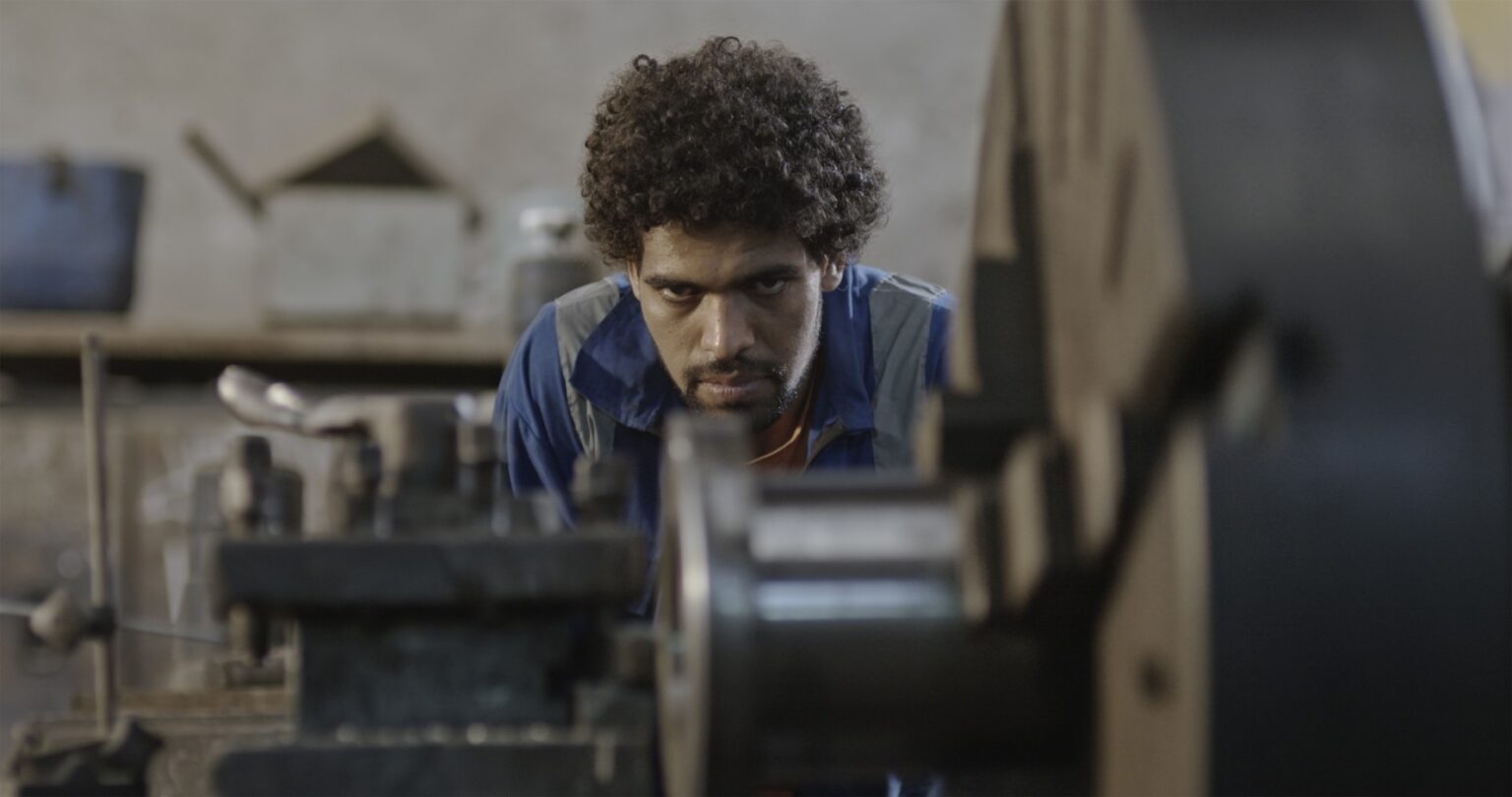
The desire for normalcy collides with the inescapable weight of inheritance. Set in a working-class neighborhood far from Alexandria’s romantic image, the film follows Hossam as he is forced to take his dead father’s factory job as compensation for a fatal accident. The film avoids easy condemnation of corruption, focusing instead on reintegration, family burden, and fragile attempts at redemption. The factory emerges as a central character: a bleak, post-apocalyptic world of endless labor. Hossam is neither hero nor victim, but an uncomfortable, volatile presence, whose contradictions allow the film an honesty rarely afforded to working-class characters in Egyptian cinema.
EXILE (Mehdi Hmili, Tunisia)
The body of Mohamed, who worked in a large steel factory on the brink of bankruptcy, becomes a battleground for corruption, grief, and uncovering a rotting system. Mehdi Hmili turns revenge into allegory to trace how loss and humiliation turn into resistance, and gives Mohamed agency to become a symbol of the workers’ struggle.
HABIBI HUSSEIN (Alex Bakri, Palestine)
Alex Bakri’s critical and power-conscious documentary chronicles the restoration of Cinema Jenin. Though it initially appears to be a modest NGO triumph to pump life into a long-shuttered movie house in the occupied West Bank, Alex problematises the “white man saviour” syndrome, highlighting the unbalanced power dynamics favoring the German team and NGO. Bakri rarely intervenes, allowing awkward and tense conversations, cringeworthy exchanges, small victories, and quiet humiliations to speak for themselves. This restraint, however, is deliberate and not passive, allowing for empowering storytelling.
LIFE AFTER SIHAM (Namir Abdel Messeeh, Egypt)
Like Youssef Chahine’s autobiographical quadrilogy, which explored his and his family’s defeats, shames, and victories, Namir Abdel Messeeh’s tender-hearted documentary turns private mourning into a quiet, searching act of cinema. Avoiding sentimentality, the director arrives at the conclusion there is no clear life “after” Siham. His parents don’t simply vanish. Their existence passes into stories, pictures, and letters that they leave behind, and most importantly, they pass on their habits and bodies to their children and grandchildren. Abdel Messeeh, like anyone grieving for a loved one, doubles back, contradicts himself, and lets memory remain unresolved
KHARTOUM (Anas Saeed, Rawia Alhag, Ibrahim Snoopy, Timeea M. Ahmed — Sudan)
Rather than follow a single narrative, this brilliant documentary describes multiple lives exiled from one’s homeland. Sudanese refugees scatter after the start of the 2023 Sudanese civil war. The extremely personal approach allows the four filmmakers to create scenes that alternate between real locations and green-screen animation that visualizes the characters’ dreams. The mix of iPhone and professional footage, along with a score that shifts between playful hope and tension, reflects the emotional highs and lows of their journeys. The fourth wall frequently dissolves as the crew and equipment appear on screen and the filmmakers openly discuss reenactments with the protagonists.