An interview with Marnie Blok
.
VERDICT: The writer-director of 'Beyond Silence,’ which scooped the narrative short prize at Tribeca, discusses giving voice to victims of abuse and the overwhelming reaction of audiences.
Although certain high profile cases and the tide of the #MeToo movement has managed to bring sexual abuse into the public cultural conscience, it still remains infuriatingly difficult for people who come forward to find any justice. Marnie Blok’s short film, Beyond Silence, was the winner of the Best Narrative Short prize at the 2025 Tribeca Festival and tells a painfully common story of a young woman being advised to keep quiet about being abused or risk ruining a promising career in academia.
The Film Verdict caught up with the writer-director in January 2026 to discuss the making of the film, working with first-time deaf actress Henrianne Jansen, and the importance of helping abuse victims find a way to speak out.
The Film Verdict: It’s an obvious place to start, Marnie, but could you begin by telling us how the project came about.
Marnie Blok: I have lived through a rape myself a long time ago, so I do have focus on the subject and a huge amount of anger, not so much about my own rape but because it happens so often. Anger is a great place to create from. It’s bittersweet with the film right now that there are so many people relating to it. When I was still acting, I wrote a script on the subject that I shelved, but then a few years ago, I revisited the script and started doing research again. I was shocked to learn that, after #MeToo, reports of sexual abuse and violence went up by something like 70% which was hopeful, but actual charges being pressed only went up by only 1%. So, there is still a huge group of people that are silenced, either by themselves or by others. During #MeToo, the backlash of the movement, infuriated me. Reactions of women, mostly my age and older, showed they thought the movement was prudish and humourless, and they warned younger women not to become a victim. But, if you’re raped or abused, you are a victim. There’s nothing weak about it. It’s a fact. And talking about it isn’t weak either. So, when I combined those two things, I found the story I needed to tell – putting two generations together and to have them confront each other.
TFV: I’d like to come back to that central conflict, but first I wondered about when the idea arose to make Eva (the protagonist) deaf.
Marnie Blok: It was a metaphor for not being heard. I also knew from the beginning that this would be in one room, in real time, so I thought the use of sign language would also give me, both cinematographically and sound-wise, a powerful tool to work with. We don’t really have deaf actresses in Holland, so I had to go and organize auditions. For Henrianne [Jansen, who plays Eva], this is her very first role – she never acted before.
TFV: Oh, really? She gives an incredible performance.
Marnie Blok: She does! Before I started auditions, my production designer introduced me to Henrianne, because she was dating somebody that she knew. So, I talked with her, together with an interpreter and I decided to skip auditons and to go onto this adventure with her. I spent a lot of time with her — getting to know the deaf world was more complicated than I had expected. And we talked a lot about her life, my life, why I wanted to make this, and how she could connect to the theme. Luckily, she had never been abused, but we could tap into other experiences in her life.
TFV: So was it part of those conversations with her that led to how you play with sound in the film – often dropping out the audio so we’re immersed in Eva’s perspective?
Marnie Blok: In the script, I knew I wanted to have the silences so we would really be in her world. But working with my sound designer [Evelien van der Molen], we found out that total absence of sound was not working. Instead, she came up with a different solution that made the silence almost palpable.
TFV: Yeah, it sounds a bit like being underwater.
Marnie Blok: Exactly.
TFV: Speaking of the script, I wanted to ask you about the generational conflict you mentioned earlier. Tamar van den Dop’s character is an antagonist to Eva and Anna but also has her own story to impart.
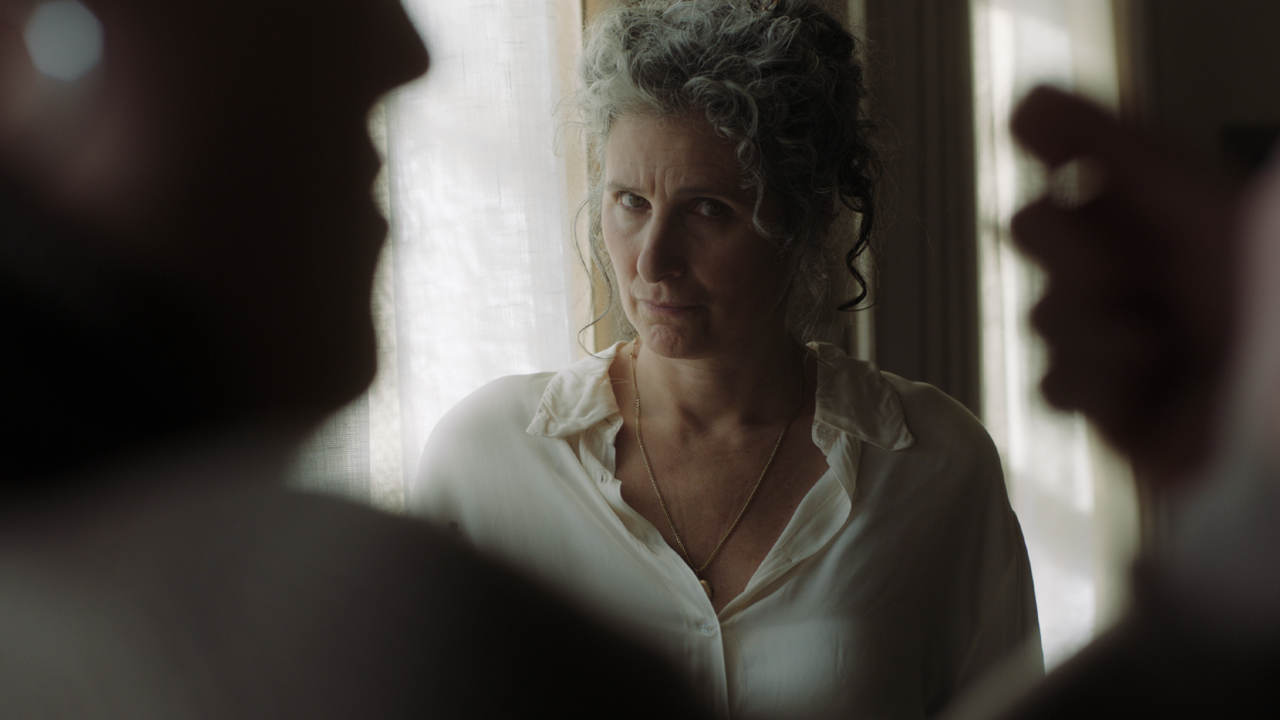
Marnie Blok: Yes, it’s all about her being of another generation. When #MeToo came, I realised I had put up with so much that I shouldn’t have put up with as an actress, as a woman. Sandrine, the character, stands for a whole generation that has been silent for decades. We are, at least, a bit more vocal about it right now, and so I could sympathise with her at the same time. I think she is unable to relate, although the younger generation is giving her a hand – giving her a chance. But if she would grab it, she would betray the 30 years of being silent herself.
TFV: I noticed in the press materials for the film some writing about your decision to have a team with female crew members in key positions. Could you speak a bit about both that decision and its impact?
Marnie Blok: all the women I wanted to work with were not there because they were women, but because they are very good. I knew from the beginning I wanted to work with DOP [Myrthe Mosterman], and the editor [Annelien van Wijnbergen] I have known for a very long time. One of our producers said they would really like all the department heads to be women and I said, ‘I can comply with that, but only if I think they are the ones that I really want.’ There were a few male crew members, for instance our composer and one of my producers. I wanted both for this project, so we were not inflexible about this aim.
The more I talk about this movie, and the more I talk with people that saw the movie, I’m happy there were men as well. Because, you know, we need men to be part of this. Many men have come up to me saying they are on our side, they would never misuse their power, and I completely believe them, but being on the right side is not enough. You have to get involved.
TFV: Absolutely. You’ve mentioned responses to the film a few times now: what has the general reaction been like since your premiered at Tribeca?
Marnie Blok: People have been very willing to share their stories. We were in London a couple of weeks ago, and had a screening, and a girl came up to me in tears saying, ‘I’ve seen now a deaf girl without words, finding words. And this is really encouraging. I’m going to find words as well. I’m going to finally speak.’ I was in tears myself because that’s what you hope for. Most people who come up have been women, but also some men have come up to me and said they were really touched, either because of their own story or because of stories of female friends, or their own loved ones that they now understood better. I’m overwhelmed by all the responses and, as I said earlier, it’s bittersweet because it’s wonderful – I’m incredibly grateful that the film finds its audience worldwide – yet it’s horrible that there are so many people who can relate to it.
TFV: Yes, it’s gut-wrenching, though sadly unsurprising, that Eva’s experiences in the film are so universal.
Marnie Blok: A couple of months ago, there was a girl [who biked home from the centre of Amsterdam to the outskirts and got raped and killed. It was big time in the news and women came up and said, ‘we are reclaiming the night, and we are reclaiming the streets,’ which was a good thing. But 45 years ago, that exact sentence was on the walls in Amsterdam. 45 years and there is so little progress. But even me, after hearing about this girl, for a split second, I thought, ‘why did you take your bike in the middle of the night?’ And then I realized, that’s victim-blaming. She should be able to take her bike.’ I was talking to my daughter about it and, you know, as a woman – and I don’t want to over-dramatize it, but – you’re always aware of danger. It’s like brushing your teeth; it’s a fact of life. That’s insane, but it’s ingrained in in our society. We need an ongoing conversation to evoke change.
TFV: And is that what you ultimate want for the film, for it to stoke the fires of this conversation?
Marnie Blok: Yes. Silence may feel safe at first for people, but in the end, you are robbing yourself of your voice, and with that, you’re robbing yourself of a very basic human right – to participate and to be heard. I truly hope survivors to find their people and start talking. I hope the film does that. For those watching who are not victims, I think there is a decisive role to be played – get involved.
Read our review of Beyond Silence.