Berlin 2026: The Verdict
.
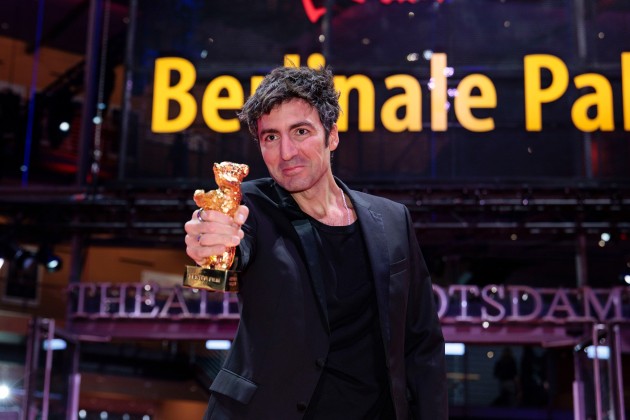
VERDICT: Ilker Catak's drama 'Yellow Letters' wins the Golden Bear for Best Film amid a firestorm of political debate.
Two films about Turkey that explored personal dilemmas within the greater context of society and politics, Ilker Catak’s Yellow Letters and Emin Alper’s Salvation, won the Golden Bear for Best Film and the Silver Bear Grand Jury Prize respectively, yet their accomplishments were largely overshadowed by political questions that had nothing to do with them. Unrolliing under the weight of a divided world wracked with wars, social upheaval, and the rise of authoritarianism, the 76th Berlin Film Festival asked itself some hard questions about the filmmaker’s role in a time of global crisis.
Controversy began at a press conference where Wim Wenders, the president of the main jury, was asked how the German government’s official support for Israel impacted the festival’s stance on Gaza. His blunt answer — that filmmakers needed to stay out of politics — became an instant soundbite that unleashed a firestorm of criticism on social media. Other side effects followed: Booker-winning author Arundhati Roy canceled her planned visit to the Berlinale to support a restored film, and more than 80 eminent artists and filmmakers including Tilda Swinton, Mark Ruffalo and Javier Bardem signed an open letter to the festival organizers urging them to take a clear stance on the war in Gaza. The debate lasted throughout the festival and cast a chill over an otherwise well-oiled Berlinale, stealing the headlines from the generally well-liked and well-selected film program.
Though the message that got through was quickly reduced to “films are the opposite of politics”, here is what Wim Wenders actually said about Gaza:
“We have to stay out of politics, because if we make movies that are dedicatedly political, we enter the field of politics. But we are the opposite of politics. We have to do the work of people, not the work of politicians.”
And for some counterbalance, it must be said that there have been some very strong politically and socially engaged films in the wider Berlinale program. For the opening film, festival director Tricia Tuttle chose No Good Men by Afghan director Shahrbanoo Sadat, a surprising depiction of Afghan life for women before and during the American pullout in 2021, underpinned by a riotous feminist romance. In Roya, Iranian director Mahnaz Mohammadi dramatizes her harrowing experience in prison.
Perhaps the biggest push-back to Wenders’ remarks – and, in a broader context, to how the German government has been handling political topics in the last couple of years – came from the festival attendees themselves, as the Audience Award went to the German courtroom thriller Prosecution, a very blunt indictment of the self-proclaimed objectivity of the national judicial system, particularly in the case of hate crimes and right-wing extremism. Traces offered the documentary testimony of Ukrainian women and men sexually assaulted by invading Russian soldiers. The fact that both Traces and Prosecution won Panorama Audience prizes might suggest that the festival public are more politically inclined than the festival organizers — or perhaps freer to express their views.
Ironically, or by design, Wenders’ jury chose to bestow its highest honors on two highly political movies. In Yellow Letters, the best film winner, director Ilker Catak directly addresses the fear-instilling injustice of the Turkish state in interfering with the lives of a theater director/playwright and his actress-wife, who summarily lose their jobs over a socially critical play and a slight to the authorities. Emin Alper’s Salvation symbolically traces the origins of political violence and war back to two neighboring Kurdish clans simmering with savage impulses and egged on by a self-styled Messiah figure. And in a slightly broader political context, there are the queer underpinnings of Sandra Huller’s award-winning performance in Markus Schleinzer’s much-admired film Rose, a startling historical tale about a soldier tired of war who settles in a village and marries, without anyone suspecting (except the audience) that he’s a woman. Interestingly, all three of these films are supposed to be inspired by real events.
In the trends-to-watch category, lots of black-and-white cinematography gave many films a special sheen, including Rose, Grant Gee’s Everybody Digs Bill Evans (winner of the best director award), and Fernando Eimbcke’s charming tale of love, loss and loneliness Flies, all visual standouts.
In general, children and the elderly were much on view, the former in films like Beth de Araujo’s Josephine featuring the fantastic child actress Mason Reeves as the eyewitness to a rape, and the Mexican Bastian Escobar as a boy alone in the city while his mom is in the hospital in Flies. Winner of best screenplay was writer-director Geneviève Dulude-de Celles for her fetching, offbeat tale Nina Roza, about an eight-year-old girl painter from rural Bulgaria who is hailed as a prodigy, and her ambivalence at the prospect of fame.
Taking home two prizes – the Jury Prize and the award for best supporting performance – was Lance Hammer’s Queen at Sea, an upsetting but never cruel story about an elderly couple played by Anna Calder-Marshall and Tom Courtenay, as the wife descends into cognitive decline. And the documentary Yo (Love Is a Rebellious Bird) by Anna Fitch and Banker White turns a woman in her eighties into a fascinating character who it is a delight to get to know. The film’s highly original set design, involving intricate miniatures of Yo’s house, won it the outstanding artistic contribution award.
Berlinale Shorts was, as ever, a rich collection of brief works up to 30 minutes, their makers ranging from emerging talents to seasoned directors like Radu Jude (who once again looked into the complicated recent past of Romania with Shot Reverse Shot) and Yolande Zauberman (who dedicated the screening of her film Les juifs riches to the memory of Frederick Wiseman, a master of the documentary form). As is often the case in this section, animation was particularly strong, the highlight being Unidentified Nonflying Objects (UNO), the latest by Russian director Sasha Svirsky. As he explained during the post-screening Q&A, that film also comes with a certain political baggage, as it was the first short he made after relocating to Germany four years ago due to his objection to the war in Ukraine. Also greatly appreciated was Cosmonauts, which was designated as the Berlin Short Film Candidate for the European Film Awards.
The main prize in the section went to Someday a Child, whose director Marie-Rose Osta already caught festival goers’ attention in Rotterdam a few weeks ago as one of the authors of the omnibus film Home Bitter Home. This time, in addition to delivering a powerful film where a young boy uses superpowers to repel invading aircraft, she used her platform to openly address the precarious situation in her native Lebanon as well as Palestine, once again showing that whatever informal gag order had been in place during the official press conferences was powerless against the voices of filmmakers who come to festivals to be heard and share their vision, with the latter sometimes rooted in a painful reality that needs to be acknowledged.