
Dust
Dust
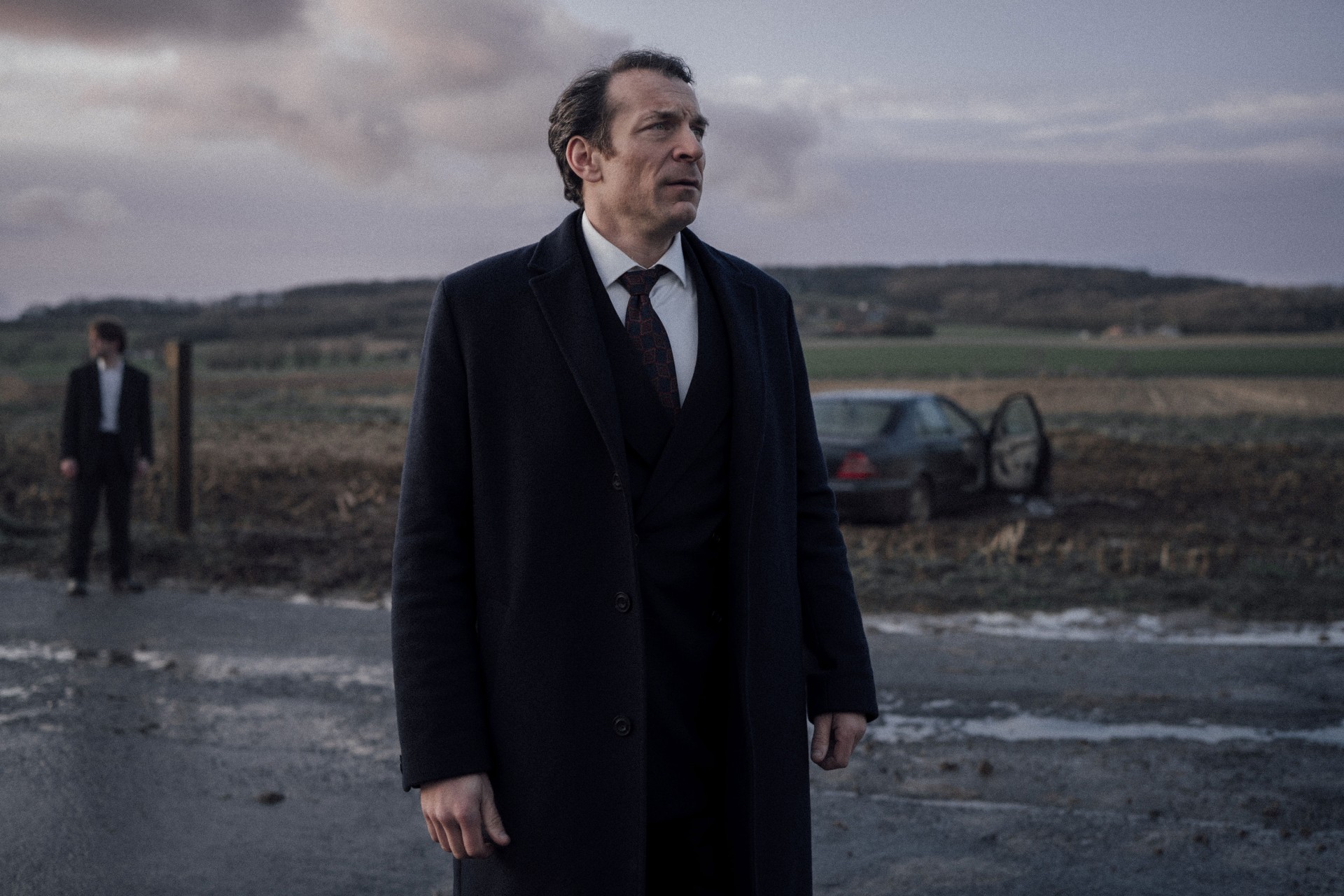
VERDICT: Anke Blondé's atmospheric psychodrama chronicles the downfall of two high-flying Belgian software tycoons consumed by corporate greed and alpha-male arrogance.
A slow crescendo of dread hums through Dust, a finely crafted business-world thriller set in the muddy rural hinterlands of western Flanders, in the Dutch-speaking northern region of Belgium. Director Anke Blondé (The Best of Dorien B) maintains a clear, cool, forensic gaze as she chronicles the mounting anguish of two highly successful entrepreneurs facing a gathering storm of disgrace, arrest and likely jail. The screenplay, by serial Lukas Dhont collaborator Angelo Tijssens (Close, Girl) takes boardroom crime drama conventions as a formal starting point, but then makes a sideways detour into more nuanced psychological terrain.
Blondé’s second feature shares an ominously brooding tone with Spike Lee’s 25th Hour (2002), another slow-burn drama about the crushing anticipation of imminent justice and incarceration. Devoid of shock twists, the fatalistic outcome is set in stone from the opening scene. So it is a credit to the film-makers, and their two excellent leads Jan Hammenecker and Arieh Worthalter, that they maintain a compelling thread of suspense throughout. Even though the narrative begins to drift a little in its second half, this is still a highly atmospheric, closely observed critique of corporate greed, snake-oil capitalism and performative alpha-male confidence. Fresh from its world premiere in the main Berlinale competition, Dust should enjoy healthy awards buzz and art-house audience potential.
Set in 1999, the film’s lightly scrambled, non-linear plot opens with company bosses Luc (Hammenecker) and Geert (Worthalter) flying high, jet-setting around the world pitching their new speech-recognition software. But soon they are crashing back to earth when news starts to breaks about the fraudulent shell companies they used to artificially inflate their own market value, duping thousands of local investors in the process. At a fraught emergency board meeting, the duo are forced to agree that surrender to the police is now inevitable.
With their fates sealed, Luc and Geert spend their final weekend of freedom in a fugue state of shame, blame and growing paranoia. Dishevelled and distraught, Luc returns home to his fully complicit wife Alma (Fania Sorel), pays a guilty visit to one of the company’s biggest investors, repeatedly tries to reconnect with his estranged daughter, and other small gestures of redemption. At the same time, he also takes great pains to conceal a hefty stash of illicit cash, beyond the reach of future police search warrants.
Meanwhile, the suavely inscrutable Geert retreats to his chic modernist villa with his young driver/lover Kenneth (Thibaud Dooms), the transactional nature of their relationship increasingly clear as the power balance shifts. This is a fascinating subplot, with a deliciously sour hint of Fassbinder. When his vague, impractical plan to flee abroad falls apart, Geert settles instead for trying to make his peace with family investors before the storm breaks.
Screenwriter Tijssens stresses the importance of this “queer time” interlude, an alternative angle on heteronormative notions of success and failure. Luc and Geert certainly have different lifestyles, but in key essentials they seem pretty similar. Both are status-driven egotists with flexible ethics and refined bourgeois tastes. When the pressure starts to bite, both become paranoid. Their reunion, late in the film, takes place in a humbling sea of mud, which plays both a literal and symbolic role in the plot. Dust might equally have been called Mud.
The true story behind Dust is pretty compelling. The film’s oddly evasive Berlin press notes simply call it a “very free interpretation” of a real financial scandal, with no further details. In truth, the plot closely mirrors the fall of Jo Lernout and Pol Hauspie, co-founders of Lernout & Hauspie Speech Products NV, hailed as one of Belgium’s most successful technology companies. The pair had ambitious plans to create a kind of European Silicon Valley in Flanders, until the Wall Street Journal exposed their history of fake transactions and improper accounts. In April 2001, Lernout and Hauspie, plus former CEO Gaston Bastiaens, were arrested and later sentenced to five years in jail. The company filed for bankruptcy soon afterwards.
Handsomely painted in autumnal shades by cinematographer Frank van den Eeden, with Poland standing in for Belgium, all swept along by Andrea Balency-Béarn’s powerfully gloomy score, Dust is a classy psychodrama only slightly weakened by its rambling, looping second half. Blondé and Tijssens never present Luc and Geert as sympathetic victims, but nor are they outright villains either. Just cogs in a bigger machine, brought down by their own hype and hubris at the dawn of the toxic tech-bro era. In that sense, this late 20th century period piece speaks very clearly to the current climate.
Director: Anke Blondé
Screenplay: Angelo Tijssens
Cast: Arieh Worthalter, Jan Hammenecker, Thibaud Dooms, Anthony Welsh, Fania Sorel, Janne Desmet, Fabrizio Rongione, Aldona Jankowska, Verona Verbakel
Cinematography: Frank van den Eeden
Editing: David Verdurme, Lambis Charalampidis
Production design: Stijn Verhoeven, Ewa Mroczkowska
Music: Andrea Balency-Béarn
Producer: Dries Phylpo
Production company: A Private View (Belgium)
World sales: LevelK, Denmark
Venue: Berlin Film Festival (Competition)
In Dutch, English, French
115 minutes