
Everybody Digs Bill Evans
Everybody Digs Bill Evans
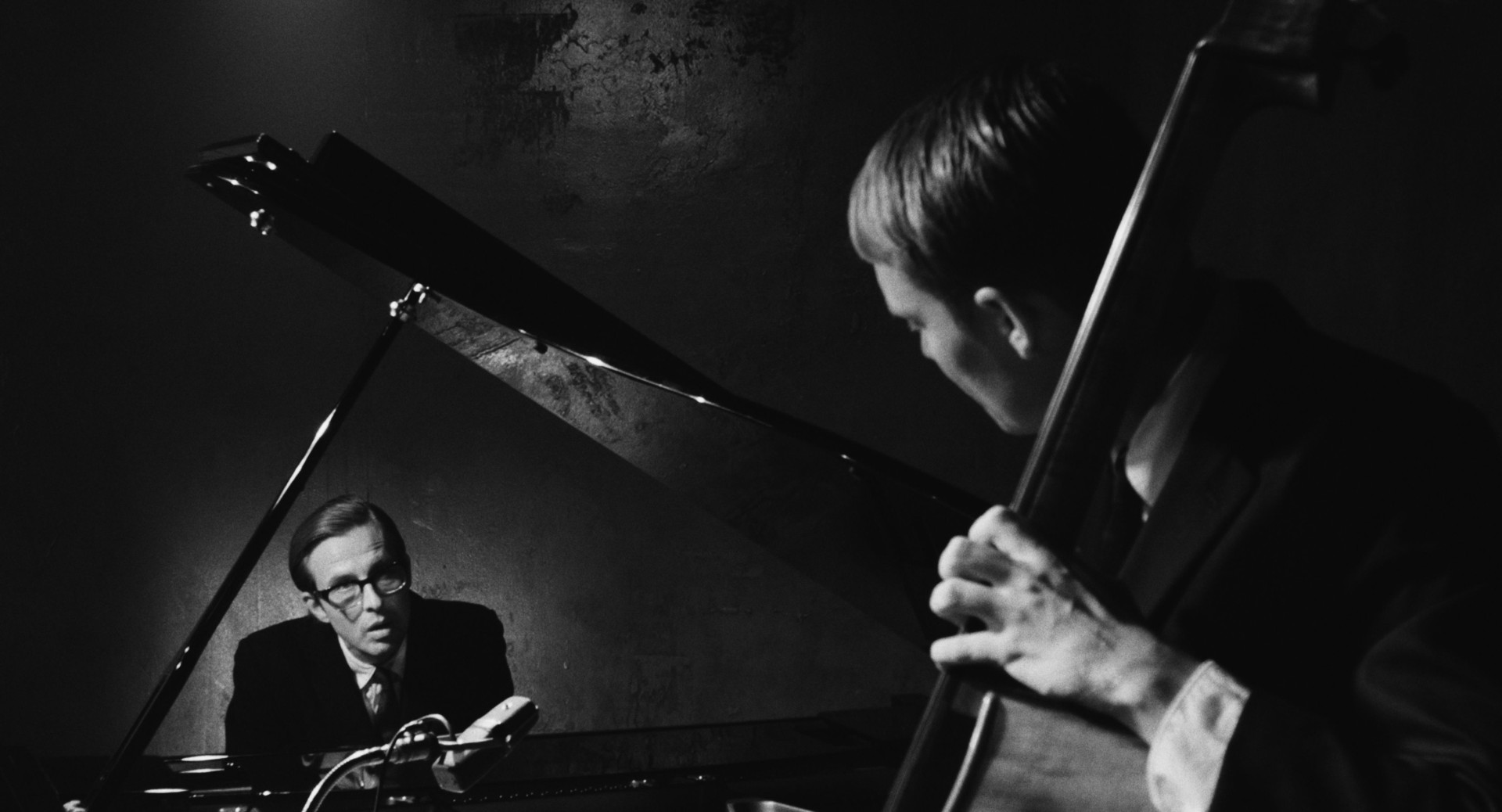
VERDICT: Documentary maker Grant Gee's debut dramatic feature offers a lyrical, fragmentary portrait of a troubled jazz icon at a crucial career crossroads.
Shifting his focus from documentary to biographical drama for the first time, British director Grant Gee explores the tortured psyche of a modern jazz icon in his impressionistic, stylishly shot Everybody Digs Bill Evans. Deploying much of the same high-art approach that he brought to his non-fiction films on Radiohead, Joy Division and the author W.G. Sebald, Gee creates a handsome package overall, even if Mark O’Halloran’s screenplay, adapted from Owen Martell’s 2013 book Intermission, is too skimpy on character context and narrative detail.
Shot in Ireland but mostly set in early 1960s New York City, the film’s noir-ish milieu and retro-chic monochrome look bear comparison to some classic jazz movies, from Shirley Clarke’s The Connection to Bruce Webber’s Let’s Get Lost (1988). There are echoes of the downbeat Coen brothers folk-rock bio-drama Inside Llewyn Davis (2013) here too, in the film’s empathetic depiction of an uncompromising musician trapped in melancholy limbo. World premiering in competition in Berlin this week, closely followed by a Dublin film festival launch next week, Everybody Digs Bill Evans has the appealing emotional intensity of a passion project. Much like jazz itself, it should find a devoted minority audience following its festival run.
A giant in modern jazz, Bill Evans was a classically trained pianist who worked with numerous legends, scoring a notable early breakthrough when he joined Miles Davis on his blockbuster best-seller, Kind of Blue (1959). “The sound he got was like crystal notes,” Davis once said of Evans, “or sparkling water cascading down from some clear waterfall.” Their partnership did not endure but Evans later found fame on his own terms, with a series of solo projects and trios, winning seven Grammys.
Rising Norwegian actor Anders Danielsen Lie (The Worst Person In The World, Sentimental Value) stars as Evans, pulling off a a credible American accent and plausible two-decade age jump in the course of the film. O’Halloran’s screenplay mostly depicts Evans as a withdrawn, depressive, chain-smoking junkie with little to say, so it is a testament to Lie’s acting prowess that he can still command a screen even when doing little more than Resting Jazz Face.
Named after a 1959 album, Everybody Digs Bill Evans is mostly shot on luminous black-and-white 16mm film, a self-conscious throwback to the cinema and photography of the era. It opens with the Bill Evans Trio playing cool, mellifluous, late-night jazz at the Village Vanguard in New York in June 1961, laying down tracks that would later form the basis of two highly regarded live albums. Ten days later, their bass player Scott LaFaro would die in a road accident, a tragedy that Gee elegantly conveys by super-imposing car wheels over reel-to-reel tape recorder spools,
Numbed from the loss, Evans takes a break from music, falling back on his family for support while privately taking solace in his deepening heroin addition. Initially staying with his older brother Harry (Barry Ward) and sister-in-law Pat (Kate McGrath), his days are listless and glum. He reconnect with his volatile on-off lover Ellaine (Valene Kane), bonding over their shared drug habit. These scenes have scant narrative momentum, but the sweetly fragile interplay between Evans and his niece Debby brings flashes of humour and tenderness. Evans would later dedicate a celebrated album to her, titled Waltz for Debby.
The film’s strongest sequence bring together two seasoned US screen stars, Laurie Metcalf (Roseanne) and Bill Pullman (Independence Day), as Mary and Harry Evans Sr., Bill’s parents. Staying at their modest family home on Florida as part of his recovery journey, Evans takes a back seat while Harry’s boozy, garrulous, thinly veiled insecurities and Mary’s sharp-tongued brand of maternal tough love fill the air with darkly comic chemistry. Metcalf and Pullman are both on grand autumnal form here, relishing these flavoursome character roles, playing off each other’s energy like – well, like jazz musicians.
Gee and O’Halloran punctuate this main 1961 narrative with sporadic flash-forward vignettes from the 1970s and early 1980s, each marked by a palette switch from monochrome to super-saturated colour. Each of these compact snapshots marks the death of a significant character, and the impact this has on Evans. As stylistic counterpoint from the main narrative, these cut-aways are aesthetically pleasing, but too brisk and sketchy to have make much dramatic impact. A little more biographical background would have elevated these brief scenes, particularly on the tragic life of the thinly drawn Ellaine.
The fine-art, collagist approach that Gee brought to his documentaries also informs his stylistic choices on Everybody Digs Bill Evans. Scratchy cuts, surface scuffs and arty blemishes on both the audio and video track amplify the sense of excavating a lost era of analogue fuzz and vinyl crackle, alongside text and graphics that pay homage to vintage album sleeve designs in the chic Blue Note style. Snippets of borrowed archive, including early New York footage shot by documentary legend D.A. Pennebaker, are also woven into the visual fabric.
Everybody Digs Bill Evans was produced and shot in Ireland, with a largely Irish cast and crew, which sometimes creates a charmingly off-kilter distancing effect. Ward can not quite suppress his Dublin accent, for example, while fleeting glimpses of boats bobbing along the shores of Country Cork never quite convince as the sweltering Florida coast. Nestled between vintage jazz recordings, Roger Goula’s glitchy, droning score is appealingly moody, but perhaps a little too avant-garde for a biopic about Evans, who favoured melody and harmony. All the same, this is a lyrical, polished and absorbing piece of work, not just taking jazz as its theme but made with some of the same soul-stirring, exploratory spirit.
Director: Grant Gee
Screenwriter: Mark O’Halloran, from the book Intermission by Owen Martell
Cast: Anders Danielsen Lie, Bill Pullman, Laurie Metcalf, Barry Ward, Valene Kane, Katie McGrath
Cinematography: Piers McGrail
Editing: Adam Biskupski
Music: Roger Goula
Production companies: Cowtown Pictures (Ireland), Hot Property Films (UK)
Venue: Berlin Film Festival (Competition)
World sales: Mister Smith Entertainment, London
In English
102 minutes