
Fatherland
Fatherland
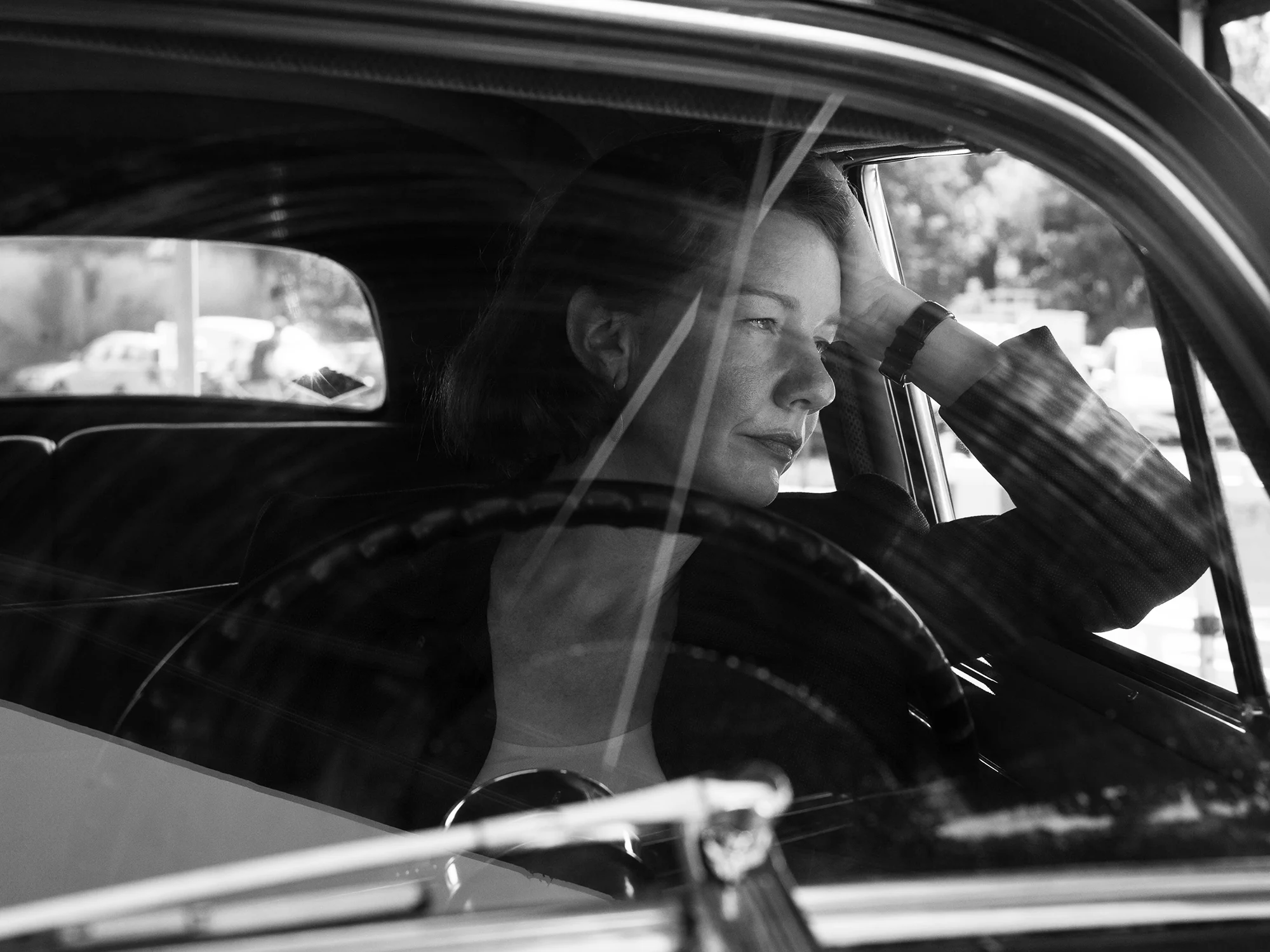
VERDICT: Set in newly divided Germany at the start of the Cold War, Polish director Pawel Pawlikowski's biographical literary drama is a visually exquisite, minimalist masterpiece.
Polish director Pawel Pawlikowski returns to his familiar discomfort zone, Eastern Europe during the Cold War, with the exquisitely crafted biographical drama Fatherland. The key distinction between his latest period piece and its two predecessors, Ida (2013) and Cold War (2018), is that this story deals with real people and true events, albeit told with a hefty shot of artistic license.
Eight years after winning the Best Director prize in Cannes for Cold War, Pawlikowski is back at the prestige French festival with that rarest of beasts, a Palme d’Or competition contender whose crisp 82-minute runtime leaves you wanting more. But don’t be fooled by its slender dimensions: Fatherland is a small masterpiece loaded with grand themes and heavy emotions.
Fatherland recreates a real visit that the Nobel Prize-winning German writer Thomas Mann (Hanns Zischler) made back to his newly divided homeland in 1949 after more than a decade of US exile. Celebrating the 200th birthday of Goethe, the feted author of The Magic Mountain and Death in Venice elects to attend ceremonies in both capitalist West Germany and the newly created, Soviet-controlled East Germany, a demonstration of his faith in the power of art to transcend politics and unite people in common humanity. With Mann under pressure to choose, as he puts it, “between Stalin and Mickey Mouse”, this idealistic gesture will seal his reputation as a closet Communist sympathiser in McCarthy-era America, ultimately leading to his re-emigration back to Europe.
Acting as Mann’s tour manager, minder and travelling companion on this trip is his cool-headed, steel-nerved daughter Erika (Sandra Hüller). Reliably magnetic as usual, Hüller’s poised, precisely calibrated performance is the main emotional engine here: composed and urbane on the surface, nervy and spiky beneath. It’s a masterclass in expressive minimalism, as Erika destroys old flames with a single raised eyebrow, or conveys the chilly devastation of family tragedy in the spare syntax of a one-sided telephone call.
But missing from this rare family reunion is Erika’s brother, and Mann’s estranged son, Klaus (August Diehl). A fellow author, depressive and drug addict, Klaus declines the invitation to join his father and sister, although Pawlikowski teasingly hints that he may have been a ghostly presence at one of their public speaking events. The absent son’s actions certainly cast a long shadow over the tour, and expose some harsh truths about the Mann family dynamic.
Visually ravishing, Fatherland leans heavily into Pawlikowki’s signature austere-deluxe aesthetic with its immaculately composed tableaux, exactingly detailed period production design and lustrous, sculptural, monochrome cinematography. Using mostly Polish locations to stand in for the ruins of post-war Germany, the director is working once again with his regular cinematographer, the Oscar-nominated Lukasz Zal, who shot both Ida and Cold War, as well as Jonathan Glazer’s The Zone of Interest (2023) and Chloe Zhao’s Hamnet (2025). As with the pair’s previous collaborations, this self-conscious stylistic homage to the mid-century glory days of Polish New Wave cinema could almost work as a stand-alone visual art-work. Take away the audio track and it would still be mesmeric.
As drama, Fatherland is controlled and pared down: essentially a series of gatherings in war-damaged hotel ballrooms, and mournful journeys across a ruined nation still reeling from the cataclysmic horrors of Nazism. Pawlikowski avoids making obvious political points or personal judgments, clearing plenty of space for poetic understatement, with mostly positive effect. That said, sometimes the screenplay feels a little too spare for its own good, briskly dispensing with juicy subplots and contextual snippets that deserve more screen time.
All three of the Mann family protagonists – Erika, Thomas and Klaus – were vocal opponents of Nazism, courageously speaking out against Hitler when others were cautiously silent. All three were also either gay or bisexual. Pawlikowski sketches some of these details in very bald terms, but ignores others, shutting down some potentially juicy sources of dramatic tension.
If there is a serious omission in this otherwise expertly judged film, it is Diehl’s glorified cameo as Klaus, which flattens a fascinating, tortured, complex character into a shadowy spectre. For example, one of the funniest scenes centres on Erika’s fractious encounter with her ex-husband Gustaf Gründgens (Joachim Meyerhoff), also Klaus’s former lover, who then became the lightly disguised inspiration for his scandalous novel Mephisto (later a feted film by Istvan Szabo) about an actor who makes a Faustian pact with the Nazis in exchange for fame. This delicious back story probably deserves its own stand-alone film. Pawlikowski could certainly have given these stranger-than-fiction side plots a little more room to breathe.
Fatherland contains many small fabrications and one big lie: it was actually Mann’s wife Katia who accompanied him on his 1949 trip to Germany, not Erika, who refused to countenance a return to her morally degraded homeland. But minor quibbles aside, Pawlikowski has delivered a gorgeous poem of a film about national identity, private and public tragedy, the dangers of trying to remain apolitical in deeply political times, and the enduring cultural riches that can offer small but crucial solace in apocalyptic times.
Fittingly, the film’s encyclopaedic end credits include a meticulously curated list of visual art and literary works that are woven into the story. Irish author Colm Tobin gets a special thanks, presumably a nod to his semi-biographical 2021 novel about Mann, The Magician. The soundtrack also features a rich musical tapestry including Bach, Mozart, Messiaen and others alongside jaunty period jazz-pop numbers and Soviet army songs. In a pleasingly self referential touch, Pawlikowski regular and Cold War co-star Joanna Kulig plays a small role here as a jazz singer.
Director: Pawel Pawlikowski
Screenwriters: Pawel Pawlikowski, Hendrik Handloegten
Starring: Hanns Zischler, Sandra Hüller, August Diehl, Devid Striesow, Anna Madeley
Cinematography: Lukasz Zal
Editing: Piotr Wójcik, Pawel Pawlikowski
Producers: Mario Gianani, Lorenzo Mieli, Ewa Puszczynska, Jeanne Tremsal, Edward Berger, Dimitri Rassam, Lorenzo Gangarossa
Production companies: Our Films (Italy), Extreme Emotions (Poland), Nine Hours (Germany), Chapter2 (France)
Venue: Cannes Film Festival (Competition)
World sales: The Match Factory
In German, English, Russian
82 minutes