
How to Divorce During the War
Skyrybos karo metu
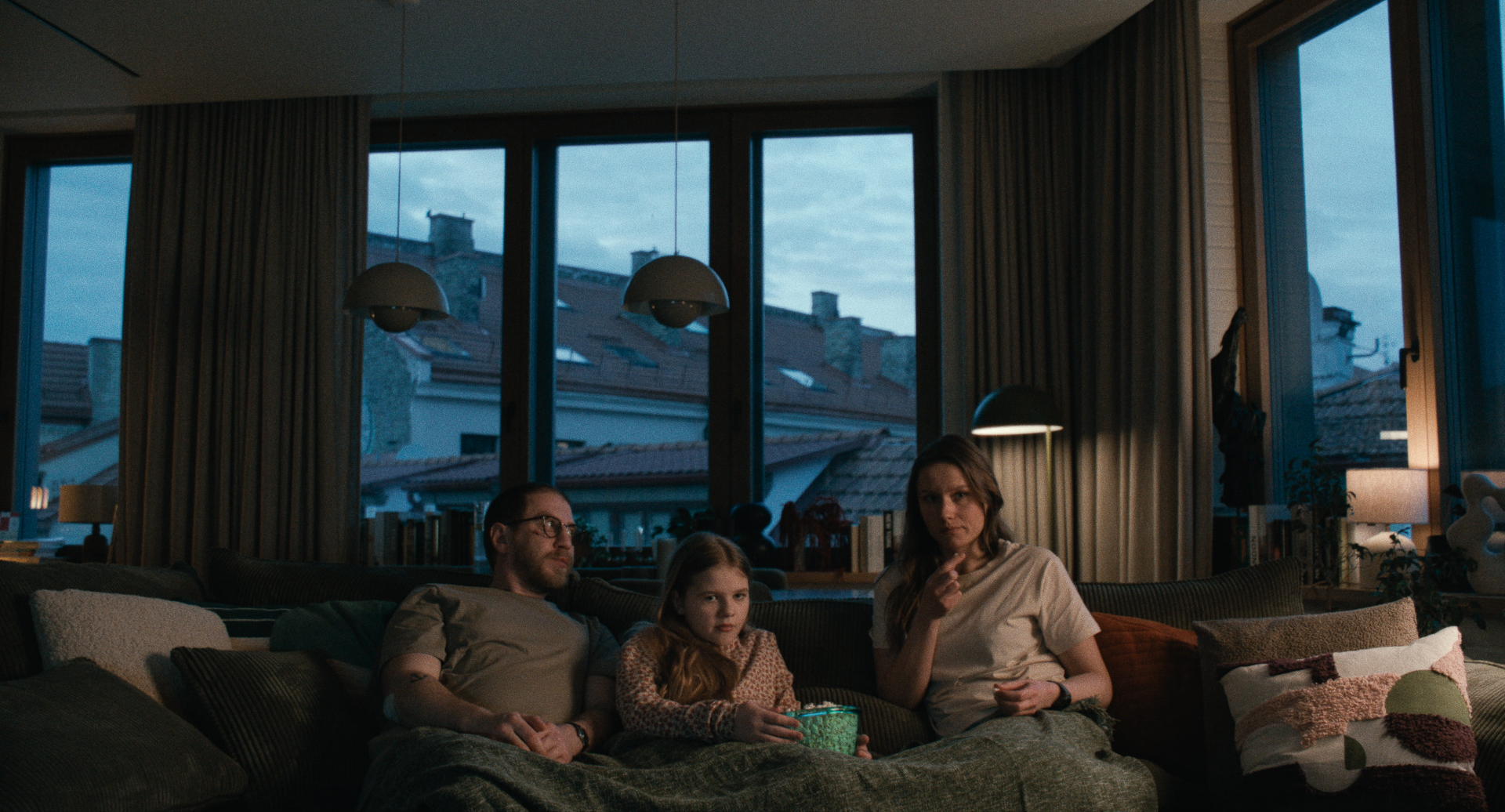
VERDICT: A couple falls apart as Russia invades Ukraine in this timely exploration of the limits of privilege and empathy in 'How to Divorce During the War.'
The title How to Divorce During the War may make its analogy between break-ups and international conflict crystal clear, but what happens in the wake is not so simple. The outstanding new feature from Andrius Blazevicius ponders what it means to discover that you’re not the good person you thought you were. How easily the privileged will fight for their own comfort. And how sometimes doing what’s right is pushed aside for doing what’s easiest.
Just as we get acquainted with their domestic routine, Marija (Zygimante Elena Jakstaite) drops a bombshell on her husband, Vytas (Marius Repsys) — she wants a divorce. No therapy, no talking it out. It’s over. In one of the best sequences of marital fracture in recent memory, Blazevicius lets their conversation unfold in one, almost entirely static long take. We watch the couple through the windshield of their car unpacking this life-altering event as they wait for their daughter Dovile (Amelija Adomaityte) to finish her music lesson. Except for a couple of outbursts, Marija calmly states she’s fallen out of love with Vytas, as he grapples to make sense of what he’s hearing. The scene unfolds with a disarming realism and sets the tone for what’s to come as the two go their separate ways.
Then Russia invades Ukraine.
The attack sends a shockwave across Lithuania as citizens wonder if their country is next. Everyone is rattled, but as Marija tells the employees under her at Hungry Rabbit, the content creation company where she works, they need to “move on.” That goes for Vytas too, who packs up his things and moves in with his parents, where the filmmaker tries to focus on getting his next screenplay finished. In the days that follow the separation and the war, Marija and Vytas find their own ways of showing their support for Ukrainians. After Hungry Rabbit shareholders refuse to close their Russian branch under mounting public pressure, Marija quits her job, takes in a refugee family, and pins up a Ukrainian flag on the balcony. Vytas stars volunteering at a food bank, participating in public demonstrations, and whenever he comes across a vehicle with a Russian license plate, finds the nearest rock to throw through its window. If Vytas doesn’t see the irony of being displaced from his own home with migrants taking his place, we certainly do.
These visible acts are paralleled by forbidden desires. Marija continues to explore her secretive relationship with Jurate (Indre Patkauskaite), a co-worker she was seeing before the split from Vytas, despite denying there was anyone else in the picture. Vytas finds physical and emotional comfort from an escort service where he’s long been a regular. In between is Dovile, outwardly placid, but inwardly troubled, as she, perhaps like Ukraine itself, wonders about what fate has in store from the unpredictable actions of those around her.
Adorned with an intriguingly off-kilter, atonal score by Jakub Rataj, the picture maintains an undercurrent of unease — for how could anything these characters are going through be normal? Despite each of them putting on a brave face and soldiering on, Marija, Vytas and Dovile privately shed their tears. When everything they’re repressing finally boils over, their anger manifests in some form of violence.
Blazevicius’ intelligent screenplay ponders the outcome of a person (or state) who find themselves ill-equipped or unwilling to reckon with the hard truths of their situation. Who believe taking action can be a substitute for truly reckoning about where your heart truly lies. As Marija grapples with the extent of what she can do to support Ukraine, there is something more honest about Jurate responding that she’s donated what she can to charity and leaves it at that.
Ultimately, the facade of both Marija and Vytas’ activism cannot be maintained nor the discomfort of trying to start over on their own. “I just can’t live with them,” Marija tells the social worker about the Ukrainians in her home. She also finds her position about Hungry Rabbit maintaining operations in Russia softening — after all, it’s not her taxes going to the Putin government, it’s the company’s.
How to Divorce During the War may be a touch cynical in drawing a line between those who settle in love and the sometimes reflexively empty nature of activism, but it’s a necessary tenor. As the current Ukraine/Russia war approaches its fourth year, the question remains of where the displaced will truly belong long after the flags are taken down and hashtags stop trending. Blazevicius perhaps suggests Ukrainians will be embraced, wherever they may be, but the arms around them might not be so warm from those who just want to move on.
Director, screenplay: Andrius Blazevicius
Cast: Marius Repsys, Zygimante Elena Jakstaite, Amelija Adomaityt?, Indre Patkauskaite, Gintare Parulyte
Producers: Marija Razgute
Cinematography: Narvydas Naujalis
Production design: Greta Viliekyte
Editing: Anna Ryndova
Music: Jakub Rataj
Production companies: M-Films (Lithuania)
World Sales: New Europe Film Sales
Venue: Sundance Film Festival (World Cinema Dramatic Competition)
In Lithuanian, English, Russian, Ukrainian
108 minutes