Kino Eye
.
VERDICT: Kim Gyeonggye and Lee Jungwon's 'Kino Eye' transforms an ethical dilemma in filmmaking into something solemnly (and subtly) cinematic.
Consider two related questions. What does a filmmaker helming a controversial documentary project owe his subjects? And will your response change if you learn that his subjects have lost their livelihoods on account of what they have said in the director’s project?
Those are two questions directors Kim Gyeonggye and Lee Jungwon pose in Kino Eye, a film currently showing at the 2026 JEONJU International Film Festival in the Korean Competition section.
As Kino Eye opens, we hear voices at a student film screening, a sequence which sets the tone for a film that is very interested in the ethics and practice of filmmaking—and maybe even in its criticism. In this opening scene, it’s a student who’s getting assessed. As the film progresses, it’s the lecturer, called Professor by his pupils, whose work comes under scrutiny.
Five years ago, he was the director of a documentary film that unexpectedly became a success. But from the day it debuts on screen, that film will become a millstone on his neck. His troubles begin when he returns a missed call. On the other end, one of his old documentary’s interviewees shares the news: “Our new CEO fired everyone who appeared in your documentary. What do we do?”
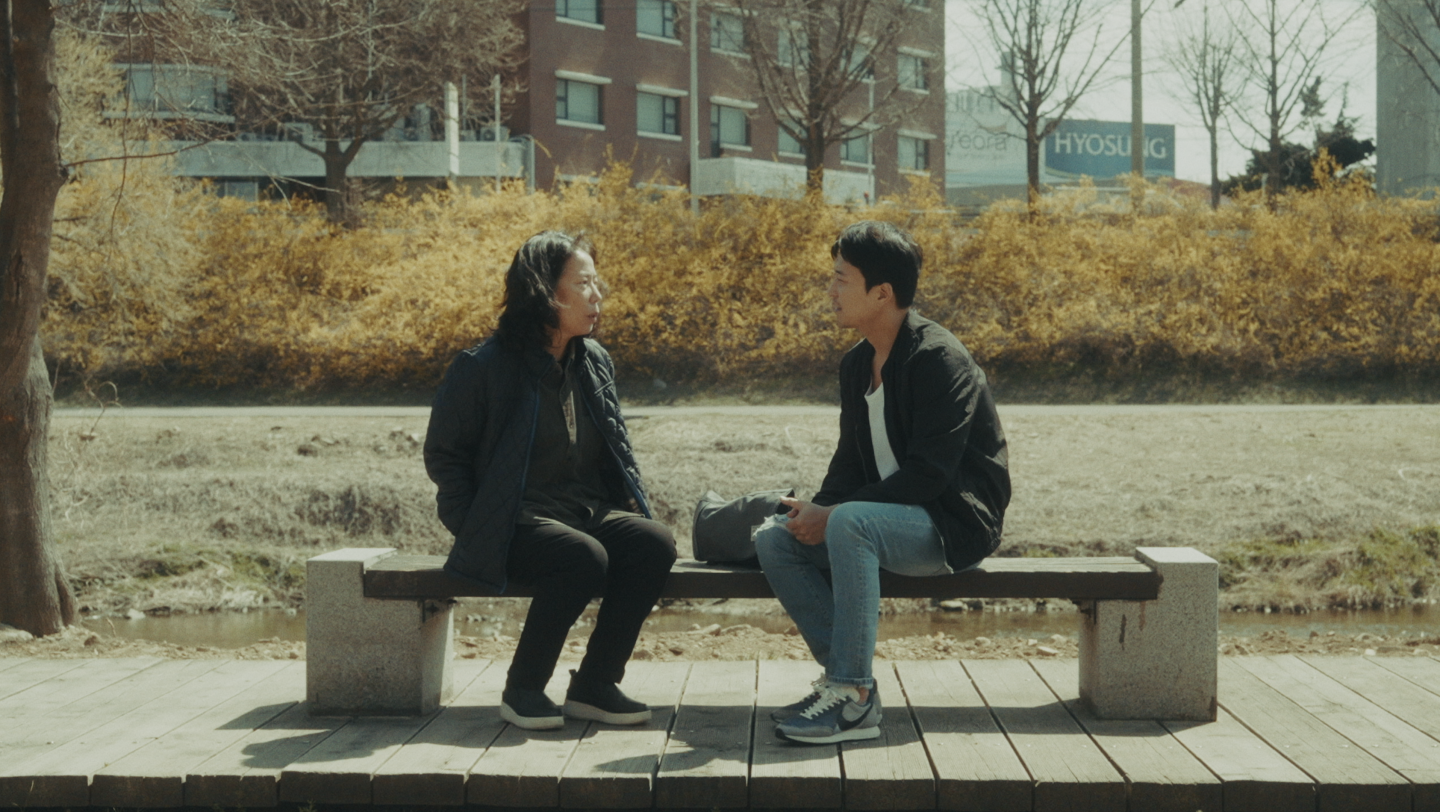
Filmed in black-and-white and with a hand-held camera (operated by director Kim), Kino Eye pretty much follows Professor’s every moment in a film that’s obviously cheaply made. But the film’s ideas and performances, especially that of lead actor Jungwoo Woo, elevate it beyond its budgetary constraint. Not only have people lost their jobs for a film, but the school employing Professor is about to lose what seems to be an important partnership.
Initially it is not quite clear what the troublemaking documentary was about, but the details accrete as the film unspools. Apparently, Professor’s film depicted Yudong Electronics, an establishment with some clout, in an unflattering light. The CEO saw the film with his daughter on Netflix and became incensed enough to fire his employees appearing in the film. On the other side of things, our hero was hired by the school where he teaches because the film had won a prize at Venice. Now that there’s some fire on the mountain, the man who hired him is considering firing him—to look good in the eyes of the establishment.
Other problems arise, including some aggression from a woman who insists he promised he was going to blur her face and hide her name but didn’t do so. Somehow, he failed to get his release forms signed. What to do?
At the heart of Kino Eye is a coolly bravura one-shot take and an assessment of a filmmaker’s activist pride. As Professor tells his boss, “I didn’t lie. I just told the truth.” The insufficiency of the truth—or this truth—is part of Kino Eye’s insight. But it does move away from insight into mantra as peeling back the ethics of filmmaking itself occupies the film’s third act—this time from the perspective of a “civilian”. In keeping with the idea conveyed by the film’s title, this civilian speaks to a camera directly, talking about an image she recorded.
In her telling, which is the film’s most emotional sequence, she is a proud auteur. But could she have abandoned her need to capture a scene for an opportunity to change the fate of her camera’s subject? It’s a question that Lee and Kim do not answer. There is nothing inherently wrong in the filmmakers’ only presenting ethical questions mediated by a camera’s lens, but the lack of answers—or even a robust narrative—roots Kino Eye firmly in philosophical territory. Because the filmmakers do not appear interested in providing answers, the audience should be forgiven for not thinking too much of an answer for themselves.
Cast: WOO Jungwoo, SONG Chihoon, SONG Hajin, SHIM Soyoung
Directors: KIM Gyeonggye, LEE Jungwon
Producer: JI Hyunjun, YOO Joonmin, JEONG Heejin
Screenwriter: KIM Gyeonggye
Cinematographer: KIM Gyeonggye
Editor: KIM Gyeonggye
Sound: CHO Eunha
Venue: JEONJU Film Festival (Korean Competition)
In Korean
70 minutes