
Michael
Michael
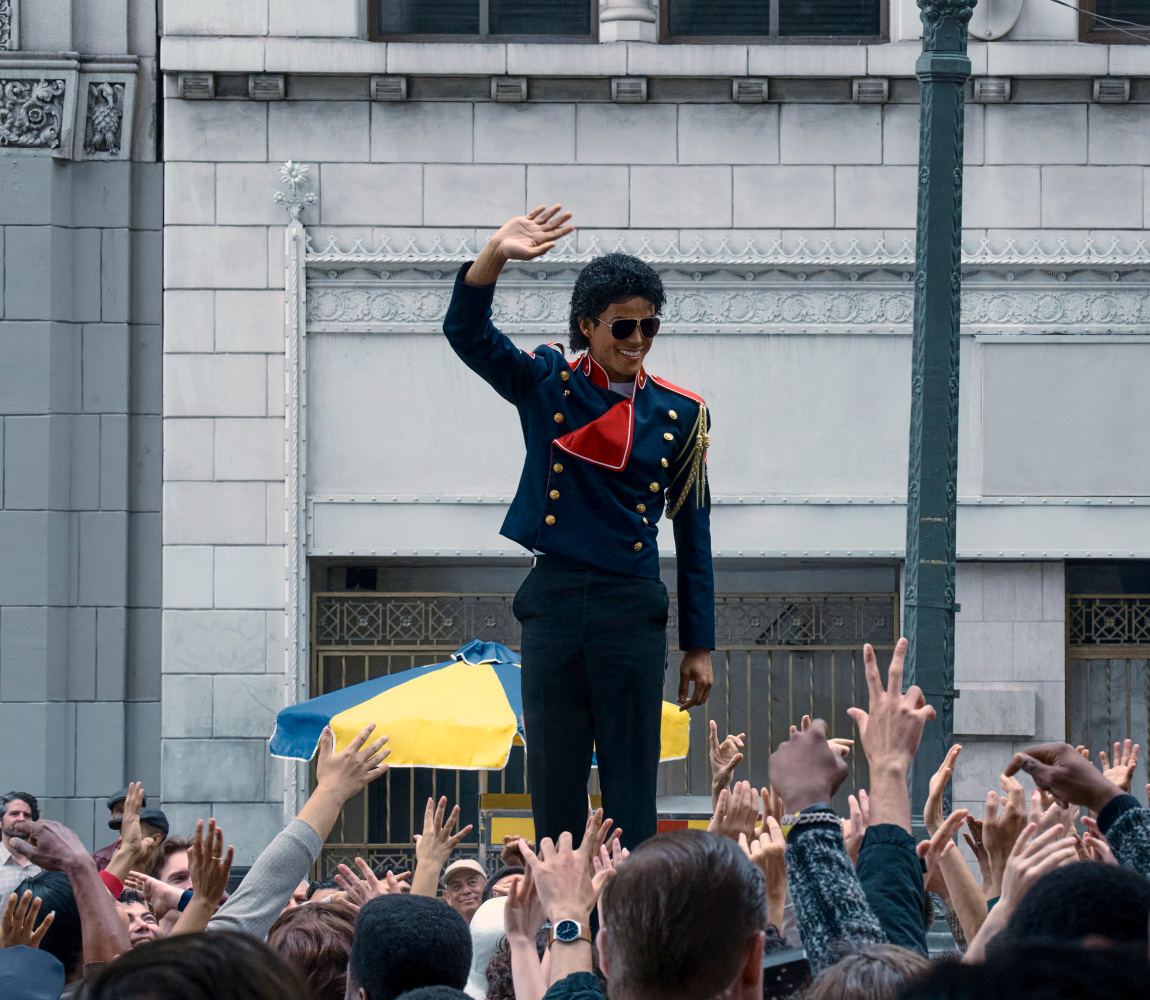
VERDICT: The recreations of the King of Pop’s iconic musical moments come alive, but human nature is in otherwise short supply in this too-tidy biopic.
Bubbles the chimpanzee flings no feces in Michael, the first of a two-part biopic on the legendary Michael Jackson, and the film itself takes a similarly sanitized approach to the singer’s complicated legacy. Michael himself was a one-of-a-kind talent, a cultural figure whose best albums forever changed pop music, but director Antoine Fuqua and screenwriter John Logan have reduced his story to “papa Joe was mean, Michael was sweet and talented, and his encounters with fans were nothing but friendly and gracious.”
In a sense, you can’t blame them, given that Michael’s manager is one of the film’s producers and Michael’s son and four of his living siblings are executive producers, which probably left the architects of this film with all the artistic freedom of a Kremlin propagandist. (Rebbe and Janet Jackson, having apparently opted not to sign on as executive producers, are never portrayed or even mentioned in the film; guess we shouldn’t expect a recreation of the “Scream” video in the promised second chapter.)
Where Fuqua and his team are allowed to shine is in the evocation of some of the most exciting musical moments from Michael’s career, from the Jackson 5’s debut on The Ed Sullivan Show to Michael’s standout appearance on the Motown 25th anniversary special to the videos for “Beat It” and “Thriller.” But the rest of Michael is so utterly empty, even by biopic standards, that one wishes the family had opted to make an EPiC: Elvis Presley in Concert performance compilation film (in IMAX and Dolby) instead of this precise impersonation.
To his credit, actor Jaafar Jackson (Jermaine’s son) offers a spot-on recreation of his uncle’s dancing and speaking, as does newcomer Juliano Valdi, playing young Michael. When either of these actors dons a familiar wardrobe and reenacts the real Michael’s dance moves, the film achieves a liveliness that’s otherwise missing; these sequences play like the only parts of this biopic that haven’t been flattened into nothingness by a team of lawyers and publicists.
The songs themselves, it’s worth nothing, seem to exist in some kind of uncanny valley; they sound like astoundingly effective cover versions, but the closing credits insist that all the vocals are by Michael himself, implying either the use of alternate takes or enough post-post production to make tunes you know by heart sound just the slightest bit different.
Story-wise, Michael skims over the highlights, from the Jacksons’ working-class origins in Gary, Indiana, to how Joe Jackson (Colman Domingo) turned his children into a pop sensation through an iron will and what we would now classify as child abuse. Once they move to California, Michael starts befriending animals because his early fame makes it impossible to make friends his own age. And as he gets older, he finds success on his own with the albums Off the Wall and the record-breaking Thriller, with Joe both resenting and attaching himself to his son’s triumphs.
Viewers interested in Michael Jackson, the human being, won’t come away with much: we learn that he picked up dance moves from watching James Brown and Gene Kelly on TV, he was obsessed with Peter Pan, and he was unfailingly gracious to his fans, particularly if they happened to be hospitalized. (Fandom has seldomly been portrayed this benignly; none of Michael’s admirers ever grab him or stalk him or make unseemly demands.)
There’s little to no exploration of Michael’s creative process, his musical inspirations, or his demons, and the same can be said for how the film portrays Joe’s weaknesses and insecurities. We get a scene in which Joe and Don King conspiratorially smoke cigars in front of a fireplace while cooking up the Victory tour, shot for maximum cartoon-villain effect.
Makeup designer Bill Corso captures the early-80s evolution of Michael’s physiognomy (the movie ends circa Bad), with the singer’s nose getting progressively smaller. There’s one scene with Michael visiting a plastic surgeon, prompted by Joe’s insults and an obsession with the sylphlike features of the storybook Peter Pan, and that’s all the film has to say about Michael’s appearance and his motivations behind changing it. The makeup department clearly wasn’t spending as much time on Miles Teller’s putty schnozz as John Branca, Michael’s manager, with the prosthetic changing appearance from scene to scene.
Movies about artists, ideally, celebrate the art while also providing a glimpse into the blood, sweat, and tears behind its creation, but any exciting moments here can be found in their original, natural state on YouTube. Michael has no ambitions beyond being its own commemorative souvenir booklet.
Director: Antoine Fuqua
Screenwriter: John Logan
Cast: Jaafar Jackson, Nia Long, Laura Harrier, Juliano Krue Valdi, Miles Teller, Colman Domingo
Executive producers: Ron Burkle, Antoine Fuqua, David B. Householter, Jackie Jackson, Jermaine Jackson, LaToya Jackson, Marlon Jackson, Prince Jackson, Tito Jackson, Hayley King, Karen Langford, Jordan Schur, Lydia Silverman
Producers: Graham King, John Branca, John McClain
Director of photography: Dion Beebe
Production design: Barbara Ling
Editing: John Ottman, Harry Yoon
Music: Harvey Mason, Jr., executive music producer
Sound design: John Warhurst, supervising sound editor; Paul Massey, film music mixer/re-recording mixer
Production companies: Lionsgate, Universal Pictures, GK Films, Optimum Productions
In English
127 minutes