
NOAH
NOAH
VERDICT: Stylistically bold and morally furious, Ali Tamim’s 'Noah' rejects the sanitized, sociological gaze usually cast on racialized communities in Germany to expose the emotional architecture of racism.
NOAH is far more radical than a simple film about police brutality; it is an honest portrayal that amplifies the voices most often ignored, denied, or caricatured. It lets them speak with their own rhythms, whether angry, funny, exhausted or defiant, and includes a harsh reminder that, in Germany, belonging is still conditional. Making its world premiere in the International Panorama at the Cairo Film Festival, this strong debut feature directed by Ali Tamim showed high potential for international distribution and critical acclaim.
The film rejects politeness, respectability, and the sanitized gaze usually enforced on racialized communities in Western Europe, especially in Germany. The slow-burn drama is loud in its emotions, harsh in its criticisms, and brutally honest in its willingness to expose the violence (visible and invisible) that underlies life for many Black, Arab, and Turkish families in Germany.
Noah presents an exceptional work of storytelling: tight, elegantly structured, and rich with dialogue that lands like punches. Every line matters. Every cut moves the story forward, making it a film to be endured and remembered.
The story is shaped around a single tragedy: the death of Noah Diallo, a young German Arab man who dies after a “police operation”, as it will be reported in German. That death is the narrative center of gravity, pulling in three parallel stories, all reflecting a different facets of the same wound.
Noah’s mother, Mariama, receives a call from the police investigations office on a cold Berlin night with snowfall. The film’s cinematography immediately demonstrates her state. Mariama’s drive to the hospital, murmuring Arabic prayers, fighting panic, answering calls from family members, captures the anguish of a parent, but also the specific, racialized horrors of navigating German institutions as an immigrant woman.
Despite the presence of a video documenting how Noah died (which we don’t see, but it is surely in the hands of the police) ,the investigation and autopsy start by trying to determine whether he died from asthma or from drugs, the oldest trick in the book when dealing with police brutality. Sadly, the Arab audience will easily relate. The heartbroken mom keeps driving through the streets of Berlin, refusing both the depoliticization of the killing to downplay police responsibility and the martyrdom rhetoric her mother pushes. She refuses to allow her son to be turned into a martyr. “He did not want to die,” she insists.
Her monologue about the “German dream” of learning the language, working hard, going to school, being useful and maybe you will be accepted, is one of the film’s most striking critiques. She describes a society that promises acceptance and belonging as a reward for obedience, while at the same time ensuring that full membership is never granted. The devastating conclusion: If Noah had been German, he would not have been killed.
Parallel to Mariama’s grief are Melek and Musa, whose storyline becomes the political and emotional heartbeat of the film. They only know about Noah from social media. Their conversations are by turns comedic, poetic, furious, and brutally honest. Their fury makes them imagine parallel worlds. Musa imagines a world where German names are always mispronounced, where Otto Von Bismark statues are destroyed and urinated on, where presidents do not exist, where immigrants are not stereotyped as drug dealers at parties. The absurdity of Musa’s monologues are a form of resistance, satire as survival.
A third thread follows Ibrahim, a German-Turkish police officer who is on a control raid to search ‘random’ suspects who happen to be all foreigners from Arab, Turkish, and Kurdish backgrounds. The police are on the move after a car is set on fire. And Ibrahim and his racist chief are deployed. Ibrahim is caught between community and institution. He is humiliated by his openly racist superior. As they grab and detain a female suspect who yells at them that she is German, the racist cop replies: “a hamster is not a horse just because he lives in a stable.” On the other hand, the suspects call Ibrahim a pork-lover and a traitor. His colleagues force him to speak German, threaten disciplinary action when he slips into Turkish, and treat him as disposable.
Ibrahim ends up in a basement, where he is ordered to hunt down suspects. This leads to one of the film’s most brilliant scenes. Trapped on one side of a door, he finds himself speaking to the Turkish-German men he is meant to apprehend, who are trapped on the other. When Ibrahim mentions he is a Galatasaray fan, they laugh and tease him for being an aristocrat. They trade jokes about Mesut Özil, debating how “German” he is — just as German, they say, as the police officer and the suspects themselves. The moment turns acidic when one of the men says, “If I were really German, I wouldn’t be here.”
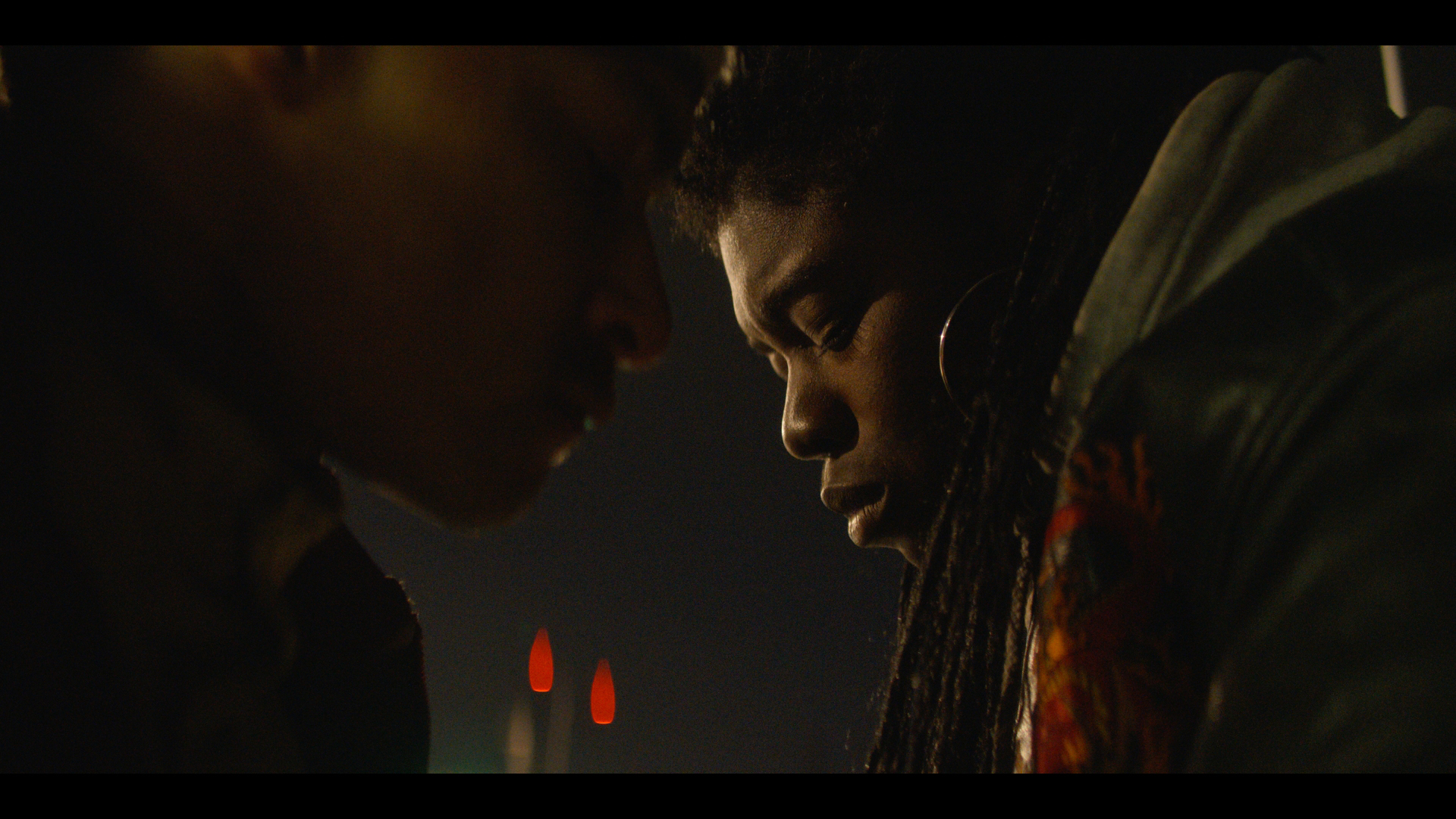
Stylistically, NOAH is memorable. Berlin is rendered as a fractured, freezing, over-lit maze of alleyways, car interiors, stairwells, and traffic stops. The lighting is anxious, and the framing is at times claustrophobic. The upside-down shots and handheld camera creates a state of disorientation which translates the emotional toll of racism and the feeling of hopelessness. By cutting between Mariama’s sorrow, Melek and Musa’s restless anger, and Ibrahim’s internal breakdown, the editing holds the three plots together in an uncompromising script.
“Do you know why Batman has a hole in his mask? So the police know he’s white,” jokes Malek, directing her pun to Musa. The brutally honest joke says a lot about racism in contemporary Germany. Walking nowadays in Berlin, a techno music crowd of young white Europeans dancing in a train on their way to a Berlin club would be lauded as a sign of Berlin’s vibrant night scene. But if a group of young German-Turkish men talk loudly or listen to music on their phones, they will be prey to police control, angry looks and “thank you, Merkel!’ comments.
Director, screenwriter: Ali Tamim
Cast: Joyce Sanha, Steven Sowah, Meriam Abbas, Dora Gürer, Nils Kahnwald, Oscar Hoppe, Luise Hart
Producer: Lisa M. Wischer
Cinematography: Lea Pech
Art Department: Henrike Heiland, Florence Stadelmann
Editor: Gerard Cañadas
Sound: Bertold Budig
Visual Effects: Sebastian Esposito
Gaffer: Arne Weiß
Production Manager: Hana Petersen
Costume Design: Marilena Büld
80 Minutes
In German, Arabic, Turkish