Past Lives, Bright Futures: Two Special JEONJU Programmes
.
VERDICT: JEONJU IFF dedicates special programmes to the late actor Ahn Sung-ki and the up-and-coming, festival-acclaimed filmmaker Park Syeyoung.
By Hyo-jin Cho
JEONJU IFF is one of the best-known film festivals showcasing the current state of Korean cinema. This year, the festival is offering a window into the past and the future with two special programmes, “Special Focus: Ahn Sung-ki’s Memorable Yet Rarely Seen Films” and “Mini Focus: Park Syeyoung, Everything Becomes Cinema,” both curated by programmer Moon Seok.
Actor Ahn Sung-ki and director Park Syeyoung may seem like an unlikely pairing. Ahn, who passed away last January at the age of 75, already had more than 100 films under his belt when Park was born in 1996. Ahn spent his entire career in the mainstream film industry. Park, by contrast, is an independent filmmaker who began his career in an era shaped by gig economy and side hustles. But both artists, while being incredibly prolific, have always challenged the ways of making films.
Ahn Sung-ki has often been called “the face of Korean cinema” or “a national icon.” Ever since his debut in 1957, except for the eight-year hiatus between his child and adult acting careers, he worked continuously, often appearing in multiple titles each year. Notably, he never acted in television series or on stage, unlike many of his peers. It is no exaggeration to say that the history of Korean cinema cannot be discussed without his life and roughly 170 works.
Honoring Ahn’s passion and dedication, JEONJU IFF presents seven of his lesser-discussed films. Most know his iconic roles in the 20th-century titles like Whale Hunting, Mandara and Two Cops, and his 21st-century box office successes such as Silmido, Radio Star and Hansan: Rising Dragon. But between these high-profile works, he consistently took on projects of varying budget sizes and genres, some with controversial topics and experimental qualities. Ahn’s star power became leverage to bring smaller, more daring productions to life.
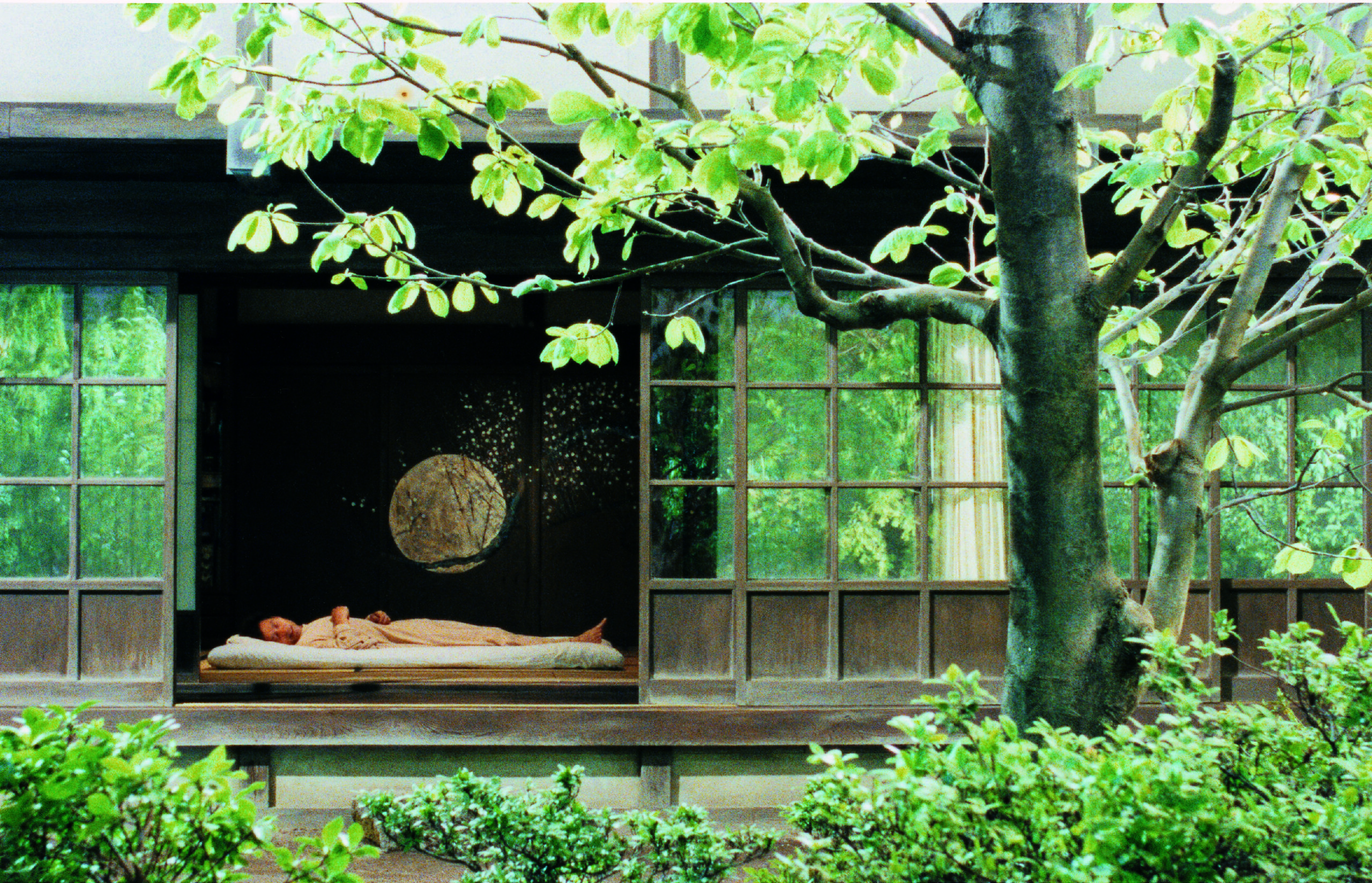
Programmer Moon’s personal pick, Sleeping Man, is a Japanese production where Ahn plays the titular character who spends most of the runtime asleep with just a single line. As Moon notes, it “attests to the strong presence the actor delivers on screen.” This meditative film has rarely been shown to local audiences and is presented here in a 4K remastered version.
Fair Love follows a man who falls in love with his friend’s daughter. He was so drawn to the script that he actively endorsed the young director and spent three years developing the screenplay with him. It is one of the three films in this section screened on 35mm, alongside the rare Korean-Polish co-production Taekwondo, where Ahn worked with a Warsaw local crew and learned Polish lines, and director Lee Myung-Se’s early work Bitter and Sweet, an obscure title marked by its bold, almost cult-like qualities.
More recent films in the lineup include Chung Jiyoung’s independently produced Unbowed, featuring Ahn’s compellingly earnest performance that won favor with audiences despite the film’s controversial subject, and Zhang Lu’s Love and…, which is among the director’s most experimental works.
Although the earliest title in the program, Our Joyful Young Days, directed by his long-time collaborator Bae Chang-ho, is one of Ahn’s best-known films, its importance to his career makes it unmissable. In it, the audience can see the pure man they have dearly loved and the moment Ahn “became eternal” in Korean cinema, as the programmer’s note puts it. Fittingly, the picture he took for this film was used at his funeral.
PARK SYEYOUNG
The mini programme on Park Syeyoung features nine works including two world premieres, most of them under 60 minutes. Although Park made his first feature, The Fifth Thoracic Vertebra, in 2022, he has been prolific since 2017, working across various formats, from features and shorts to music videos, commercial ads, and video art, which is not common in Korea, even in the independent scene. In this sense, as programmer Moon notes, “he is a filmmaker of a new era.”
Park’s Locarno debut The Fin is recommended by Moon, as it “perfectly captures his world”. The near-future dystopian story addresses the environmental, ideological, and social issues of his signature style mixed with genre-specific elements. It also inspired the experimental museum piece Revenant Princess, which also uses footage from the sensory sci-fi drama. Similar imagery is further experimented with in a world premiere title, La plante dansante de désastres, based on a performance by an experimental gayageum player and the film’s co-director.
Park’s style is distinctly his own: experimental narratives, distorted imagery, and strong emphasis on sound. This is strengthened by the fact that his works are mostly written, shot, directed, and edited by the filmmaker himself. Twilight, one of his earliest works, is essentially a solo project. This spirit of independence continues throughout his career, down to the latest film that premieres at JEONJU IFF, After Hours, a story that unfolds in a near-empty cinema.
Park shows that independent cinema is unconstrained by traditional boundaries. His many works made in different contexts remain interconnected, sharing a cohesive vision, which is evident in this year’s programme. Audiences can trace it through his distinctive style, recurring motifs, and frequent collaborators, such as actor Jung Hoerin.
Despite shrinking audiences, fewer opportunities, and tighter budgets, new generations of filmmakers continue to find their way. Park may point toward a possible future for filmmaking. One of his Instagram post reads: “I’m actively seeking work [for hire]. Available for directing, producing, editing, color-grading… Until filmmaking profits alone are sustainable (probably in 999 years), I plan to keep working on film and all things around it.” Audiences can sense, from his eclectic body of works, what he refuses to compromise in his search for a more sustainable way of filmmaking.
Ahn’s expansive legacy encapsulates an era of Korean cinema, during which it both flourished and experimented, helping shape its present. Park’s way of working demonstrates how a filmmaker can still pursue a personal vision on his own terms amid the challenges of a new era. JEONJU IFF invites audiences to rediscover the under-written past and imagine its future right now, in 2026.