
Rose
Rose
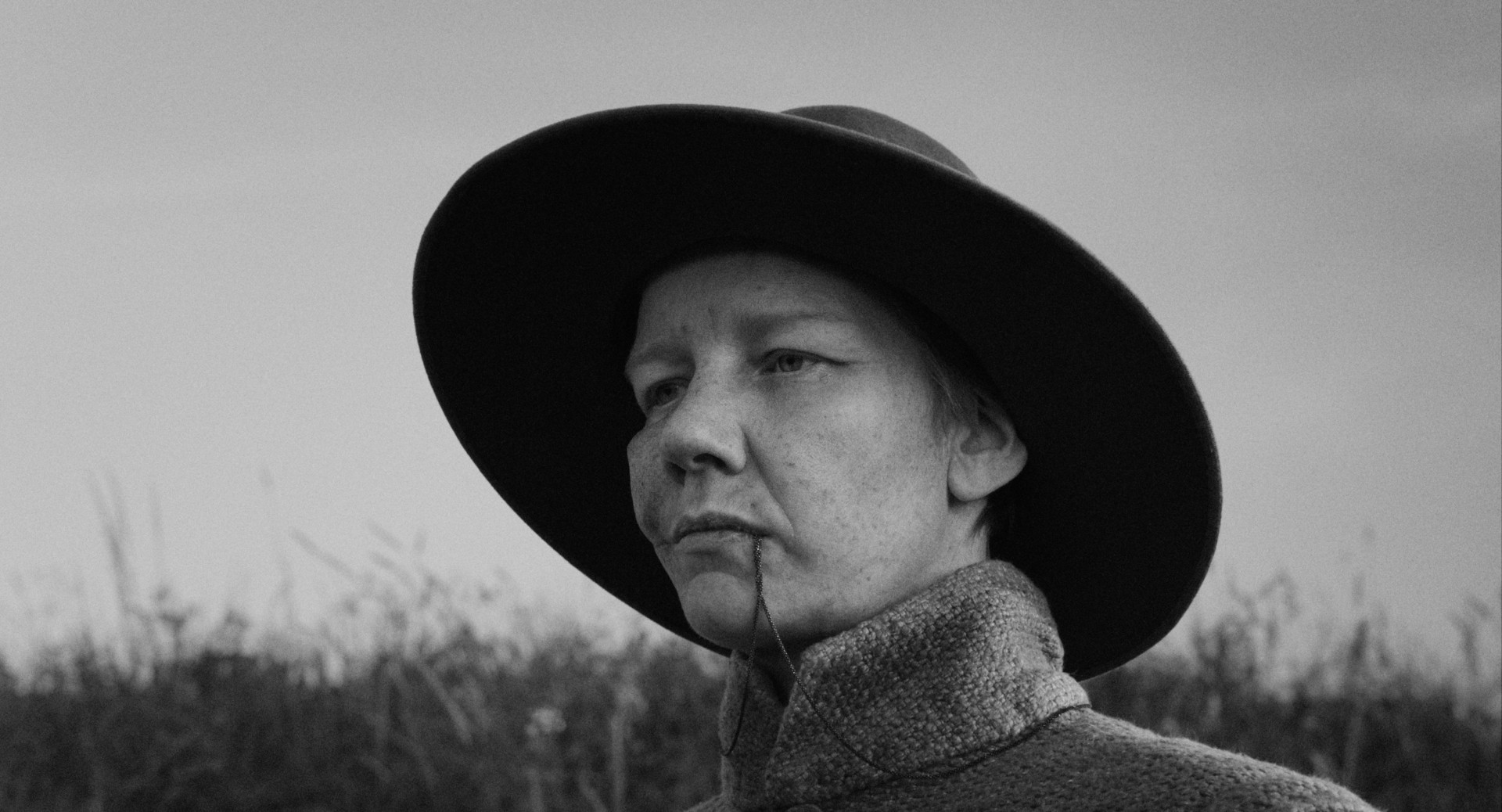
VERDICT: A fascinating tale of gender politics in 17th century Germany offers a gripping backdrop for Sandra Hüller’s prodigious acting talents in the surprising historical biopic 'Rose'.
One of the most striking films to appear so far in the Berlinale competition, both cinematically in its expressive black-and-white lensing and thematically in its uncompromising essay on the limits of women’s freedom, is Rose by rising Austrian director Markus Schleinzer. With casual cheek, he retells the astonishing true tale of a stranger who appear in a remote village in male guise, claiming to own land there, and who integrates into the local community in spite being, rather obviously one would say, a woman.
With his wonderful eye for the subtly grotesque, Schleinzer makes good use of his long career as a casting director for legends of the offbeat like Ulrich Seidl, Michael Haneke and Jessica Hausner, endowing his own characters with a humorous eccentricity that makes the audience wonder. Award-studded actress Sandra Hüller, acclaimed for her performances in Anatomy of a Fall and The Zone of Interest, won a Silver Bear for Best Actress at the 2006 Berlinale for Requiem, and her transformation into a grubby soldier and farmer with a bullet wound disfiguring her face, walking the razor’s edge of gender identity, should surely make her a contender this year, too.
The film also shows the director’s creative growth from his 2011 film Michael, a Haneke-esque drama based on a real-life child abductor, and his 2018 Angelo, the story of Angelo Soliman, an African boy sold into slavery who luck drew into Austrian aristocratic society of the 18th century. Here again in Rose, there is a historical source for an outrageous tale out of the past, which in the capable hands of screenwriters Schleinzer and Alexander Brom turns out to have very modern vibes in its call to individual freedom.
In the wake of a great war, a tired and battle-scarred soldier traipses through the German countryside, which is eerily littered with screaming skeletons. This single visual detail tells it all – or almost all – about the soldier’s past. The honeyed voice of an off-screen narrator (Marisa Growaldt) explains that after ten years Rose has done with soldiering and is ready to settle down.
She enters a village as an odd-looking man, brandishing a document that shows she is the legal heir to a decrepit farmhouse in the woods. In the midst of the tall, dark-bearded residents, some wearing primitive masks, she stands out like a sore thumb. The joke is that no one sees what the audience realizes at once: Rose is a woman in trousers. Her disguise is as flimsy as her little boat-shaped hat that passes for a military helmet, yet for the longest time no member of the God-fearing community questions the “gentleman’s” claim to his ancestors’ land.
The steep-roofed house needs a lot of repair, but Rose has the money to hire two laborers full-time. Handy with a rifle, her reputation grows when she shoots a marauding bear and little by little, the villagers relax their suspicions. Things get interesting when one of them proposes the gentleman marry one of his five daughters — and Rose madly accepts. They are wedded in church and Suzanne, the awkward young bride, rides home with her husband on a cow-drawn wagon.
Now viewers hold their breath as they wait to see how long it will take for Rose to be unmasked. Having sex is a problem, especially when Suzanne (played by the delightful Caro Braun) turns out to be neither as shy nor as doltish as she first seems. In fact, she soon makes the stunning announcement they are expecting a baby, who duly appears. The father remains a question mark but in the eyes of the trad villagers, Rose has done her reproductive duty to the community and everyone is happy.
Having reached an ideal equilibrium, the little family seems at peace. The filmmakers seem reluctant to move on to the grim third act, when the black clouds of 17th century reality blow in, in a moving ending full of restraint and dignity.
All technical work is playful and creative. The notable black-and-white cinematography of Schleinzer regular Gerald Kerkletz makes a powerful impact on the story, cloaking the historical scenery in almost fairytale abstraction. Music (by Tara Nome Doyle) and sound design (by Manuel Grandpierre) do the rest with unexpectedly modern notes and textures.
Director: Markus Schleinzer
Screenwriters: Markus Schleinzer, Alexander Brom
Producers: Johannes Schubert, Philipp Worm, Tobias Walker, Karsten Stoter
Cast: Sandra Hüller, Caro Braun, Marisa Growaldt, Godehard Giese, Augustino Renken
Cinematography: Gerald Kerkletz
Production design: Olivier Meldinger
Costume design: Doris Bartelt
Editing: Hansjorg Weissbrich
Music: Tara Nome Doyle
Sound design: Manuel Grandpierre
Production companies: Schubert (Austria), ROW Pictures (Germany), Walker + Worm Film (Germany)
World sales: The Match Factory
Venue: Berlin Film Festival (competition)
In German
93 minutes