
Saccharine
Saccharine
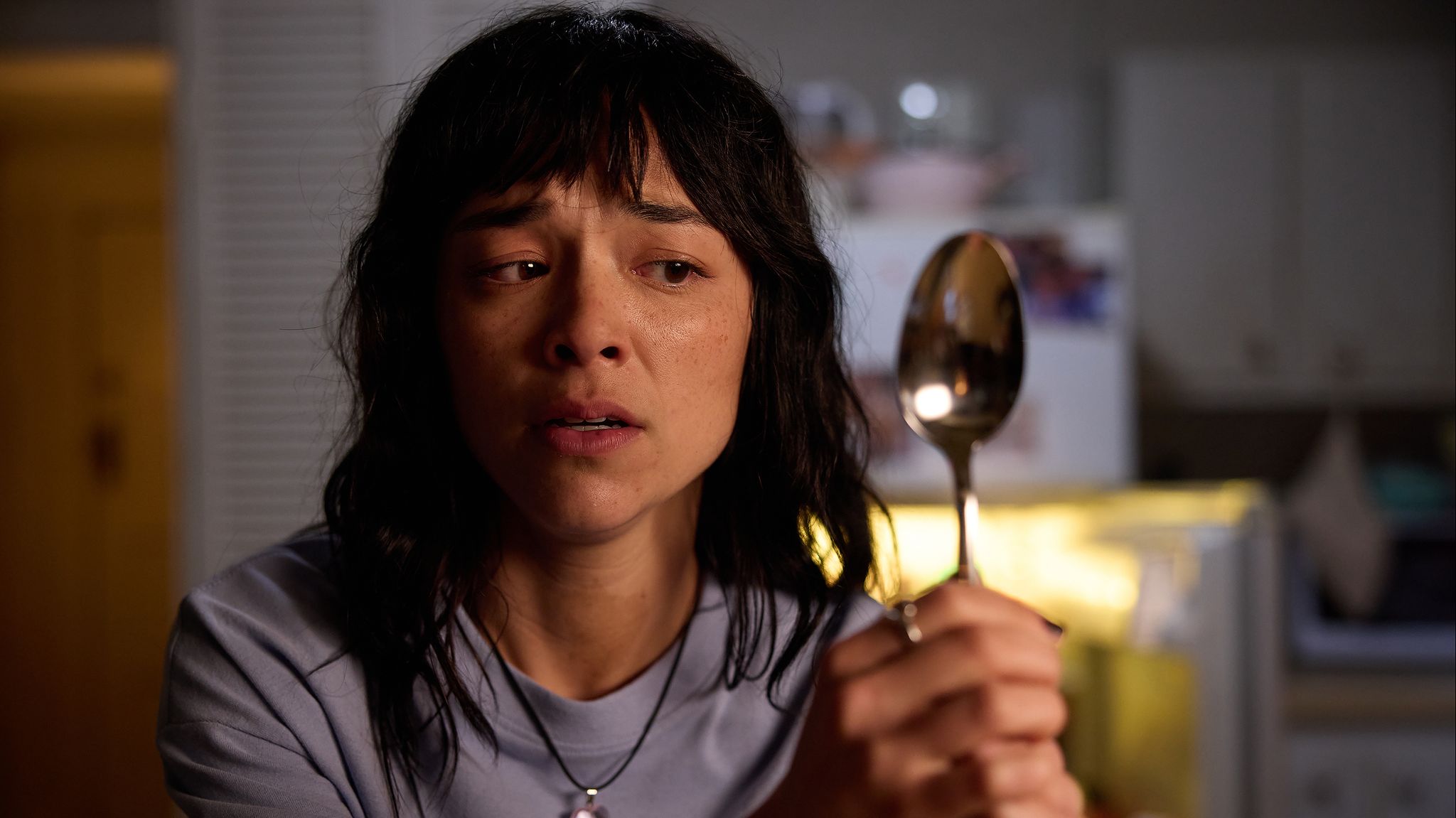
VERDICT: A medical student creates a sinister diet drug to fight her own eating disorders in this witty, gory body-horror shocker from writer-director Natalie Erika James.
Locating the sickly-sweet spot between body horror and body-shaming horror, Saccharine is a deliciously disgusting exercise in feminist gore for the era of Ozempic, Mounjaro and other headline-grabbing diet drugs. Right from its queasy opening credits, the third feature from Australian-American writer-director Natalie Erika James (Relic, Apartment 7A) serves up a bilious audio-visual banquet of high-calorie excess, teasing out spooky supernatural forces from a darkly satirical plot rooted in disordered eating, food addiction and patriarchal beauty standards that encourage women to hate their own bodies.
Saccharine is a female-centric story featuring virtually no male characters, but that feels like an incidental detail in a universal plot that smartly riffs on classic horror lineage. With its carnal excesses and queer feminist undertow, it will inevitably draw comparisons to Coralie Fargeat’s indie sensation The Substance (2024) and the work of Julia Ducournau (Raw, Titane). Which is no bad thing, though James relies more on familiar paranormal genre tropes than either. Her plot feels overstuffed with ideas at times, not all of them fully coherent, but the central premise is witty and timely, and production credits are consistently excellent. Premiered in Sundance ahead of its European festival debut in Berlin this week, this superior shocker has already been bought for streaming release in several markets, and is likely to travel widely.
Saccharine wears its Australian locations lightly, with an unnamed Melbourne serving as non-specific city backdrop, and an international cast sharing a range of accents. In a neat piece of self-aware casting, Gray’s Anatomy alumni Midori Francis stars as Hana, a medical student who routinely slices up dead bodies in class. Raised by parents with dysfunctional issues around food, Hana now struggles with her own weight, body image and binge-eating. She also has a crush on super-athletic gym teacher Alanya (Madeleine Madden) but is too under-confident to ever act on it, despite body-positive encouragement from classmate Josie (Danielle Macdonald), who repeatedly reminds that fat is feminist issue.
Salvation, or maybe damnation, comes calling in the form of an old school friend, once overweight but now super-slim, who recommends a mysterious new diet pill to Hana. The price is way too steep for a poor first-year student, but Hana finds an ingenious solution, acquiring a single pill and breaking down its chemical make-up in the college lab. Her shock discovery: the core ingredients are human ashes. A resourceful Hana then takes a leaf out of Victor Frankenstein’s science manual by cooking up her own home-made version of the diet drug, using stolen body parts from one of her classroom corpses, a morbidly obese woman cruelly nicknamed Big Bertha by the students.
At first, Hana’s crazy chemistry experiment on herself seems to work wonders. She loses weight, gains in self-confidence, and scores a hot date with Alanya. But her incredible shrinking woman act comes with unforeseen side effects both physical and mental. Most bizarrely, she is soon being terrorised by the invisible spirit of Bertha’s bloated, decaying corpse, who hijacks Hana’s body during manic “sleep eating” food binges.
Drawing on Buddhist folklore, as outlined by Hana’s Japanese mother Kimie (Showko Showfukutei), Bertha has become a “hungry ghost”, an anguished wandering spirit with an insatiable appetite. In a further quirky piece of arbitrary plotting, Hana can only see her phantom stalker as a reflection in specific convex surfaces, chiefly spoons. Adhering to classic psycho-horror tradition, James initially leaves the question open as to whether her traumatised heroine is hallucinating these nightmarish visitations.
In her final act, James pushes Hana through a head-spinning assault course of risky escalations, shock reveals and gloriously grotesque visual effects. Already shaky, any sense of narrative logic is stretched to snapping point here. The underlying body-positive message arguably gets a little muddled too, in a macabre fat-shaming subplot based on the director’s real family history.
But despite a few minor inconsistencies, Saccharine is a twist-heavy treat, visually rich and heaped with generously treacly dollops of deluxe-pulp energy. This lurid intensity is amplified by cinematographer Charlie Sarroff’s hyper-saturated colour palette, which has the overripe glow of rotting fruit, plus the disorienting loops and sense-frazzling jump cuts of editor Sean Lahiff. Credit is also due to electronic composer Hannah Peel’s sinister, discordant score and editor Robert Mackenzie’s alluringly slimy, squelchy, gloopy sound design. Bon appetit.
Director, screenwriter: Natalie Erika James
Cast: Midori Francis, Danielle Macdonald, Madeleine Madden, Showko Showfukutei, Robert Taylor
Cinematographer: Charlie Sarroff
Editor: Sean Lahiff
Music: Hannah Peel
Sound design: Robert Mackenzie
Production design: Josephine Wagstaff
Producers: Anna McLeish, Sarah Shaw, Natalie Erika James
Production companies: Carver Films (Aus), Thrum Films (Aus), Stan (Aus)
World sales: XYZ Films (Los Angeles)
Venue: Berlin Film Festival (Special Midnight)
In English
112 minutes