
Salvation
Kurtukus
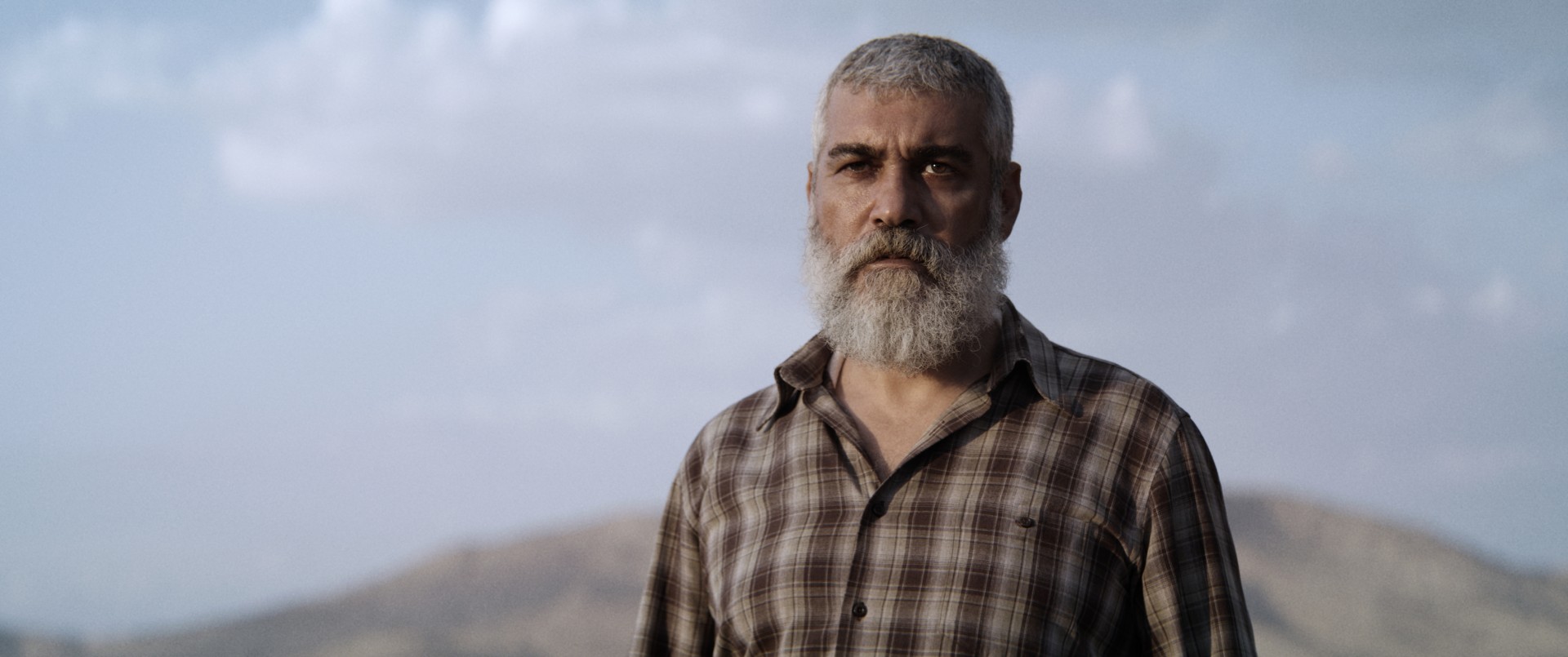
VERDICT: While violent savagery simmers between two Kurdish clans who live in adjoining villages, director Emin Alper raises the tension from fear and suspicion to vicious messianic-style murder in ‘Salvation’.
A director who takes a long, often symbolic view of strife within society, Emin Alper is not afraid to ramp up the visual and emotional intensity in his work. In Salvation (Kurtulus) he again demonstrates his mastery at manipulating atmosphere to highlight the divisions and mindless group-think that characterize so many societies today. Bowing in Berlin competition, the film is as atmospheric and foreboding as a thriller, vaunting the dazzling black-and-white visual fireworks that have inspired many festival films this year.
Alper has earned festival attention from his first film Beyond the Hill, which bowed in the Berlinale Forum in 2012; his second feature Frenzy (2015) won the Special Jury Prize in Venice. In 2022 Burning Days appeared, a searing drama of corruption in a small Turkish town, seen through the eyes of an idealistic young prosecutor. Taking a new tack, Salvation is conceived as a choral film in which the viewpoint shifts dramatically from one character to the next, from the reasonable and conciliatory to the fanatic, even though they belong to the same clan and village.
However, audiences outside Turkey might need to do some background reading regarding the area of eastern Anatolia where many Kurdish people reside, and their evolving relationship to the armed extremists in their midst, as well as the state police. Salvation appears to offer the snapshot of a moment in time when Kurdish terrorism is on the wane and the local population is actively aiding the police as “guardians” of the territory. As the sun rises over a breath-taking terraced landscape, a group of men with rifles have killed two terrorists in the hills. As though it was a hunting expedition, they load the bodies onto a truck for the police and congratulate each other on a good night’s work.
But even as the threat of armed conflict diminishes, another fearsome source of violence arises out of the past. An ancient stone village dug into a hillside has been split into two parts in the course of a long-running and senseless blood feud. Now the Hazerans, who inhabit the upper village, fall prey to a false preacher who calls himself a prophet and spurs them to violence against the Bezaris living in the lower village. The Hazerans herd sheep; the Bezaris (maligned as “traders and usurers”) farm the land; and the unfounded rumor is that the Bezaris intend to steal the Hazerans’ land.
At first the unrest seems limited to a few hotheads in the upper village and the gossip of bigoted women; it is contained by the modern young sheikh whose sermons during prayers cool things off. But soon crazy old Mesut (Caner Cindoruk) starts having nightmares he takes for visions and assumes spiritual leadership of the Hazerans. His platform is to rid the area of the Bezaris once and for all – and the majority of the community gets behind him, precipitating the film’s terrifying conclusion.
Though mainly told through the actions and reactions of the men in the village, women also have a role to play. Mesut’s wife Gulsum (Ozlen Tas) has given him four children and is pregnant again, yet her husband convinces himself she had an affair with the Bezari leader when she lived in his house as a servant and must be purified. In stark contrast is Fatma (Naz Goktan), the wife of a hardliner and an active guardian herself, who shamelessly slanders Gulsum on every occasion. Not even children are spared the fanatic fury of Mesut’s holy war, giving the story an increasingly darker vibe when the pressure cooker of hatred explodes.
The barbaric scenes spring vividly to life in the endless rock formations of an Anatolian valley, eerily washed in ghostly black-and-white night photography (Ahmet Sesigurgil and Baris Aygen share cinematography credit). Composer Christiaan Verbeek (Two Prosecutors) matches his score to the primordial sounds of drumbeats and the very unique religious chanting of the Kurdish cult.
Director, screenwriter: Emin Alper
Producer: Nadir Operli
Cast: Caner Cindoruk, Berkay Ates, Feyyaz Duman, Naz Goktan, Ozlem Tas
Cinematography: Ahmet Sesigurgil, Baris Aygen
Production design: Nadide Argun Van Uden
Costume design: Gulsah Yuksel
Editing: Ozcan Vardar
Music: Christiaan Verbeek
Sound design: Nardi Van Dijk
Production companies: Liman Film (Turkey) in association with Bir Film (Turkey), Circe Films (Netherlands), Meltem Films (France), TS Productions (France), Horsefly Films (Greece), Second Land (Sweden)
World sales: Lucky Number (France)
Venue: Berlin Film Festival (Competition)
In Kurdish, Turkish
120 minutes