
The Arab
The Arab
VERDICT: Algerian director Malek Bensmaïl reframes the iconic Albert Camus novel 'The Stranger' from an Arab viewpoint in this imperfect but ambitious literary adaptation.
The cult classic novel L’Étranger (The Stranger) is enjoying a buzzy comeback right now, more than 80 years after it first catapulted French existentialist icon Albert Camus to literary rock-star fame. Arriving hard on the heels of director François Ozon’s sumptuous new big-screen adaptation, Malek Bensmaïl’s The Arab puts a playfully post-modern, postcolonial twist on the same source material. It is based on Algerian journalist Kamel Daoud’s prize-winning 2013 debut novel Meursault, Contre-Enquête (The Meursault Investigation), which revisits the events of the Camus story through the eyes of its Algerian characters, in the process mounting a sophisticated critique of its Eurocentric gaze.
Moving from documentary to drama, Bensmaïl’s debut fiction feature is a modest art-house sideshow compared to Ozon’s lavish period piece. Even so, students of colonial history, culture vultures and Camus fans will likely take an interest, while festival bookers and cinema programmers are sure to see the appeal of screening both films in tandem, setting up a fruitful dialogue between the two. Indeed, L’Étranger is playing this week at IFFR in Rotterdam, alongside the world premiere of The Arab.
Using an iconic French text as its starting point, Daoud’s book plays games with fact and fiction, blurring the borders between literary truth and real history as it tracks Algeria’s bumpy progress from French colony to hard-won independent state in 1962, with much chaos and bloodshed to follow. Notoriously, Camus did not even name the Algerian murder victim shot by his anti-hero Meursault, simply calling him “The Arab”. Daoud, and Bensmaïl, give him a name: Moussa. They also allow him a rich back story and a wider family hinterland, chronicling how the aftershocks of his death went on to overshadow the lives of his domineering mother (Palestinian screen queen Hiam Abbass) and younger brother Haroun (portrayed by multiple actors at different ages) for decades afterwards.
Bensmaïl makes a few changes and cuts to Daoud’s novel, pinpointing the framing story in the mid 1990s, when Algeria was at the peak of its “Black Decade” of civil war and factional Islamist violence. Initial narrative focus is on Kamel (Nabil Asli), an investigative reporter based in the port city of Oran. One night, while trawling the city’s late-night bars, he meets a wily older gentleman (Ahmed Benaissa) with a remarkable claim: that L’Étranger was a true story “stolen” from his family, and that he is Haroun, brother of the man murdered by Meursault some 50 years before.
A hard-nosed newsman and professional cynic, Kamel initially shrugs off Haroun’s fanciful claims. But their wary exchanges slowly build into a bond of trust, opening up deeper interrogations of memory and guilt, personal regrets and national trauma. Freewheeling through Algeria’s painful 20th century history, Haroun reassures Kamel that “writing is a form of resistance.”
Haroun’s story also becomes a confession, consciously mirroring key events in L’Étranger by revisiting a murder that he himself committed as a young man, fatally shooting a Frenchman who was seemingly complicit in Meursault’s crimes. Occurring around the same time as two notorious real massacres on both sides of the Algerian War of Independence, this act of personal score-settling serves as emblematic revenge against decades of colonial injustice. But it also leaves Haroun haunted by remorse, and disillusioned with the failed promises that followed victory against the French.
Clearly made on a modest budget by a fairly inexperienced director, The Arab lacks finesse at times. The time-jumping plot feels episodic and scrambled, occasionally staying into overheated family psychodrama. All the same, this is a mostly compelling metatextual experiment, made with sufficient intelligence, wit and lofty ambition to excuse a few clunky, bumpy touches.
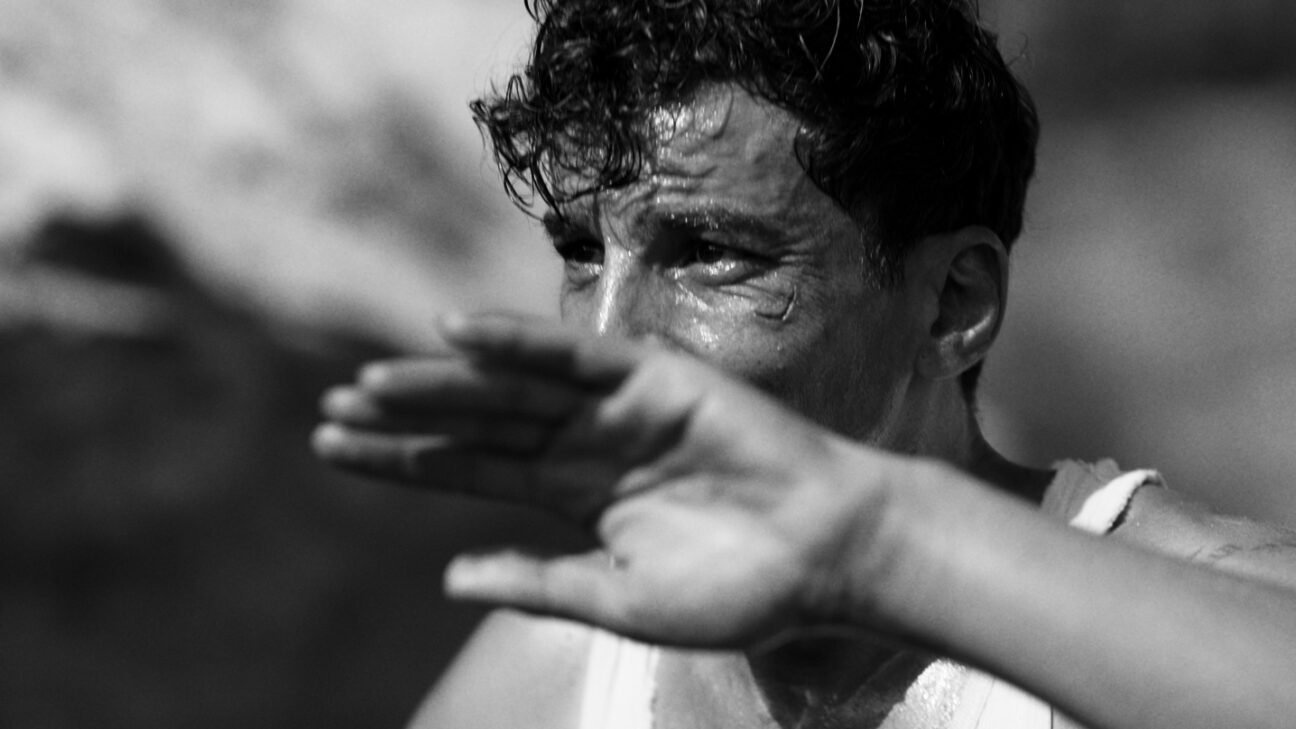
In visual terms, handsome Algerian landscapes and retro-chic vintage production designs are positive selling points. In another pleasing stylistic flourish, Bensmaïl and his team switch between chromatic palettes, using crisp monochrome with spare flashes of blood red for flashbacks to the events drawn from the Camus novel, then full colour for later chapters, symbolically shaking off the narrow aesthetic limitations imposed on Arab characters by European observers.
Director: Malek Bensmaïl
Screenwriters: Jacques Fieschi, Malek Bensmaïl
Cast: Hiam Abbass, Nabil Asli, Ahmed Benaissa, Dali Benssalah, Thierry Raphaël, Brahim Derris, Amina Ben Ismail
Cinematography: Gilles Porte, Lionel Yan Kerguistel
Editing: Matthieu Bretaud, Julia Gregory
Production design: Hachemi Zertal
Music: Nicolas Rabæus
Production companies: Hikayet Films (Algeria), Tita B Productions (France)
World sales: Hikayet Films
Venue: International Film Festival Rotterdam (Big Screen Competition)
In Arabic, French, Spanish
106 minutes