
The Lady
El Sett
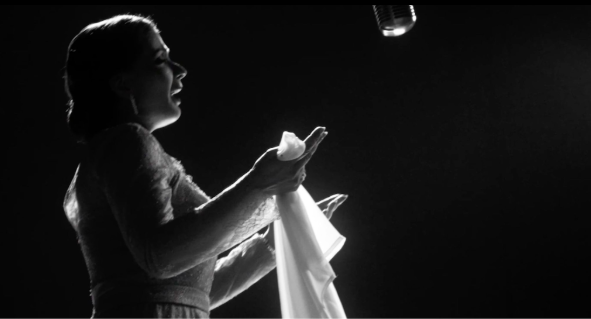
VERDICT: Tracing Egypt’s most enduring musical legend and a touchstone across the Arab world, Marwan Hamed’s 'The Lady' ('El Sett') is less interested in embalming Umm Kulthum's legend than in dramatizing what it cost to become her.
The fantasy that greatness comes without bruises is unmasked in Marwan Hamed’s The Lady (El Sett), the captivating, unconventional biography of one of the Arab world’s leading female artists, a woman who exerted a dominating presence in a male-dominated music industry and political sphere during the last century in Egypt. Making its European premiere at IFFR 2026, it is screening in the Limelight sidebar alongside the festival’s “Focus: Marwan Hamed” programme. This star-studded, big-budget production tells the story of the great Umm Kulthum with commendable craft.
Umm Kulthum was the towering Egyptian singer whose voice defined the modern Arab world, turning personal longing and national history into a shared, almost sacred soundtrack. Director Hamed and screenwriter Ahmed Mourad build the story with accumulating pressure, a never-quite-loosening force that haunts the protagonist. The best move in Mourad’s screenplay is not to ask what Umm Kulthum (played by Egyptian actress Mona Zaki) achieved, but what she endured. That intention, at its best, becomes the film’s real subject: the burden of being Umm Kulthum.
From being born in poverty and forced into child labour that turned her talent into currency, the star’s legend rises, pushing her to navigate a city and industry that demanded femininity and masking on its own terms, working conditions that tested her boundaries, and a public that loved her so much that it left her nowhere to hide.
She was a “cash prize” to her family and male relatives, but also to other men: producers, poets, distributors, and theater managers. Since her childhood in El-Senbellawein at the beginning of the century, a city not far from Cairo but totally different, she began accompanying her father (played by Sayed Ragab) to perform religious chants at weddings and religious holidays, while disguised as a boy so as to be taken seriously. He made the bucks, while she got a cola. She gets spotted by a booking agent, who introduces them to 1920s burlesque and cosmopolitan Cairo, where in order to perform she has to adopt a certain feminine masking needed for a singer-diva.
A series of incidents describe her life: feeling lonely at night after friends and family leave, fearing medical operations, fearing a change in her figure and facial expressions, facing classism from members of the monarchy and sexism from male musicians, being offered love by men in exchange for obedience. The Lady, in short, imagines not just what makes an artist, but the formation of a woman who is both formidable, powerful, and fragile.
Mona Zaki plays Umm Kulthum as someone who has trained herself to be a figure of authority, able to dominate rooms, setting terms and holding silence as a weapon, while still carrying the exhaustion of never being allowed a moment of softness without consequences or a request. These moments are captured beautifully by the camera of D.P. Abdelsalam Moussa.
Throughout the film, the story moves in a non-linear rhythm, jumping through decisive stations in the singer’s life, challenging previous visual images and biographical productions. Most of these films and TV series were state-produced hagiographies narrating the history of a saint, a flawless woman always masking strength and femininity and class, whose only challenge was illness. Hamed humanises “Kawkab al-Sharq” (Star of the East), capturing the fragility of one of the Arab world’s most powerful women. He employs soundscape and music to do heavy lifting, and allows public life to be staged as drama. Crowds, corridors, waiting rooms, the machinery of performance, are shown to take a toll on her private life. With composer Hesham Nazih and sound designer Wayne Pashley amplifying the film’s scale, Hamed (who made his name with mainstream epics like The Yacoubian Building and Kira & El Gin) tells her story unconventionally.
In addition to mapping how her public purpose became inseparable from the political tides of contemporary Egypt — from the waning of the monarchy under British dominance to the republican military upheaval of 1952 and the rise and fall of pan-Arabism — the film investigates themes like loneliness, body image, being careful with money, and what it means to be a powerful woman in a man’s world, where women are pushed into certain roles. This is not how most Egyptians see their beloved Umm Kulthum. The Lady carries a strong feminist current in its depiction of the everyday mechanics of how she was looked at, evaluated, and negotiated over, and most importantly how she lived in survival mode in a world eager to consume her voice while disciplining her as a person.
Director: Marwan Hamed
Screenplay: Ahmed Mourad
Cast: Mona Zaki, Mohamed Farag, Sayed Ragab, Tamer Nabil, Ahmed Khaled Saleh
Producers: Ahmed Badawy, Tamer Morsi, Mohammed Hefzy, Marwan Hamed, Fadi Rahim, Wael Abdallah
Cinematography: Abdelsalam Moussa
Editing: Ahmed Hafez
Production design: Muhammed Attia
Sound design: Wayne Pashley
Music: Hesham Nazih
Production companies: Film Square, Synergy Films, Film Clinic, Big Time Fund, Luxor Studios, Oscar Picture
Sales / World rights holder: MAD Solutions
Venue: International Film Festival Rotterdam (IFFR) (Limelight)
In Arabic, French
162 minutes