
The Loneliest Man in Town
The Loneliest Man in Town
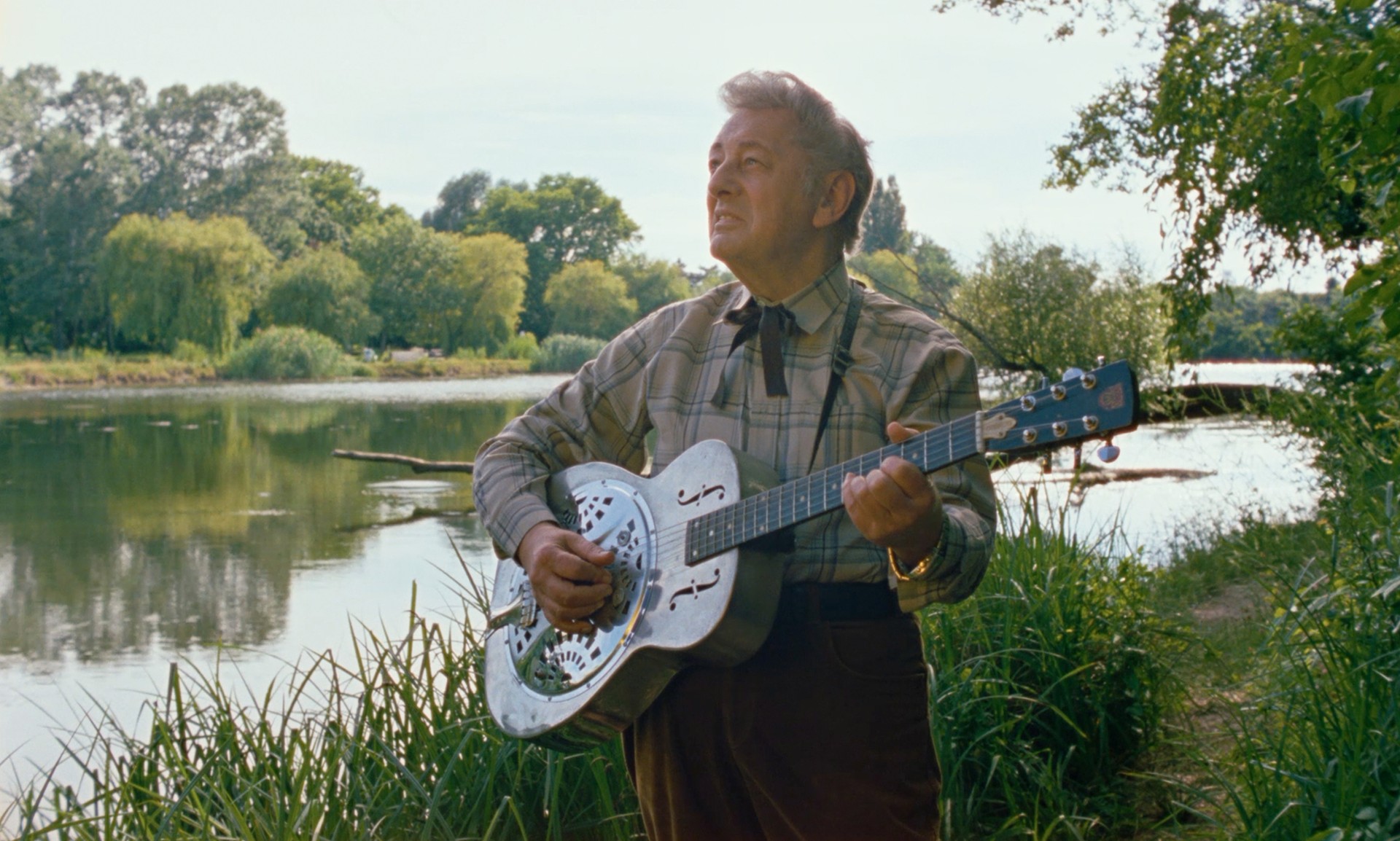
VERDICT: A droll delight from Austria, whose wry performance by aging blues player Al Cook made it one of the most popular films in Berlin competition, ‘The Loneliest Man in Town’ once again pushes the documentary envelope in unexpected ways devised by filmmakers Tizza Covi and Rainer Frimmel.
Austrian cinema seems to have an inexhaustible supply of eccentric characters to dissect and explore on screen, from the grotesque and psychologically misshapen outcasts of Ulrich Seidl to those of Michael Haneke and Jessica Hausner veering into horror territory. Blues guitarist and lifelong Elvis devotee Alois Koch (stage name Al Cook), instead, would seem more at home in an Aki Kaurismaki film, warming the heart with his solitary retro life lived on memory lane. In its Berlin competition slot, The Loneliest Man in Town earned positive consensus as a Berlinale crowd-pleaser, indicating strong crossover potential after the festival.
The film comes on the heels of the 2022 Venice sleeper Vera, which starts as a documentary about the depressed daughter of Italian spaghetti western star Giuliano Gemma, only to slide into a presumably fictional story of celebrity exploitation. In the new film, the directing duo Tizza Covi and Rainer Frimmel investigate the wonderfully authentic blues singer and guitarist Al Cook, who has single-mindedly devoted his entire life to American blues music. His comfy home is a sprawling shrine full of out-of-tune pianos, fancy guitars, scratchy LPs and loudspeakers, along with newspaper clippings and framed photos of Black musicians like Robert Johnson and Ma Rainey who pioneered the blues.
His collection of original Elvis Presley memorabilia is also vast and carefully preserved in suitcases. But the King’s influence extends to Al’s gray side-swept pompadour and leather jacket worn with the collar turned up. The extreme care with which he dresses is an endearing joke throughout the film.
He has taught himself English by repeating song lyrics over and over.
He has never set foot in America.
Now calamity is literally at his door. His beloved apartment (“my life”) has been bought by a crass real estate developer and is on the verge of being demolished. Al is the only tenant in the building who has refused to vacate. The first hint that the baddies mean business is when they cut off his power on Christmas Eve. Instead of reacting with anguished panic, Covi and Frimmel have him play the scene with understated control as he checks the fuses and calls the city power hotline, only to be told they will send a repairman after the holidays.
He treats the chubby, fully-tattooed owner of the building with the same irritated but laid-back politeness. One day he walks in to find the man stripped to the waist and snoring on his sofa, where he has polished off Al’s champagne. Without waking him, Al picks up a pen and signs the eviction notice, accepting the inevitable while changing his life forever.
At this point the film noticeably shifts register: far from being defeated, Al is looking forward into a brave new future, which he imagines will take him to Memphis and the Mississippi delta. There he plans to reinvent himself and get a foothold in the music industry – though his memories are forty years out of date. As he slowly sells off his souvenirs and the clutter of a lifetime, even the videos of his gigs as a young man, the mood is not sad or downbeat. At times Al confesses to an old girlfriend (now elderly and alone like himself) that he doesn’t know how to carry on. But then he remembers his youthful wish — to “get away from narrow-minded Austria”. And it spurs him on.
Watching the film, it is impossible to decide if and when the story wanders away from the “real” Al Cook. That he is a real blues musician is documented in his album covers and the fact that most of the songs in the film are written, arranged, played and sung by Al. But is the drama of the demolition of his once genteel building an incontrovertible fact? What about this relationship to his old flame? The filmmakers tease the viewer with doubts about where to draw the documentary line, as they did in Vera. For most general audiences it will make little difference, as the pleasure is in following the very consistent character face change and upheaval. And in listening to some very good blues.
Directors, producers: Tizza Covi, Rainer Frimmel
Screenplay: Tizza Covi
Cast: Alois Koch, Brigitte Meduna, Alfred Blechinger, Flurina Schneider
Cinematography: Rainer Frimmel
Production design: Lotte Lyon, Christian Gschier
Editing: Tizza Covi, Emily Artmann
Music: Al Cook
Sound design: Nora Czamler
Production company: Vento Film (Austria)
World sales: Be For Films (France)
Venue: Berlin Film Festival (Competition)
In German, English
86 minutes