
To Hold A Mountain
Planina
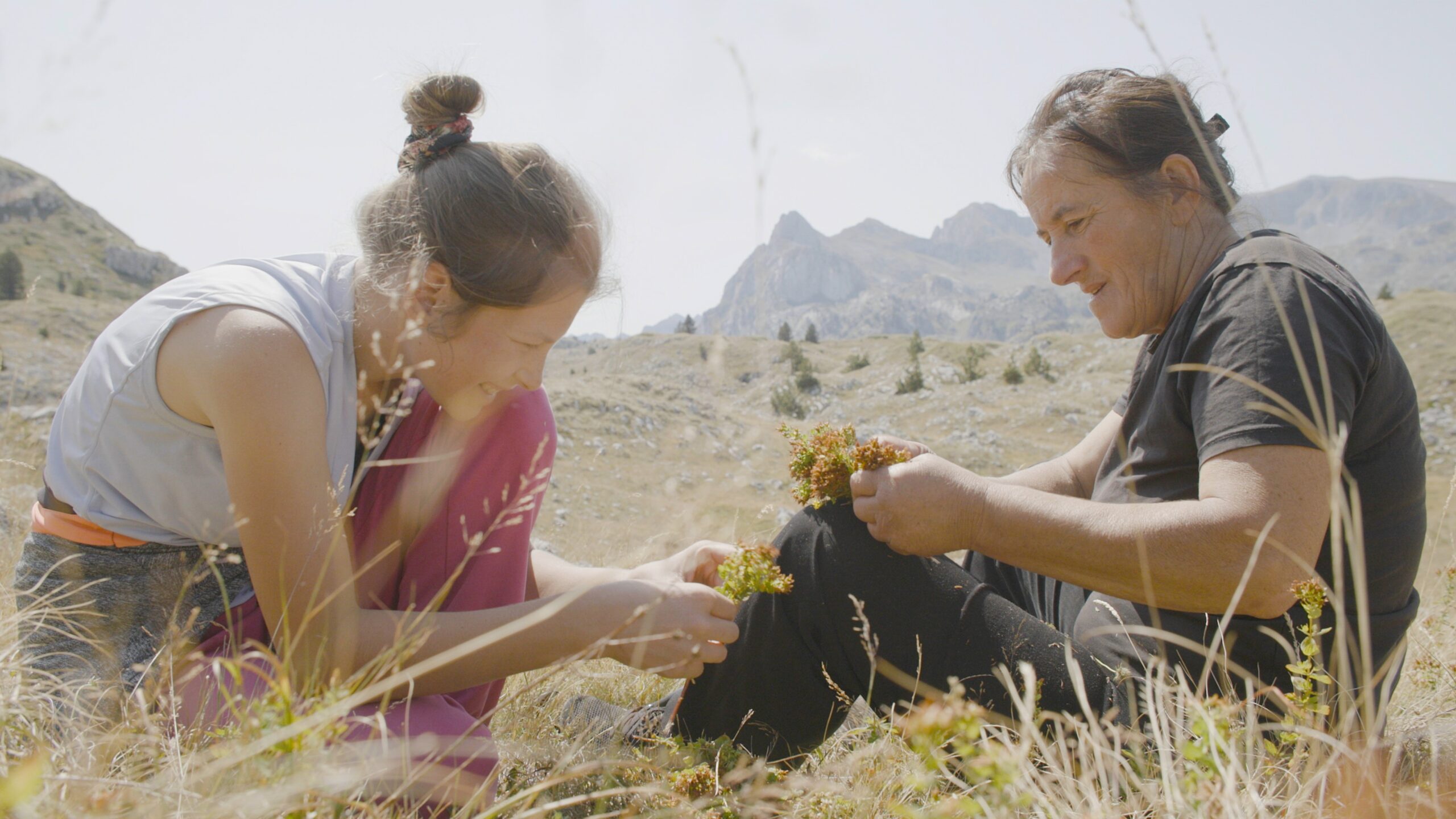
VERDICT: A shepherdess takes on the military in 'To Hold a Mountain', a documentary about bullets versus beauty.
If you visit Montenegro, you might find a souvenir refrigerator magnet bearing one the country’s “ten commandments.” Featuring such rules as “Rest during the day, so you can sleep at night.” and “Do not work. Work kills”, the idioms reflect a popular stereotype of the nation’s supposed idleness. To Hold A Mountain offers an undeniable rebuttal. The scenic and poetic documentary from Biljana Tutorov and Petar Glomazic takes viewers among the hills of the Sinjajevina mountains where a shepherdess runs a farm from dawn to dusk, all while fighting to protect the land that raised her.
Gara has known the pastures of Sinjajevina her entire life. She considers the mountain range to be her mother, and its inhabitants its children. Cows graze among its grasses, producing milk that creates unique variants of Montenegrin cheese. Sheep bleating and countless stray kittens mewing provide the soundtrack to Gara’s day as she tends to her livestock. By her side is her adolescent daughter Nada, who expertly assists in every task that needs to be done. Theirs is a life of little luxury. There isn’t a television in sight, and if there is an internet connection, they certainly don’t have time for social media or email. But they live in an easy harmony with each other and their surroundings — until gunshots start being heard in the distance.
After taking in Eva Kraljevic’s stunning cinematography, and learning that the region is UNESCO protected, it beggars belief that the Montenegrin military would even considering building a NATO training ground anywhere on this land. Gara is in disbelief too and, along with her neighbors, works to drive any such intrusion out of the vast sweep of their home. The army’s rationale that Sinjajevina offers an ideal backdrop to military vehicles and weapons is so absurd, the filmmakers don’t waste time engaging other sides of the argument.
Indeed, To Hold A Mountain draws its focus primarily on a way of life that is not only worth protecting, but brings with it knowledge and skills that have been passed down from one generation to the next. Tutorov and Glomazic’s contemplative and observant picture is more attuned to the rhythms of Gara and Nada’s life than the traditional framework of a David versus Goliath story. Aside from a couple of sequences of community action, and another of Gara appearing on a television news show to confront military officials, the film stays rooted in its pastoral milieu.
Gara’s devotion to her homeland and her reasons for defending it are clear, but beneath them, perhaps unspoken, is also a rejection of the male violence that has haunted her life. We come to learn that Nada is not actually her daughter, but her niece. Gara’s sister Mika was brutally murdered shortly after Nada was born by her ex-husband. And casting a shadow over the narrative is the man’s release from prison and what steps he might or might not take to reconnect with the family he brutalized. It would not be a leap to suggest that Gara correlates domestic violence with the military forcing themselves onto her “mother” Sinjajevina.
Hard-won victory eventually comes for Gara and her community, but progress still makes its presence known. The film’s most quietly shocking image is simply that of a dirt road being paved over with asphalt. Even if the military won’t run their exercises, the area has been pegged as a burgeoning eco-tourism hotspot. The outside world will find its way in one way or another, but at the very least, Gara has set the terms and shown Nada how it can be done in the years ahead.
Directors, screenplay: Biljana Tutorov, Petar Glomazic
With: Mileva Gara Jovanovic, Nada Stanisi
Producers: Petar Glomazic, Quentin Laurent, Rok Bicek
Cinematography: Eva Kraljevic
Editing: George Cragg
Music: Drasko Adzic
Sound: Julij Zornik, Samo Jurca
Production companies: Wake Up Films (Serbia)
Venue: Sundance Film Festival (World Cinema Documentary Competition)
In Montenegrin
103 minutes