
Trial of Hein
Der Heimatlose
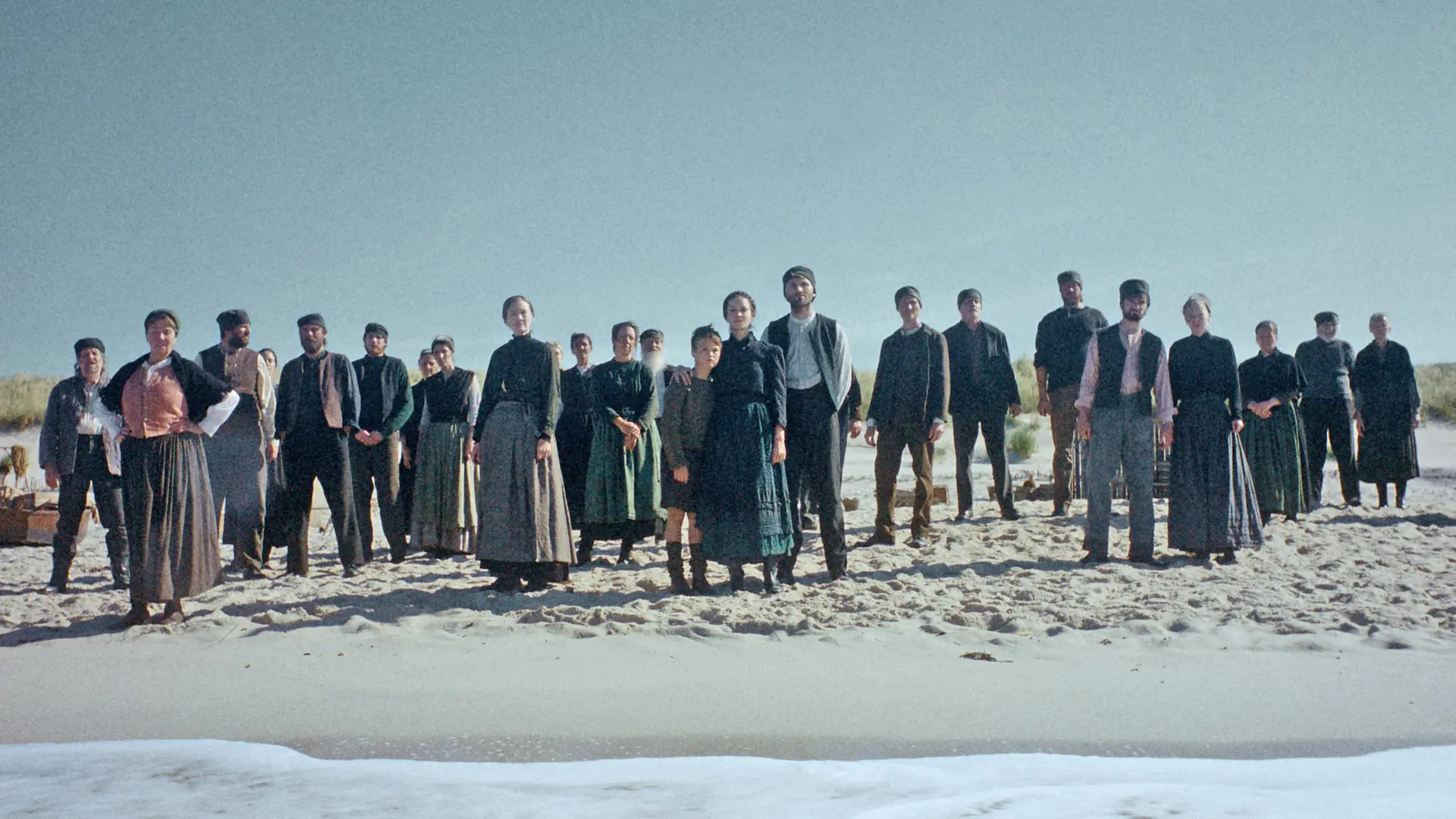
VERDICT: Home is definitely not where the heart is in writer-director Kai Stänicke's ponderous but mostly impressive drama about exile, identity and repressed desire.
A world-weary traveller returns to his remote North Sea island home after 14 years on the mainland, only to be greeted with suspicion and paranoia, in young German writer-director Kai Stänicke’s self-serious but impressive debut feature. Set in some purposely vague Baltic backwater of 19th century Europe, Trial of Hein flirts teasingly with the visual grammar of folk horror, psychological thriller and magical realist fable. It ultimately settles into a more conventional meditation on homeland and exile, fluid identity and repressed desire. But the journey is worth taking even if the destination slightly disappoints.
Trial of Hein borrows the clothes of naturalistic playwrights like Ibsen or Strindberg, but adds an allegorical fairy-tale undertow, plus some heavily mannered theatrical elements. If the plot feels familiar, that may be because the homecoming stranger with a mysteriously murky identity is a recurring archetype in both fiction and non-fiction films, from The Return of Martin Guerre (1982) to Sommersby (1993), The Astronaut’s Wife (1999), The Imposter (2012) and beyond. World premiered to positive reviews in Berlin this week, Stänicke’s solemn drama has solid art-house credentials that should ensure further festival interest.
A painterly opening sequence zooms in on a gaunt, intense, thirtysomething man (Paul Boche) crossing a foggy sea to the remote island village he once called home. But there is no warm welcome awaiting him in the bosom of this tight-knit fishing community. The stranger claims to be Hein, a native son of the island, but 14 years later nobody seems able to confirm his identity. His sister, a mere child when he left, is wary. His ailing mother has dementia, and struggles to recognise her own son. Even his closest confidantes from adolescence, Greta (Emilia Schüle,) and Freidemann (Philip Froissant), are torn, the intense bond they once shared now adrift on a foggy ocean of unreliable memory.
Wary of outsiders, the island’s Amish-like elders treat Hein as an invader from the outside world, seeking to corrupt their simple way of life with his shady motives and big city ways. Their solution is to stage a public “trial” that puts this interloper to the test, measuring his claims of belonging against the values of the wider community. Over several days, clashing memories and competing versions of history are aired, which only serve to amplify hidden tensions and buried secrets.
Spanning two ponderous hours, Trial of Hein takes a long time to deliver its Big Surprise Twist, which is not actually that big, nor really much of a surprise. No spoilers here, but Stänicke does have eloquent points to make about his protagonist’s real identity, about conformity and complicity, repression and denial, and how our public persona can be a performative facade. All valid dramatic themes, but they add up to an oddly anti-climatic pay-off. The limitations of a first-time film-maker, single-minded and heavy-handed, are probably factors here.
In aesthetic terms, Trial of Hein is a polished and pleasing affair. The film’s maritime landscapes have a rugged, elemental beauty, well complemented by Florian Mag’s precisely choreographed overhead drone shots and Damian Scholl’s elegantly chilly chamber-orchestra score. Making resourceful use of a minimal budget, the production design balances broadly realistic, period-correct elements with stylised, quasi-Brechtian artifice. Most strikingly the village set is a huddle of deconstructed wooden houses without walls or roofs, reminiscent of the town in Lars Von Trier’s Dogville (2003). In his Berlinale press materials, Stänicke admits this design decision was initially dictated by financial limitations, but it also underscores the theme of small town life being a kind of theatrical performance. This world is a stage, and all the men and women merely players.
Director, screenwtriter: Kai Stänicke
Cast: Paul Boche, Philip Froissant, Emilia Schüle, Stephanie Amarell, Jeanette Hain, Irene Kleinschmidt, Julika Jenkins
Cinematography: Florian Mag
Editing: Susanne Ocklitz
Music: Damian Scholl
Production design: Seth Turner
Producers: Andrea Schütte, Dirk Decker, Dario Suter
Production companies: Tamtam Film (Germany)
World sales: Heretic, Athens
Venue: Berlin Film Festival (Panorama)
In German
122 minutes