
Yellow Letters
Gelbe Briefe
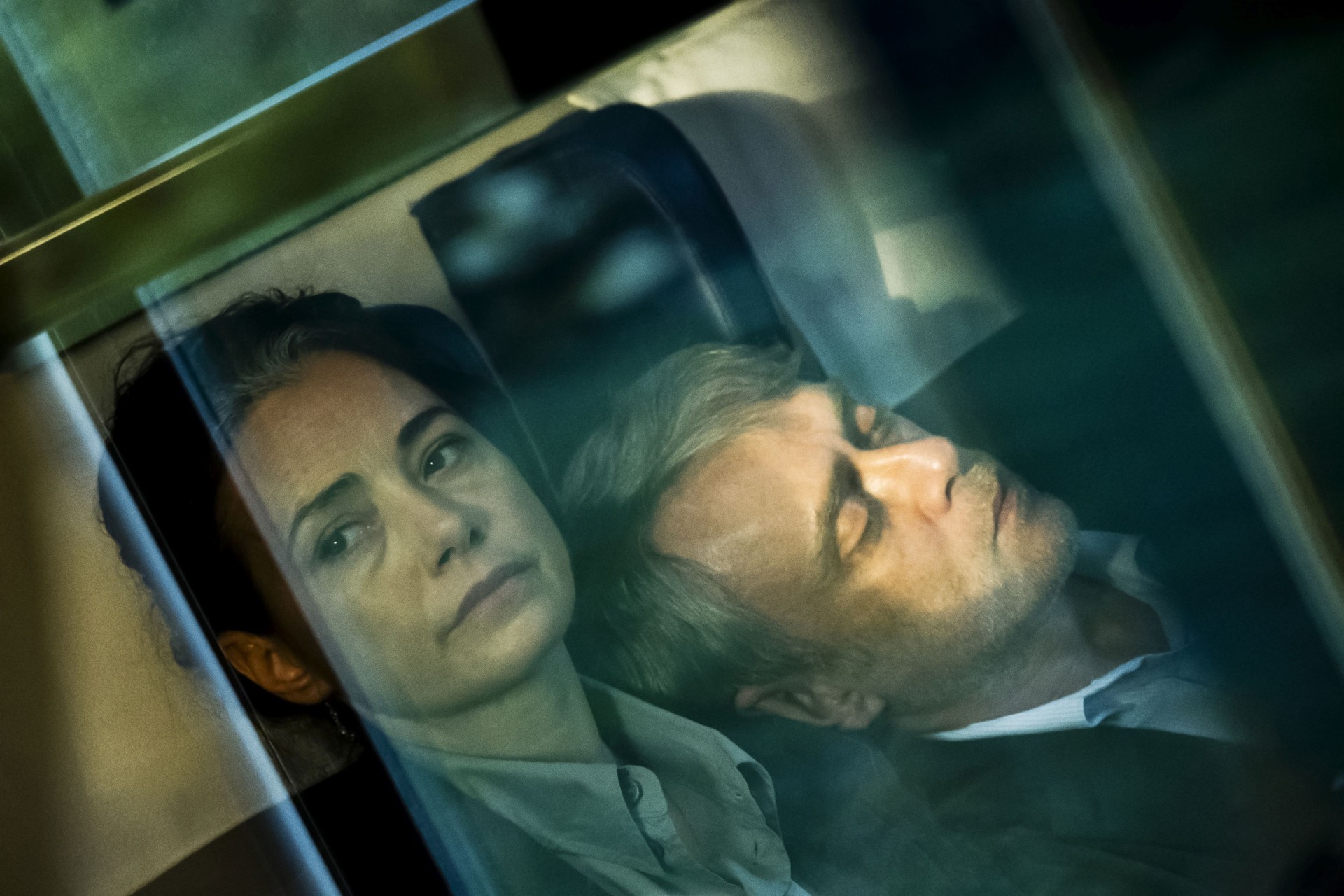
VERDICT: An acclaimed Turkish actress and her theater director husband lose their livelihoods over a petty dispute with the authorities in power in ‘Yellow Letters’, a deeply disturbing tale that struggles to stay on topic.
The artistic/intellectual couple Aziz and Derya see their worst nightmare come true on the eve of their greatest theatrical success in Yellow Letters, a harrowing tale that is dismayingly based on real life events. One only wishes the screenwriters had kept the long-winded account of disintegrating middle-class lives more focused and concise, instead of continually getting lost in side issues of parenting and how the couple clawed their way back from financial ruin. Still, it is a brave film that pulls no punches in describing how brazenly the government curbs freedom of expression and the helplessness of the common citizen before the arrogance the power.
Mimicking the film’s setting, director Ilker Catak adopts a theatrical approach to telling the story, giving the actors lots of dialogue and cutting repartees to play with when they converse. This can get on the viewer’s nerves pretty fast, despite the bravura of Tansu Bicer as the introverted playwright-teacher Aziz and Ozgu Namal as his fiery and talented actress-wife Derya. Everything seems much more deliberately ambitious than in Catak’s breakthrough feature The Teachers’ Lounge, which used a schoolroom as a miniature of Turkish society and ignited Berlin’s 2023 Panorama sidebar, going on to rep Germany in an Oscar bid. The current film bowed in Berlinale competition, after which its likely audience will be the dinner jacket arthouse regulars, especially in Germany, which is the main coproducer with France and Turkey.
Here the yellow letters of the title refer to what in other places are called pink slips, those nasty bureaucratic notices that a person is being terminated on an ongoing job. They arrive on the heels of a triumphant opening night of Aziz’s new play, which is attended by the governor in person. From the glimpse we get of the closing scene, where actors writhe in metal cages suspended from the floor and Derya declaims a speech on freedom, the play seems a bit critical of society’s leaders. But the governor’s object is apparently to get some photos with the star – a desire Derya perilously refuses to satisfy.
Whatever the real reason behind the catastrophe that follows, it engulfs not only the prominent couple but a considerable number of other teachers at the college where Aziz has his day job teaching dramaturgy. A few days earlier, his class had been nearly deserted when most of his students took part in an anti-government demonstration. Aziz doesn’t realize he’s being video-recorded when he suggests the remaining students in the classroom are free to participate, too. The tape will only surface much later in the film, when Aziz’s criminal case for abetting “terrorists” comes up in court, a Kafkaesque proceeding (mercifully brief) where he sees his chances of getting a dismissal slip through his fingers.
But first, as he waits for his long-postponed trial, he must find a way to keep his family fed, clothed and sheltered. Losing two incomes is a hard blow, but there is his elderly mother to fall back on. So the family – which includes their difficult 13-year-old daughter Ezgi (a vivid Leyla Smyrna Cabas) – leaves their comfortable life-style in Ankara to cram into granny’s old-fashioned Istanbul apartment. Thus begins a meandering saga of how the family bows to the slings and arrows of outrageous fortune, while the story gets farther away from the idea of corrupt politics and closer to everyone finding an individual solution to get through life. (In a curious parallel to Park Chan-wook’s No Other Choice, which also featured a middle-class family on the skids, the first expense to be cut is the daughter’s music lessons.)
One can dispute the rather glib symbolism of how it all turns out in the final reel, but Catak is admirable in painting a grimly realistic picture of democracy slipping away. This time it was the intellectuals who got hit; next time it could be anyone. Judith Kaufmann’s warm cinemtography concentrates on contrasting interiors; there don’t seem to be many exteriors in the film, and there may be a reason for that. Titles inform us that we are watching “Berlin as Ankara” and later “Hamburg as Istanbul” — suggesting a production decision dictated by necessity.
Director: Ilker Catak
Screenwriters: Ilker Catak, Ayda Meryem Catak, Enis Kostepen
Producer: Ingo Fliess
Cast: Ozgu Namal, Tansu Bicer, Leyla Smyrna Cabas, Ipek Bilgin
Cinematography: Judith Kaufmann
Production design: Zazie Knepper
Costume design: Christian Rohrs
Editing: Gesa Jager
Music: Marvin Miller
Sound design: Sebastian Tesch, Florian Holzner
Production companies: if…Productions Film (Germany), Haut et Court (France), Liman Film (Turkey)
World sales: Be For Films (France)
Venue: Berlin Film Festival (competition)
In Turkish
128 minutes