
The Kidnapping of a President
Presidentin kyyditys
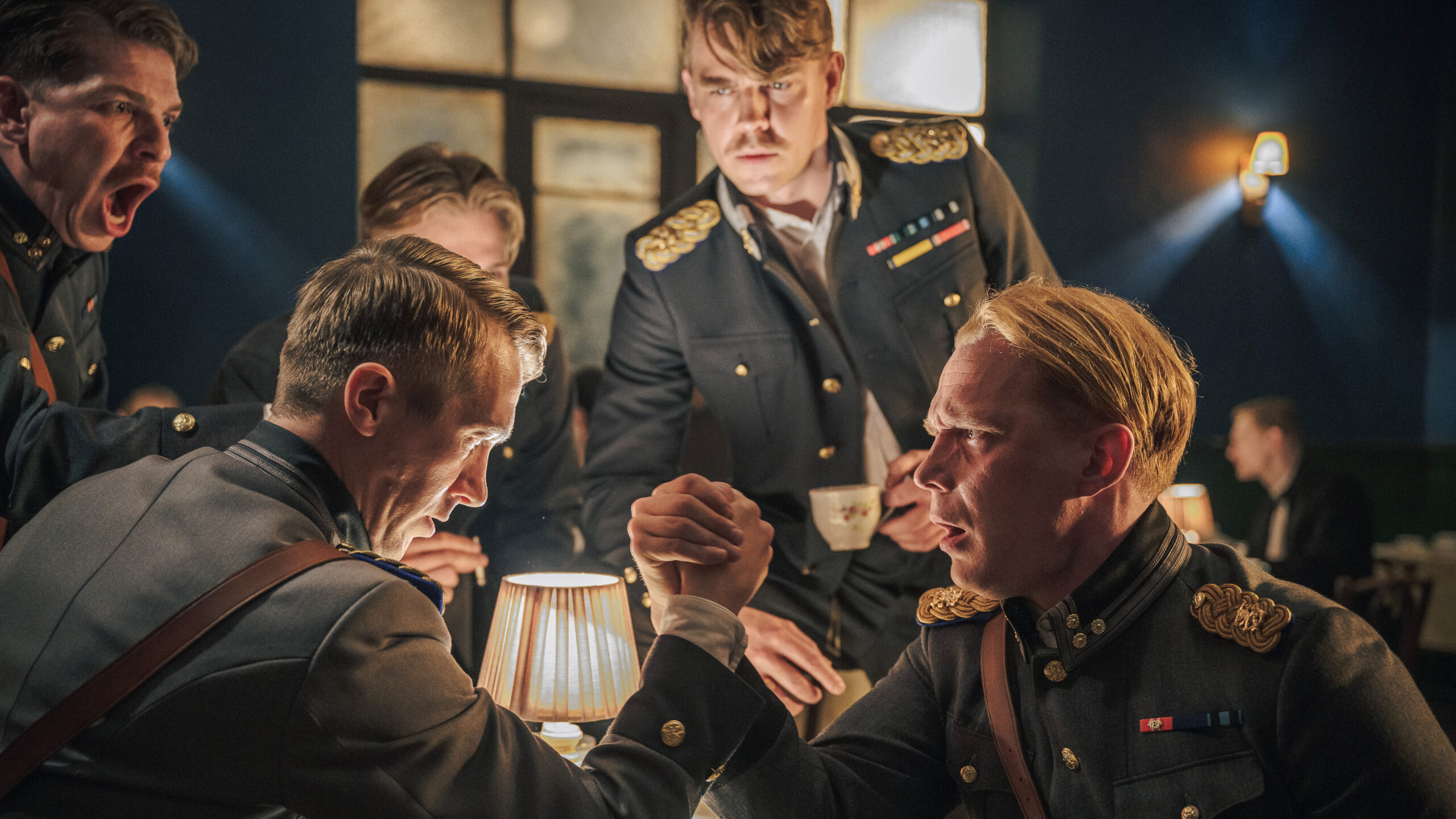
VERDICT: Political upheaval is the backdrop for a fact-based dark comedy in the shape of Samuli Valkama’s ‘The Kidnapping of a President’.
“There is no room for empathy when reshaping a nation,” says Major General Kurt Wallenius at one point during the events of The Kidnapping of a President, a title that has become increasingly topical in the weeks leading up to the film’s world premiere in Rotterdam (which occurred less than a month after US forces abducted Nicolás Maduro in Venezuela). The contemporary relevance, paired with the overall comedic tone, should give Samuli Valkama’s film plenty of international exposure.
The plot is rooted in real events, which took place in 1930. At that moment, far-right movements were on the rise in multiple areas of Europe (Mussolini gets namechecked), and Finland was not immune to this. It’s in this context that we first make the acquaintance of Eero Kuussaari, an army officer who longs for a promotion but is unlikely to receive one due to his reputation for sloppiness and incompetence (his track record in Germany earned him the derisive nickname Der Saboteur).
Nevertheless, he’s still somewhat in the good graces of the aforementioned Wallenius (Aku Sipola), who shares his nationalistic vision with a restricted circle of army friends. Next thing you know, the small group is at a hotel in Joensuu, where both Eero and Wallenius receive a coded telegram neither of them can make sense of. Eventually, it dawns on them that, while heavily inebriated, they set in motion a coup d’état by mandating the abduction of Kaarlo Juho Ståhlberg (Pertti Sveholm), the former President of Finland. Yes, it’s a political kidnapping drama by way of The Hangover.
The film follows two main plot strands: the kidnapping, and the farcical implications thereof when the eager but clueless young men entrusted with the task also end up taking Ståhlberg’s wife Ester (a delightfully no-nonsense performance by Riitta Havukainen); and the simultaneous realization that Eero and Kurt drunkenly started their self-described revolution way ahead of schedule (the “1931” in their plan’s name being the main giveaway). And yes, this is all inspired by true events, although the opening disclaimer is perhaps less necessary now than it would have been ten years ago, given the many news stories about public buffoonery that have circulated far and wide in recent times.
Vatanen is no stranger to playing a character with a drinking problem, having done so to understatedly humorous effect in Aki Kaurismäki’s Fallen Leaves; and while the laughs are a bit broader this time, there’s also a stronger underpinning of tragedy to Eero’s entire arc, since booze is more of a coping mechanism in the face of failure. His pairing with Sipola provides good buddy movie energy across the film’s brisk 82-minute runtime, while never failing to stress how Wallenius is more on the villainous side of things (although in this case evil is not so much banal as it is perennially intoxicated).
In fact, much like Armando Iannucci’s The Death of Stalin (with which The Kidnapping of a President shares a penchant for copious profanity when things go pear-shaped), the film never forgets the horror that lies underneath the laughs, and when the fascistic rhetoric inevitably takes the stage for its customary speech, captured with close-ups that barely contain Wallenius’ warmongering ego, the comedy becomes a cautionary tale. Yes, this coup attempt was a failure, but under even slightly different circumstances the outcome could have been unfavorable for democracy. And almost 100 years later, the power and weaponry at the incompetents’ disposal has increased to a frightening degree. And unlike Eero, at least one of them is famous for not consuming alcohol at all…
Director: Samuli Valkama
Screenwriter: Samuli Valkama, John Lundsten
Cast: Jussi Vatanen, Aku Sipola, Pertti Sveholm, Riita Havukainen, Elias Salonen
Producers: John Lundsten, Melli Maikkula, Rogier Kramer, Jakub Koš?ál, Vratislav Šlajer, Madis Tüür, Laura Bouwmeester
Cinematography: Tuomo Hutri
Production design: Henrich Boráros
Costume design: Eugen Tamberg
Music: Juho Nurmela
Sound: Vincent Sinceretti
Production companies: TACK Films, Bionaut Films, Labyrint Film, Munchhausen Productions
World sales: LevelK
Venue: International Film Festival Rotterdam (Limelight)
In Finnish
82 minutes