Gaua
Gaua
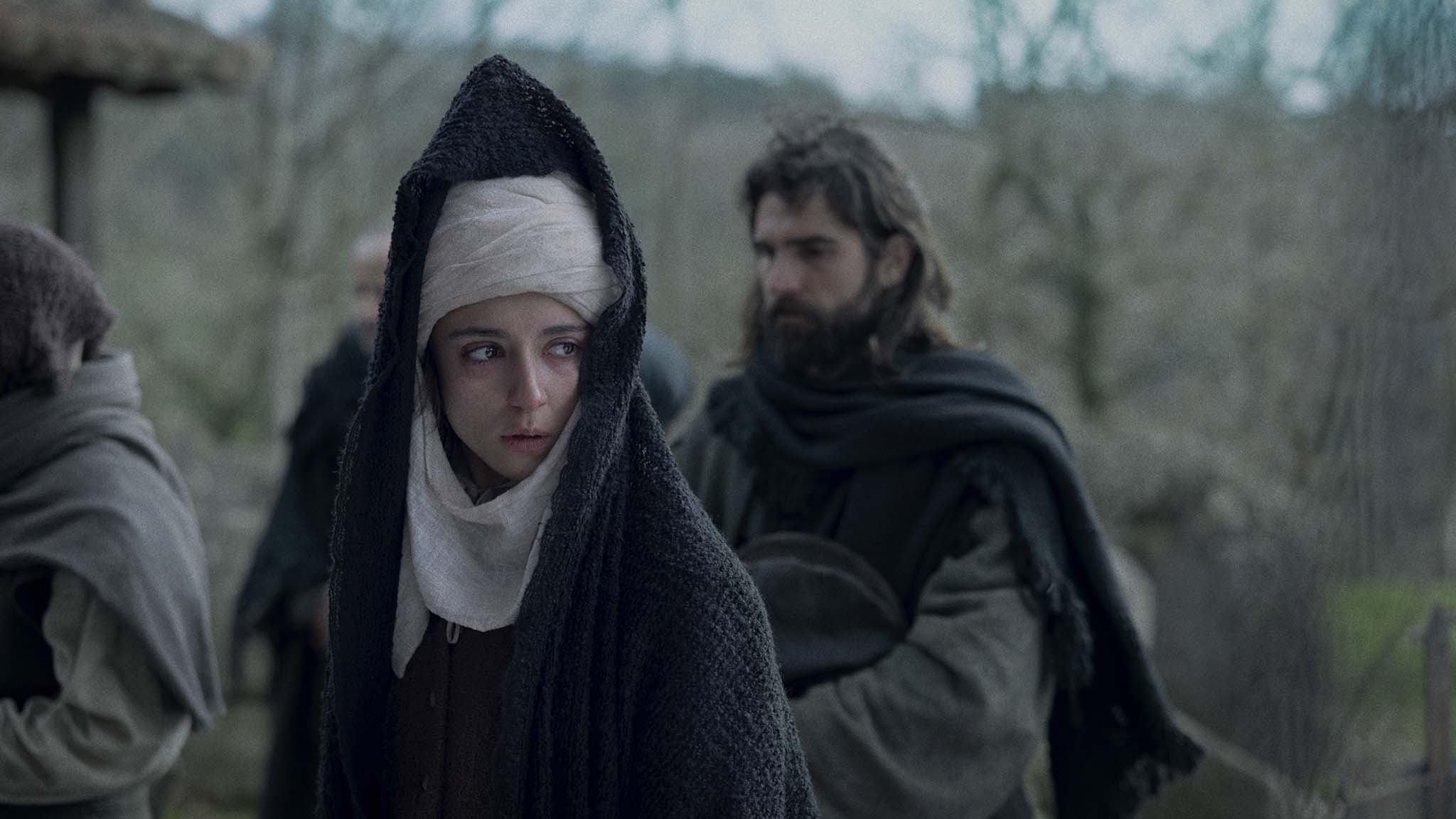
VERDICT: Paul Urkijo Alijo’s Basque folk-horror Gaua is a ribald, gloomy and deliriously over-the-top vision of sexual liberation in the time of the Inquisition.
For the mistreated and defiant young bride in Basque folk-horror Gaua, it’s hard to know what to fear more: the brutality of a punitive Church in the midst of a witch-hunt, or the shape-shifting dangers of a dark forest of wild creatures that villagers warn about in their terrifying stories (“gaua” means “the night” in Basque.) Set in 17th century northern Spain during the Inquisition, it is the third Basque-language feature from director Paul Urkijo Alijo, who made 2017’s similarly themed fantasy-horror Errementari, and 2022’s adventure fantasy Irati.
Gaua is a ribald, unhinged tale of repression and sexual liberation that gets away with the more hackneyed genre elements of its world-building by mixing in some inspired strokes of surreal satire, and by a brazen commitment to its more outlandish touches that mostly work their strange and unsettling charm without high-tech effects. There are possessed deathbed theatrics, a levitating coven and hybrid man-beasts aplenty, but also a hunting-obsessed, self-flagellating priest with a taxidermy-filled parish who is led astray by a sly rabbit, in this earthy and Gothic-tinged flight to the dark side, which had its international premiere in the Harbour section of the Rotterdam International Film Festival. Its emancipation-themed crux of women taking ownership of the monsters invented to suppress them, and its immersion in regional lore and gloomy landscapes, stands to widen its audience appeal a little beyond its midnight-movie hook.
Kattalin (an intense, magnetic Yune Nogueiras) is trapped. Her new husband Pello (Xabi ‘Jabato’ López) is violent and controlling, and she turns to a poisonous mushroom to aid her escape from their small farmhouse in the middle of the night. The only place to run is deep into the surrounding woods, where she is pursued by a presence that resembles her husband, but seems to change forms, merging with trees and animals. Such frightening encounters are known to happen here after the sun goes down, so she is relieved when she happens upon three older women who are gathered at a laundry spot. They only pretend to wash clothes there; their real reason for meeting is to have time out from men, chewing over village secrets and sharing horror stories. What follows is their series of tales, separated into chapters, but bleeding together as Kattalin becomes a part of the fabric of each alarming episode.
The world of Gaua is one governed by black-and-white notions of good and evil, where those who do not curry favour with priests or denounce their neighbours as she-devils are tarred as blasphemers and shadow-dwellers. Sin, under the powerful watch of the Catholic Church and its informants, is largely a sexual business here. Women overwhelmingly draw the short straw amid all of the opportunistic moralising for personal advancement, with lesbian desires and clandestine trysts particularly risky grist for the village gossip mill. The hypocrisy and corruption of the most powerful men of the cloth, who whip up terror to divide their parishioners and consolidate their rule, are laid bare. But that’s not to say that occult forces are not real in this universe, or that magic lore and secret remedies are not a potent alternative counter-measure.
The tall, horn-like white linen head-dresses of the women (frowned on, historically, as too phallic by the Church) add Basque specificity to the blue-tinged gloom with its spectral trees, dimly lit by firelight and lanterns, that fills Gaua. These horn shapes are echoed in the form of a black, Baphomet-like creature, who plays a role in a feverish finale spectacle of orgiastic village excess. None of this is subtle, nor does it have to be. Gaua succeeds as a vivid, risque and entertaining celebration of a human impulse as old as time: storytelling in the dead of night.
Director, screenwriter: Paul Urkijo Alijo
Producers: Ander Sagardoy, Ander Barinaga-Rementeria, Xabier Berzosa
Cinematographer: Gorka Gomez Andreu
Editor: Elena Ruiz
Cast: Yune Nogueiras, Elena Irureta, Ane Gabarain, Inake Irastorza
Production design: Izaskun Urkijo
Music: Maite Arroitajauregi, Aránzazu Calleja
Production company: Irusoin (Spain)
Sales: Filmax International
Venue: Rotterdam (Harbour)
In Basque
91 minutes