
Summer Drift
Virages
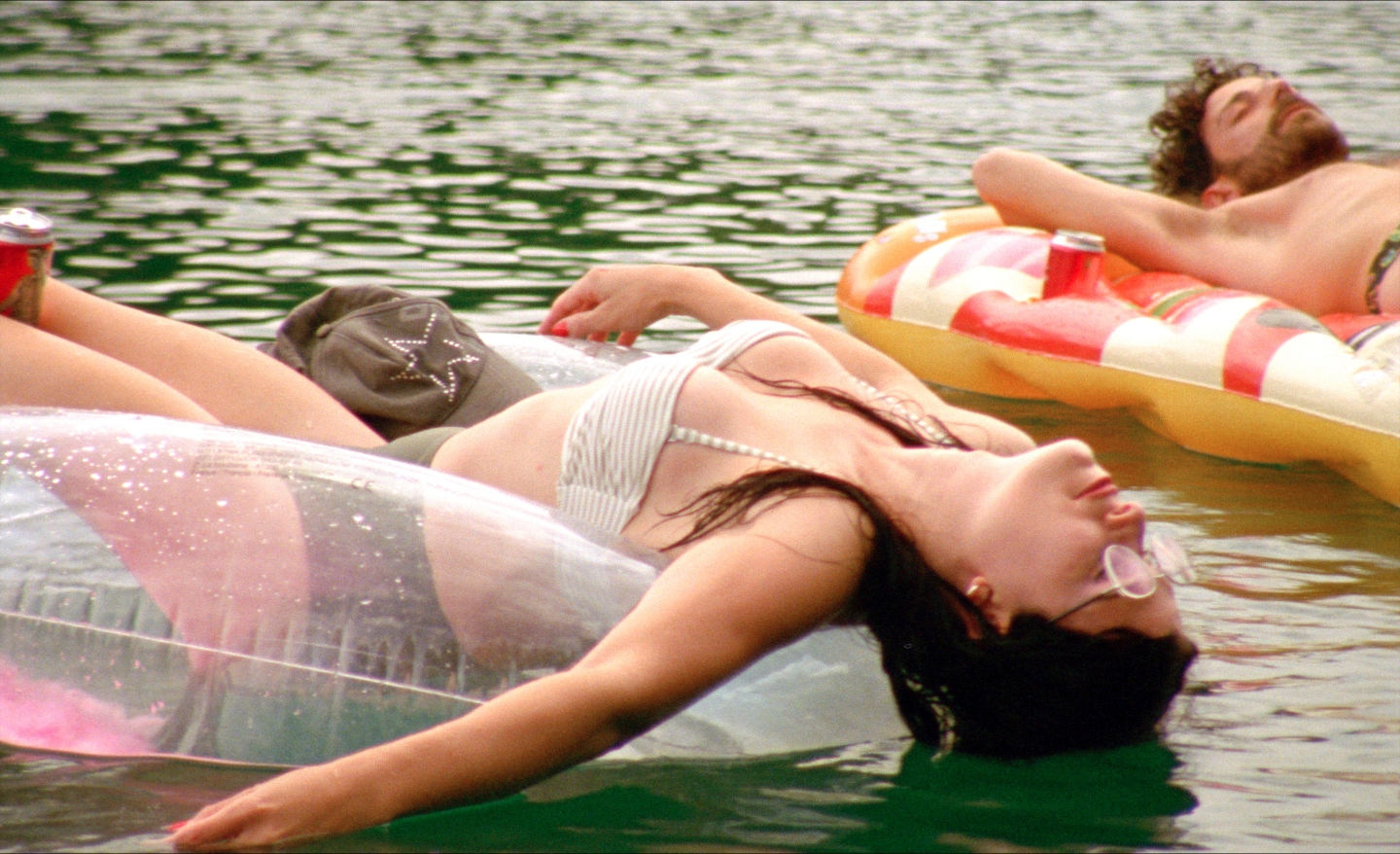
VERDICT: Notions of identity and seasonal entertainment coalesce in quietly affecting fashion in the Swiss autofiction ‘Summer Drift’, playing in the ACID sidebar at Cannes.
What’s the best way to spend the summer in Geneva? That question receives an amusingly off-kilter answer in Summer Drift (Virages), a Swiss-French co-production that world premiered in Cannes in the ACID section. The film might be too “small” (even by indie standards) to truly break out theatrically, but the vibrant 16mm aesthetic, LGBTQ+ themes and captivating central performance are sure to make it an intriguing proposition on the festival circuit going forward.
Set and shot in the city of Calvin, the film revolves around Johanna Schopfer, playing a lightly fictionalized version of herself. She works at the assembly line in a luxury watch factory, but without the visual elegance the sector got in Cyril Schäublin’s period piece Unrest: these scenes are as far removed from stereotypical Helvetic ostentatiousness as they can get, not least because the opulence would run counter to the simplicity directors Céline Carridroit and Aline Suter seek to capture.
Summer is around the corner, and while everyone else goes on vacation, Johanna sticks around, enjoying lakeside activities with her friends. Then, as she contemplates disposing of her VW Beetle, she decides to go in the opposite direction and restore it, reclaiming a part of herself that was rejected after she transitioned. That vehicle is the bridge between her old world and the new one, and much like Johanna herself it sort of exists on its own terms, not quite at the same rhythm as everything else.
Described as an autofiction (the staged structure being a practical necessity to account for Schopfer’s real-life work schedule and availability for filming), Summer Drift was shot over the course of four summers, condensed into one on the screen. Per the directors, the choice to use 16mm film stock was partly sociopolitical, to acknowledge the fact they’re spotlighting a person from the LGBTQ+ community who would most likely not have been present – at least not overtly so – in similar indie projects from decades past.
It is also in keeping with their aim to showcase a different side of Geneva, a more timeless one. Famously high-class and expensive (it’s no coincidence one of the most prominent national TV series shot on location was literally called Quartier des banques), the city undergoes a transformation through the lens adopted by Carridroit and Suter: it’s timeless and almost elemental, with water playing a crucial role. And with that old school flicker, Lake Geneva looks even more beautiful and serene than usual, the ideal escape for those who find themselves oppressed by the everyday grind imposed by capitalism.
And in the middle of all that, Johanna Schopfer shines bright as the star of an existence she gets to reclaim and redefine with wit and charm (including her charismatic regional accent). And while there is no obvious boundary between performing and being observed (her personality, also expressed through self-published comic books, having served as a major inspiration for the hybrid approach in making the film), she has a natural understanding with the camera, effortlessly driving or floating through the hottest period of the year as the director duo immortalizes all that with an energy that matches hers: slightly off-kilter, but quietly engaging over the course of an hour and a half on the shores of the Léman.
Directors, Screenwriters: Céline Carridroit, Aline Suter
Cast: Johanna Schopfer
Producer: Aurélien Marsais, Cécile Lestrade, Elise Hug
Cinematography: Victor Zébo, Aurore Toulon
Sound: Xavier Lavorel, Eliot Ratinaud, Gerald Wang, Sophie Dascal, Timothée Zurbuchen
Production companies: Cavale Films, Alter Ego Production
World sales: MoreThan Films
Venue: Cannes Film Festival (ACID)
In French
89 minutes