
The Fertilizer Home
Oga
VERDICT: Young Korean auteur Jeong Hyo-jung makes a dazzling feature debut that explores the deadly mystery swirling around a smalltown factory owner.
With her first feature, Jeong Hyo-jung blends science of the soil, supernatural rituals and scorching sibling rivalry to yield a sharp and shuddering suspense thriller. Backed by the renowned new-talent greenhouse that is the Korean Academy of Film Arts – which counts Bong Joon-ho, among others, as an alumnus – The Fertilizer Home offers fertile ground for contemplation about the effect of modern technology on society and the family, and vice versa.
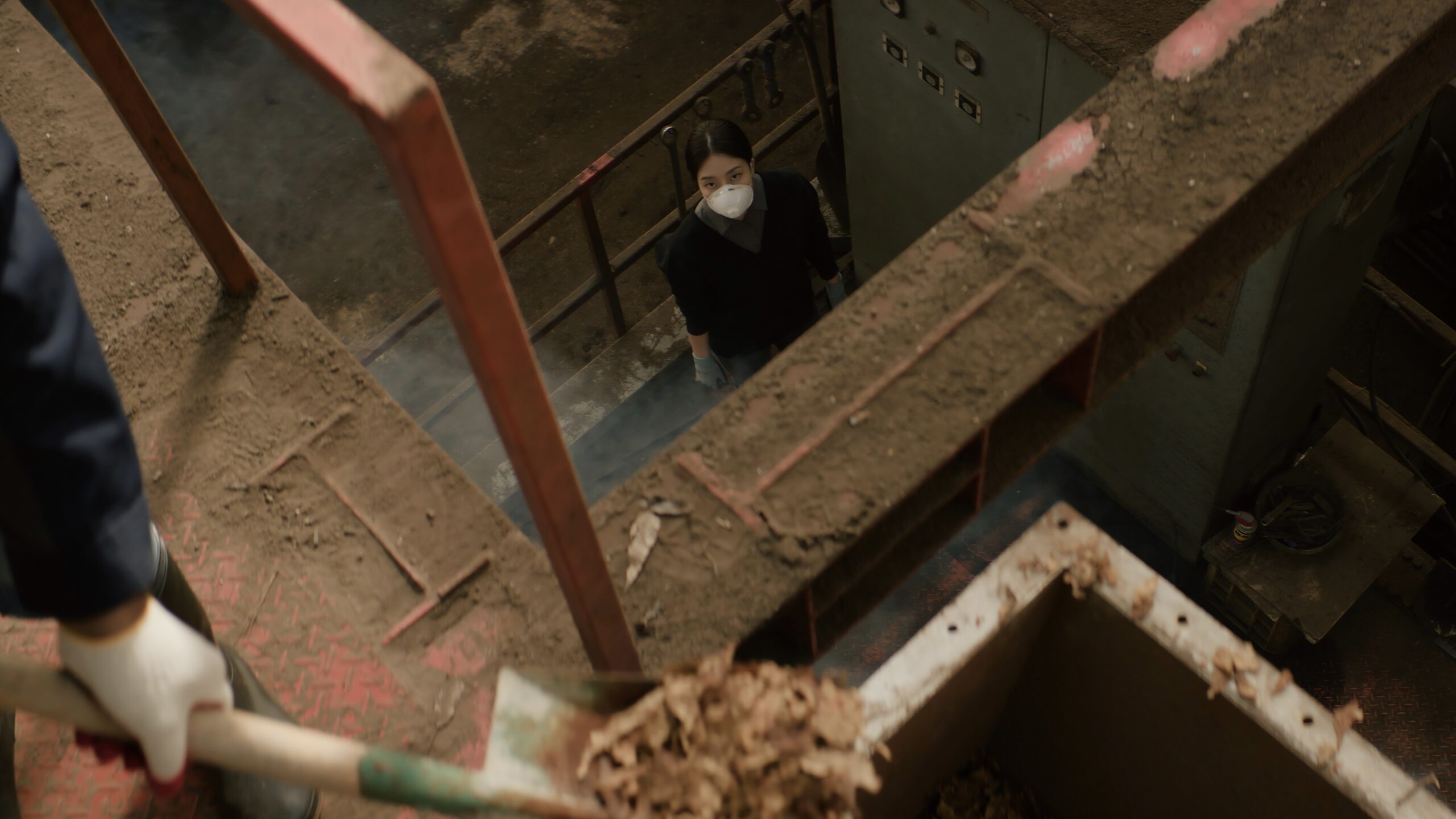
Bowing in the Korean competition at the latest edition of the Bucheon International Fantastic Film Festival, The Fertilizer Home is set in a small village dominated by a manufacturing plant where dried surplus tobacco is processed to become compost. The plant is now headed by Mi-jo (Kim Seung-hwa), who has taken up the operations of the family-run business from her now wheelchair-bound founder-father (Jeong Dong-hwan). Always dressed in a black blazer and a matching shirt, she appears perennially aloof from the humdrum around her: a defence mechanism, perhaps, against the sometime wayward behaviour of long-time workers who have known her since she was a toddler.
Mi-jo’s cold, authoritative veneer begins to unravel when the village is hit by a string of brutal murders committed by the unlikeliest of people around: a gentle matriarch is found stabbing her grandson to death, followed by a happy-go-lucky worker’s assault on her loved ones. Even Mi-jo’s family is hit by this “epidemic”, with her twin sister Eun-jo (Park Ah-in) nearly getting bludgeoned to death by her erstwhile mousey mixed-race boyfriend.
While the workers blame all this homicidal violence on a curse on the village – a thinly-veiled critique of Mi-jo’s competence – the chieftain from a neighbouring hamlet comes calling to complain about the impact of the factory’s toxic fumes on his people. Criticised by her father for using new techniques at the plant and doubting her own abilities in running things at home and at work, Mi-jo’s power is slowly usurped by Eun-jo, who slowly shakes off her idler persona to bring the village under her shamanic sway.
With a title card that proclaims the story as being “inspired by real environmental disasters”, The Fertilizer Home appears first and foremost as a j’accuse of sorts about the impact of haphazard industries on bucolic backwaters – a point Jeong and her DP Lee Do-hyun bring to the fore with recurrent visual contrasts of pastoral beauty (wide shots of forests, or close-ups of cabbages) and pitiless modernity (images of infernal shopfloors and streams of manufactured manure). The intrigue slowly builds as the mystery brings forth ever more jarring juxtapositions, such as the whirl of the factory and the ringing of Eun-jo’s aggressive rituals.
But The Fertilizer Home is not just a message film about pollution and the like. Just as much as it talks about humans put through the grind of smalltown capitalistic fervour, the film is also a story about the schisms between sisters as they seek recognition and redemption from their papa. Jeong’s strong screenplay manages to illustrate the two women’s very difficult personalities and the fluctuating dynamics between the pair. While Park Ah-in injects Eun-jo with mystery and menace, Kim Seung-hwa matches her co-star’s more extrovert turn with an impressive performance of internalised anxiety and doubts which eventually turn deadly. Jeong’s film depicts alienation in action with beauty and danger.
Director, screenwriter, editor: Jeong Hyo-jung
Producers: Kim Han-ul
Cast: Kim Seung-hwa, Park Ah-in, Jung Dong-hwan
Cinematography: Lee Do-hyun
Production design: Gang Myeong-hee
Music: Hong Cho-sun
Sound: Kim Eu-gene
Production company: Korean Academy of Film Arts
World sales: Finecut
Venue: Bucheon International Fantastic Film Festival (Bucheon Choice
In Korean
98 minutes