
A Fire There
A Fire There
VERDICT: Doc-maker Marlene Edoyan brings a sensitive and poetic, observational eye to Armenian dreams of past and future on the Georgian border.
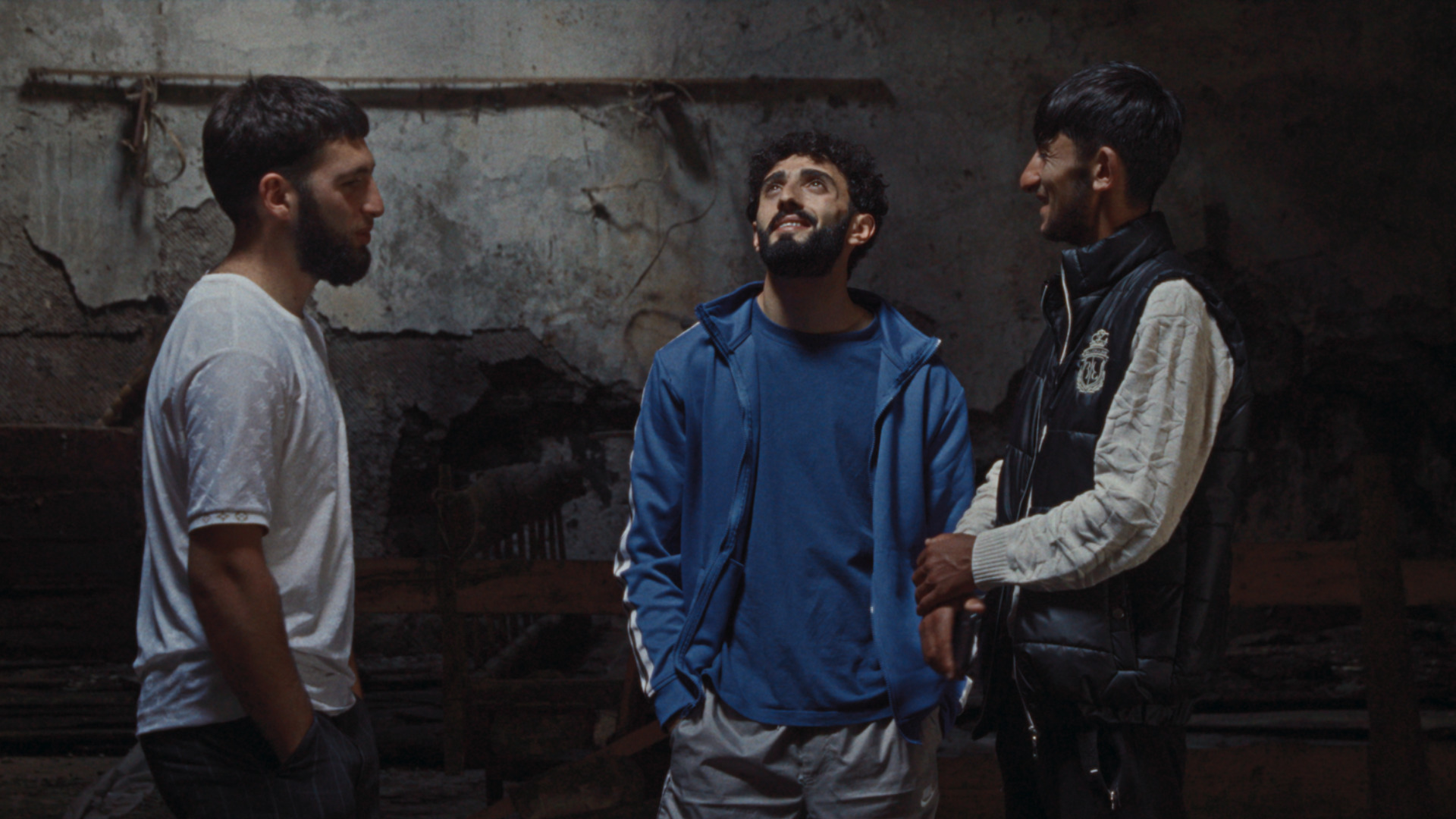
Three young men in Gandzani, a predominantly Armenian village in southern Georgia, weigh up their futures in director Marlene Edoyan’s poetic documentary A Fire There, which won a Special Jury Prize at Visions du Reel in Nyon and screens at the Golden Apricot Yerevan International Film Festival.
The tension between tradition and the economic and educational possibilities that can be sought elsewhere in a globalised world has almost become a cliche theme of doc coming-of-age portraits, but Edoyan transcends reductive dichotomies, reaching something more ineffable and existential in her sensitive reflections on the bone-deep need for home and dreams. As the friends choose whether to stay or go, she presents their divergent perspectives without judgment, and conveys the intense anxiety caused by geopolitical instability in the Caucasus, where small nations vulnerable to outside aggression try to maintain ancestral roots while pushed to orient themselves toward either Russia or the European Union, and war in Ukraine rages on village televisions. The question of how to live in one’s homeland is a recurrent one for Montreal-based Edoyan, who explored it in Figure of Armen (2012), also about Armenia, and The Sea Between Us (2019), on Lebanon, where she grew up.
Edoyan is a second–generation Armenian, and a tenderness for place and lives on the land, as well as the lyrical possibilities of documentary to capture its contours and essence, is palpable in every frame. The camera tracks across the snow-coated landscape, almost caressing it, before dissolving into the sleek hide of a cow’s back. A quiet, monumental dignity is conferred on faces, which appear painterly and timeless in candlelit close-ups in church, or dining against inky shadow as rain beats down, through Etienne Roussy’s gorgeous cinematography.
The rhythms of outdoor labour, from raking hay in fields to washing carpets in the river and moving flocks of sheep, are unhurriedly portrayed. But it’s the conversations between the longtime friends Hakob, Karlen and Henrikh that provide both the political context and loose narrative drama. These exchanges are neatly explanatory enough to feel at times prompted or scripted, but they are welcome guides to a lesser-known transcontinental corner of the globe on the Armenian border that can confound in its historical complexities.
As most of his peers leave, Hakob, who works at a cheese factory, plans to remain. His mother was a kidnapped bride, but the balance of power is more ambiguous in his long-distance relationship with Monika, a dance teacher in Tbilisi he met online. Many youths have turned their attention to the European Union for migrant work, but Karlen, facing tough economic prospects as a shepherd on his family’s farm, prefers the prospect of labour in Russia. Henrikh, in contrast, is dead set on the promise of Europe. When protests ring out through the night sky in Tbilisi against the law on foreign influence introduced by the ruling Georgian Dream party that hampers Georgia’s chances of joining the European Union in an abrupt authoritarian turn, he is with them. He went to the capital to study international relations, and perceiving that kind of future at risk, he launches into political activism, and a path of risky resistance that has a multi-generational legacy.
The abandoned ruins of what was, in the Soviet era, a large milk factory but is now returning to nature, with cows roaming inside its walls, is the dramatic setting for discussions of the past between the young men, who disagree on whether nostalgia for the employment offered under socialism, or residual anger for the Soviet repression of Christian beliefs, is more salient. But it’s a poem by Vahan Terian (the village, despite its size, has a whole museum dedicated to him), that provides the film’s title, and its spirit. Shepherds who light fires on the mountain are free, but those who roam are prisoners wherever they go, it suggests. Edoyan’s film for a new era adds the tentative, fragile hope that there is formless but real possibility in blazes away from home — both the hearths of temporary respite, and the flames of continued resistance in exile.
Director: Marlene Edoyan
Producers: Dominique Dussault, Marlene Edoyan
Cinematographer: Etienne Roussy
Editor: Omar Elhamy
Sound: Alex Lane, Marie-Pierre Grenier, Irakli Ivanishivili, Lynne Trepanier
Music: Mathieu Charbonneau, Christophe Lamarche-Ledoux
Production companies: Nemesis Films (Canada)
Sales: Filmotor
Venue: Yerevan (Regional Competition)
In Armenian, Georgian
94 minutes