Hijamat
.
VERDICT: The Iranian diaspora takes center stage in Nader Saeivar’s flawed but compelling drama ‘Hijamat’, screened in Karlovy Vary’s Crystal Globe Competition.
While he remains committed to making films in his native Iran, legal consequences be damned, Jafar Panahi has often expressed admiration and solidarity when it comes to the subject of his fellow Iranians making films abroad that are critical of the Islamic Republic or similarly oppressive systems. Such is the case of Nader Saeivar and his fourth feature, Hijamat, on which Panahi serves as a producer and editor (the two previously collaborated on 3 Faces and It Was Just an Accident). His name will undoubtedly help get more eyeballs on the film, which is a bit rough around the edges but should prove popular among viewers with an interest in the subject of diaspora.
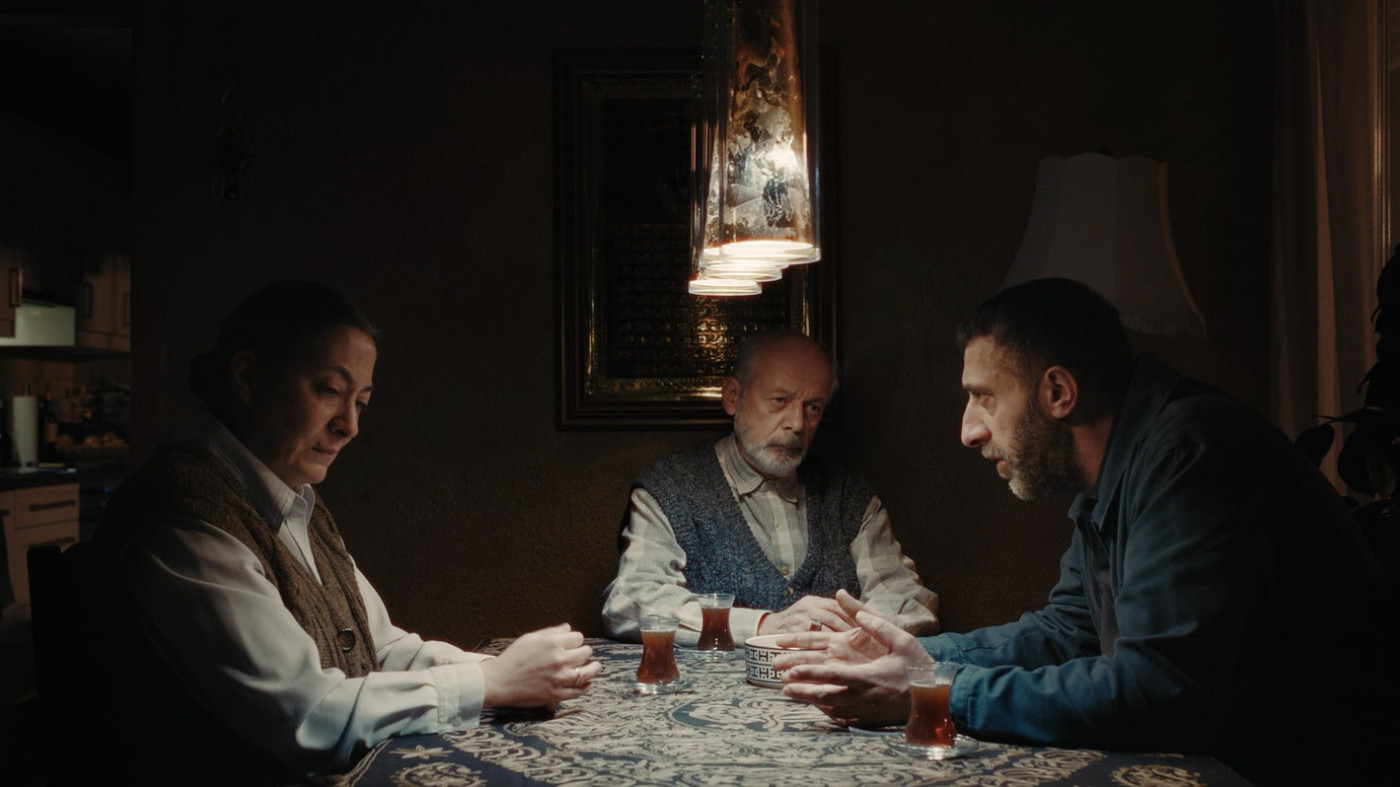
The picture is set and shot in Germany, specifically Berlin, where Saeivar is based. It’s also where the 50 year-old Murad (Kida Khodr Ramadan) has spent most of his life, as his parents left Turkey for Europe four decades prior. Murad works in his father’s restaurant alongside his much younger brother Kerem (Jael Cem Ilhan), and the family leads a seemingly ordinary life. Then, one day, a photo starts circulating.
The snapshot reveals Kerem is gay, a deadly sin within the extremely devoted Muslim community the family belongs to. The local sheikh comes to the conclusion that Kerem’s body has been taken over by Satan, and the young man himself starts second-guessing his life choices and wondering whether he should submit to the rituals meant to purge him of evil spirits. The scandal, which jeopardizes his mental health and physical safety, also drives a wedge between him and his father. Only Murad shows real support, as he’s always had an ambivalent relationship with the spiritual plane, a feeling shared by his wife Leyla (Nicolette Krebitz), who immigrated from Kosovo as a child refugee due to persecution for her family’s beliefs.
The inciting incident may involve Kerem, but the plot revolves chiefly around Murad, who carries most of the film’s thematic and emotional weight, a heavy burden for a character who limps due to a pre-existing physical ailment (the title is the Arabic word for a medical technique that comes into play in a key scene). Saeivar, himself of Turkish descent, approaches the subject matter with a critical yet empathetic eye, working with cinematographer Emre Erkmen to capture the contradictions of living in an overall progressive city while still being trapped inside a far more conservative microcosm. The nuances dominate the first half of the picture, a very strong portrait of generational conflict and brotherly solidarity.
Things get a tad messier in the second half, which builds on the strong foundations laid down in the first while also adding new material that feels at odds with the overall feel of the film, both narratively and tonally. In particular, two subplots revolving around the two most recognizable faces in the cast – Nastassja Kinski as an old family friend who is sadly no longer all there mentally, and Moritz Bleibtreu as a practitioner of alternative medicine – add a touch of humor that is perhaps too broad to fully be of a piece with what was happening before. But even in that unfocused second half, there are enough grace notes that help bring the story of Murad and Kerem back on track, leading to a thematically satisfying dénouement.
Director, Screenwriter: Nader Saeivar
Cast: Kida Khodr Ramadan, Moritz Bleibtreu, Nicolette Krebitz, Jael Cem Ilhan, Nastassja Kinski, Aziz Capkurt, Vedat Erincin, Derya Durmaz
Producers: Jafar Panahi, Said Nur Akkus, Murat Seker
Cinematography: Emre Erkmen
Production design: Michael Schindlmeier
Music: Hossein Mirzagholi
Sound: Andreas Mücke
Production companies: ArtHood Films, sugarWorkz, Lightburst Pictures GmbH, JPJ Film Productions
World sales: ArtHood Entertainment
Venue: Karlovy Vary International Film Festival (Crystal Globe Competition)
In Turkish, German
104 minutes