
The Balkan Cowboy
The Balkan Cowboy
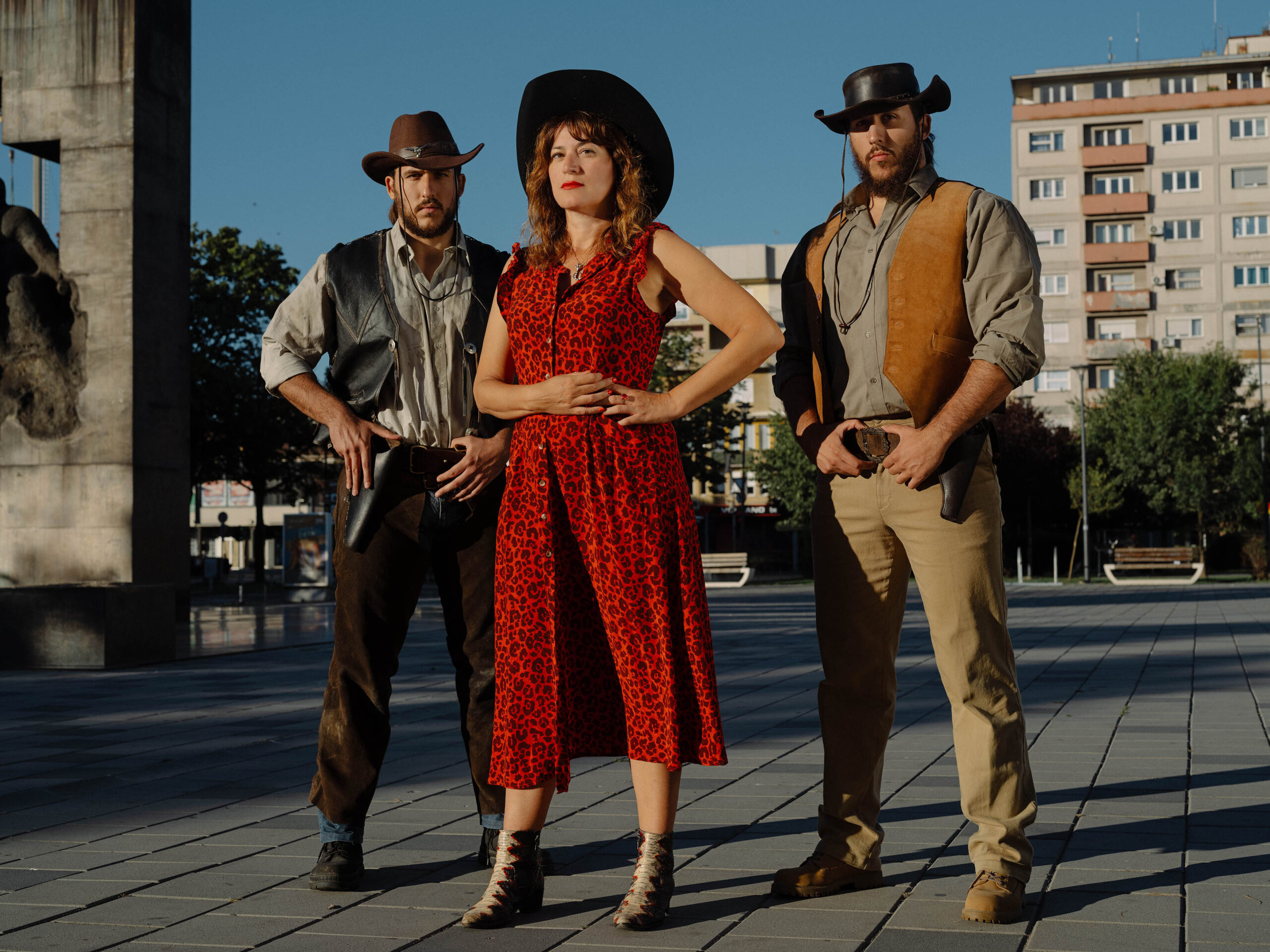
VERDICT: An exiled Croatian film-maker returns to the Wild East of her war-torn childhood in this charming, deeply personal love letter to a lost pioneer of low-budget Balkan westerns.
Croatia-born, Dublin-based debutante director Dragana Jurišic returns to her former homeland to investigate the stranger-than-fiction true story of an eccentric cult film-maker in this playful, offbeat and moving documentary. The Balkan Cowboy is a sentimental journey that becomes a bittersweet interrogation of roots, exile, and the lingering scars of war. But these heavy themes are packaged in an amusing, engaging, artfully handled travelogue with a likeably colourful cast.
Taking viewers back to a long-lost country torn apart by gun-toting outlaws and ethnic conflict, The Balkan Cowboy could have been called Once Upon a Time in the Wild East. With backing from Screen Ireland and Irish broadcaster RTE, it world premieres in competition at the Sarajevo Film Festival this week. Assembled with style and wit, plus timely observations on the current global rise in toxic nationalism, this Irish-Croatian co-production feels well-primed for further festivals and wider audience appeal.
A prize-winning visual artist, photographer and assistant professor at Dublin City University, Jurišic grew up in the former Yugoslavia, but left in 1991 when the Balkans split into warring factions. She can never go home again, she says wistfully, because the country of her birth is now a mythical lost land, “like Atlantis.” She settled in Ireland because “it looked safe and the people seemed kind,” but recent anti-immigrant protests in her adopted homeland have been a depressing reminder that right-wing nativism is resurgent again across Europe.
In The Balkan Cowboy, Jurišic travels to Bijeljina in northeastern Bosnia-Herzegovina, close to the Serbian border. Her primary mission is to pay homage to a photographer called Aljuš Musli, an obsessive underground film-maker who made a series of zero-budget 8mm Balkan westerns in the 1970s and 1980s under the pseudonym Hari Džekson (aka Harry Jackson), a name he adopted to sound more like a Hollywood cowboy director. A popular local figure who never enjoyed wider success, Musli shot these mini-epics with an entirely amateur cast and crew, recruiting people from the local Roma community to play Native Americans. On a more personal note, he was also a crucial mentor figure to Jurišic and her family, encouraging both her and her father to take up photography.
When Yugoslavia was torn apart by civil war in the 1990s, citizens of Albanian-Muslim heritage like Musli suddenly faced mortal danger as Serbian nationalists began occupying and terrorising neighbouring states. In April 1992, paramilitary forces led by the notorious Željko “Arkan” Ražnatovic massacred around 50 Bosnian Muslims in Bijeljina as part of Serbia’s wider “ethnic cleansing” strategy. The occupiers also carried out torture, rape, beatings, looting, extortion and burning of Mosques. In an act of stubborn defiance, or possibly madness, Musli elected not to follow his wife and family into exile. Amazingly, he survived the conflict, but was repeatedly arrested on trumped-up charges and brutally beaten by Serbian thugs, his life and business destroyed.
Approaching this factual material through the lens of a creative artist, Jurišic channels Musli’s spirit by hosting auditions in Bijeljina for a DIY western of her own, an inspired idea which sparks a quick-fire montage of comic vignettes. This film-shoot format becomes a fertile vehicle for her to interview numerous locals about their memories of the elusive “Hari Džekson”, including her own father. She intercuts contemporary footage with clips from the classic Hollywood western Shane (1953), one of Musli’s favourites, highlighting the real-life parallels in its stark depiction of violent gunmen fighting over disputed land ownership.
Jurišic initially teases viewers with conflicting folklore around Musli’s final years. While some claim he strapped on his six-shooters for an audacious Wild West showdown with Arkan’s men, others speculate that he may still be alive. At first the director seems to dance around the truth in the style of Searching for Sugarman (2012), but she eventually confirms that Musli died a few years after the war, homeless and broke. Too fuzzy on detail, this closing section is where the film feels weakest. Musli was obviously a slippery character who left behind only a scrappy legacy, but Jurišic could have dug deeper into his psyche during her interviews with former friends and loved ones, including his widow. A more journalistically rigorous documentary would have drawn some firmer conclusions, and mapped out a more robust narrative arc.
But these are minor shortcomings in an otherwise highly engaging, big-hearted project. The Balkan Cowboy is an enjoyably quirky deep dive into the faded celluloid of half-remembered history, peppered with charming musical interludes and framed with the keen eye of a visual artist. It comes as no surprise that Jurišic used some of the same material for a Dublin gallery show earlier this year. Concluding with a bleak reminder that nobody has ever been brought to justice for the war crimes in Bijeljina, her recurring mantra, as bitingly urgent today as it was 30 years ago, is that “nationalism kills good people, and kills the good in people.”
Director, screenwriter: Dragana Jurišic
Cinematography: Eleanor Bowman
Editing: Paul Mullen
Music: Michael Fleming
Sound design: Zoran Medved, Luka Gamulin
Producers: Oliver Sertic, Anna Rodgers, Zlata Filipovic
Production companies: Invisible Thread (Ireland), Restart (Croatia)
Venue: Sarajevo Film Festival (Documentary Competition)
In English, Bosnian
93 minutes