
Eklipse
Eklipse
VERDICT: A lyrical but uneven study of a friendship fractured by secrets.
The excitement of the 1999 solar eclipse and the unspoken anxiety of the approaching dawn of the 21st century underpin the gentle drama of Eklipse. The feature debut by Manuel Wetscher combines the elemental with the emotional to mixed results in his exploration of a quietly turbulent friendship between two 12-year-old boys.
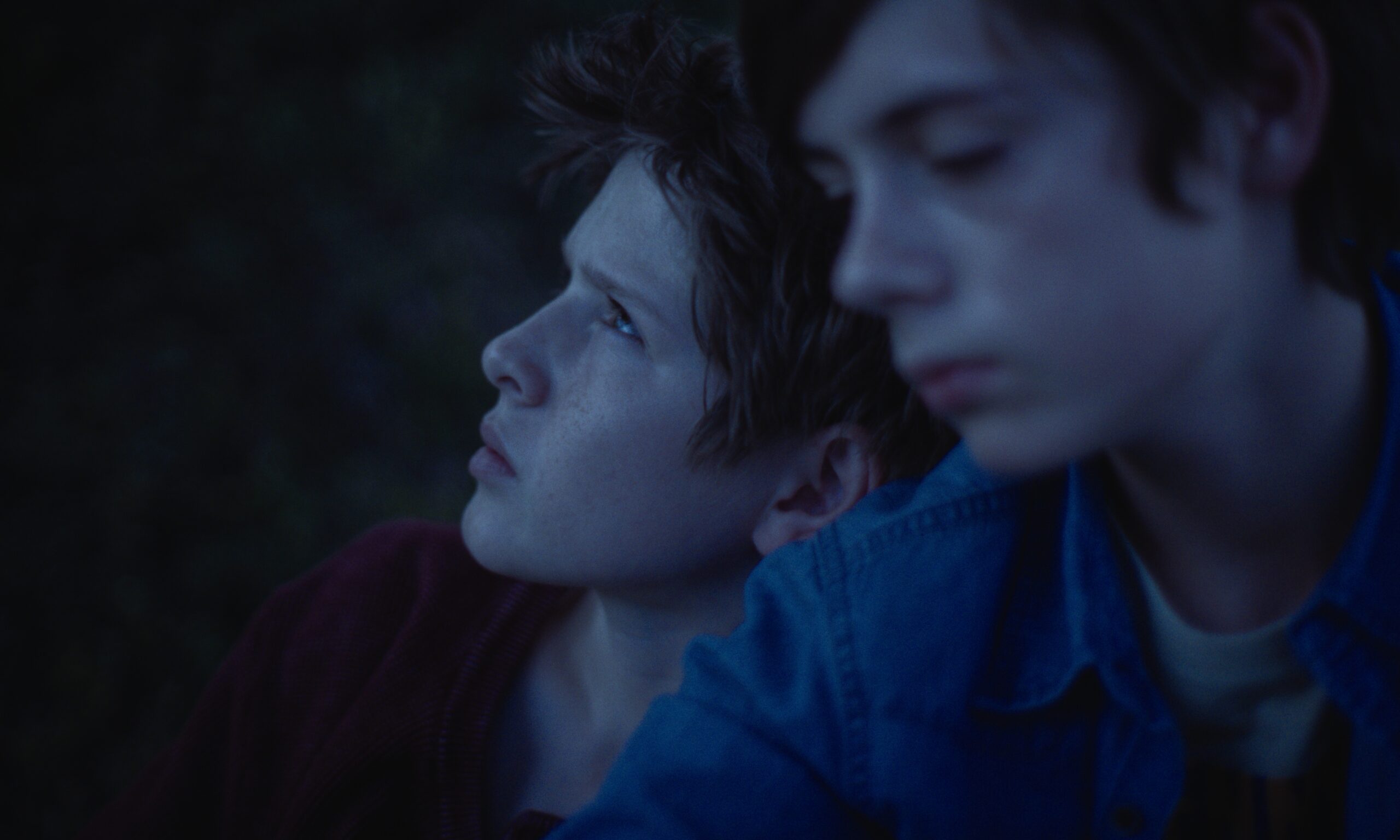
In the rolling hills of the rural, Austrian countryside Tomy (Moritz Hohlrieder) works on the dairy farm of his uncle Georg (Hannes Perkmann) along with Chris (Finley Brown) who is taking a break from living with his grandmother. When they aren’t pushing around manure and milking cows, the pair wander the fields, play fight, and daydream together. The boys spike their hair like punk rockers NOFX, and dance to Eiffel 65’s earworm “Blue (Da Ba Dee).” But the absence of Tomy’s father casts a shadow over their sun-soaked days. Admitted to the hospital for an extended stay, Franz is the subject of rumors in the small community. Tomy’s mother tells him its a case of pneumonia, while Georg finds reasons not to visit his brother. However, when Chris learns from a dairy truck driver that Tomy’s father has the “gay disease,” it drives an immediate wedge into his relationship with Tomy. Chris becomes distant and cold, consumed by paranoia he might catch the disease. Tomy, still in the dark about his father’s diagnosis, struggles to understand the sudden change between the once inseparable pair.
Unfolding at an unhurried pace, the early stages of the picture have the feel of a docudrama, capturing the daily activities in the running of a dairy farm. But this comes at the cost of the particulars of the story. The screenplay by Wetscher and Bernhard Jarosch has its characters speaking around each other. The effect is ostensibly intended to reflect Tomy’s uncertain state of mind, but it’s to such a degree that viewers are left trying to decipher clues and details rather than settle into the picture’s finely attuned atmosphere. At times, the passivity of the characters to voice their misgivings to each other becomes a frustrating crutch on which the drama hangs.
This general haziness extends to the film as a whole. Even though it comes a shade under ninety minutes, the relatively thin narrative on occasion feels stretched to make its running time. The film’s title — a metaphor for the rural community’s ignorance about AIDS overriding their empathy, or the lies Tomy is told to keep him from the truth — is about the extent of the drama’s thematic substance. Meanwhile, a subplot, involving a battle over the ownership of Georg’s farm feels like a patch leftover from an aggressive edit.
None of this diminishes some of the excellent work being done both in front and behind the camera. Hohlrieder and Brown, as the film’s center, deliver lovely, naturalistic performances. Their easy chemistry makes the fissure in their friendship genuinely affecting. So too is their hard fought reconciliation in the last act, played out in a wonderfully wordless sequence as the two take a long walk through the hills that eventually draws them back together. Cinematographer Simone Hart is largely responsible for establishing the film’s languid mood, her camera taking in healthy gulps of the gorgeous landscape in full bloom.
A solar eclipse feels miraculous because it’s hard to imagine that the endlessly spinning universe pauses for a moment of celestial synchronicity. What Eklipse gets right is our illusion of control. Humans are also spinning in their own way day-to-day: making a living, raising a family, and getting by. But there are moments when between friends, family or lovers there’s a brief shining moment of understanding. And its at that juncture we learn a little more about ourselves and the world around us.
Director: Manuel Wetscher
Screenplay: Bernhard Jarosch, Manuel Wetscher
Cast: Moritz Hohlrieder, Finley Brown, Hannes Perkmann, Lenz Moretti, Lisa Schützenberger
Producers: Bernhard Holzhammer, Victor Kössl, Wilfried Gufler, Debora Nischler
Cinematography: Simone Hart
Production design: Esther Frommann
Costume design: Cinzia Cioffi
Editing: Anna Kirst
Music: Johannes Winkler, Marco Schröder
Sound: Benedikt Palier, Isobel Cope, Nora Czamler
Production companies: Eutopiafilm (Austria), Albolina Film (Italy)
World sales: Films Boutique
Venue: Venice Film Festival (Orizzonti)
In German
91 minutes