
An Interview With Tony Vahl
An Interview With Tony Vahl
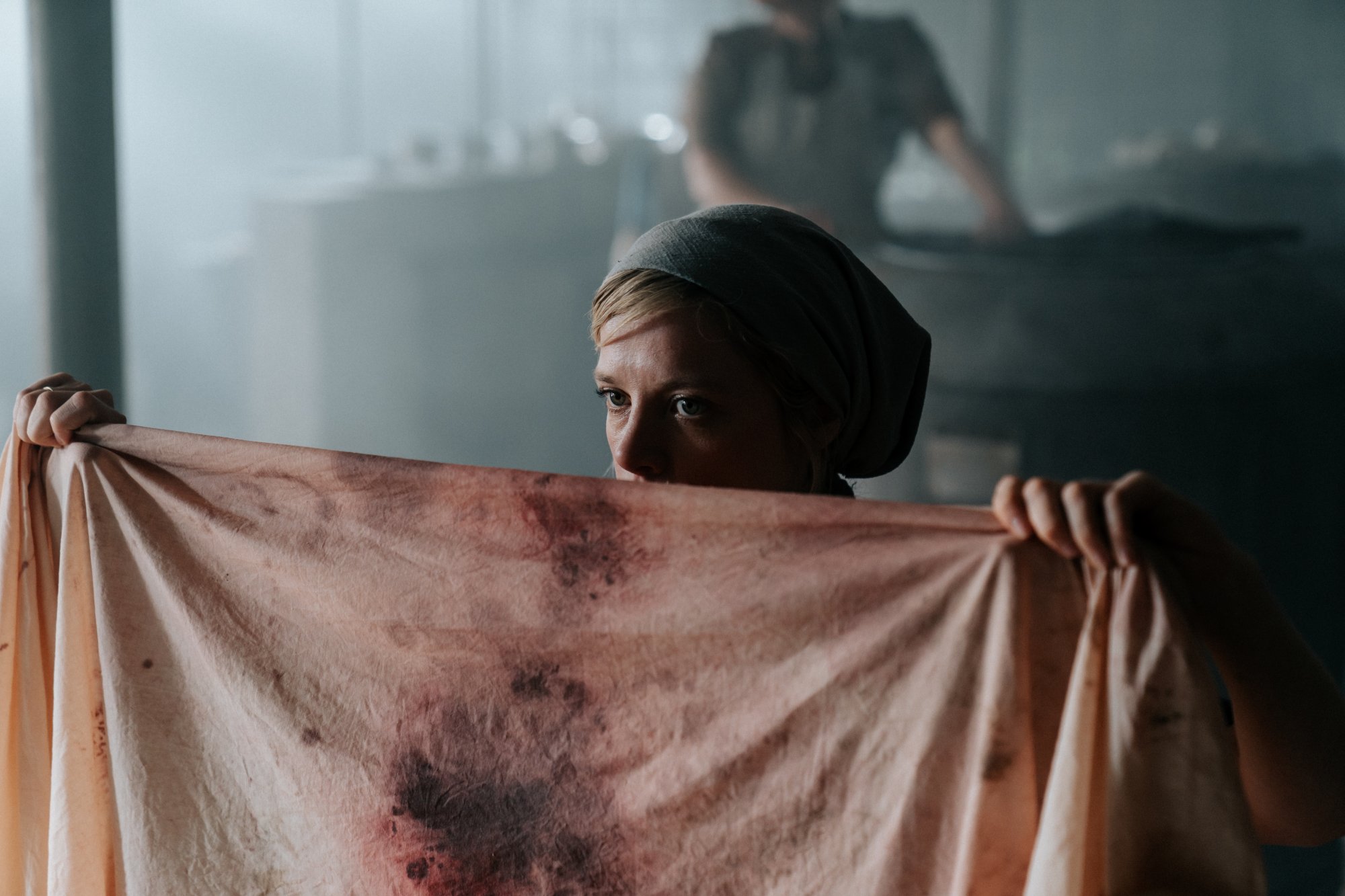
VERDICT: The director of 'Krux' talks about bringing a taboo subject during Germany's darkest moment to the big screen.
Kadavergehorsam is a German word that roughly translates to “corpse-like obedience” or unquestioning loyalty. It’s a quality that afflicts the characters in Krux, Tony Vahl’s distinctive debut film set in the final days of the Second World War.
The film centers on 28-year-old Greta (Jella Haase), a recently widowed woman in a small community in Eastern Germany. They are comfortably shielded from the realities of the war, but nevertheless remain duty bound to their country in their thoughts and deeds. But when bodies start washing up on the banks of the nearby river, the village is unsettled. As it becomes clear that the Russian army is advancing, fealty to the fatherland is followed to the extreme in this cinematic depiction what led to the mass suicides that spread across Germany in 1945 as defeat loomed.
“The Nazis trained the people to behave like that: just a body function, without will, without meaning [and without] the right to [question] something,” Vahl explains.
Citing books including Florian Huber’s “Promise Me You’ll Shoot Yourself” and Ian Kershaw’s “The End,” the director’s deeply researched film started a lot closer to home. “Normally, the old people that didn’t talk so much about the wartime, but my grandmother, she was different,” Vahl said. “When I was a little child, when we walked to the river and she said, ‘They went into the water.’ That [image] never let me go.”
The subject, taboo in Germany for many years, felt like “a horror story of fairy tale” for Vahl who saw in the material something that resonated across far and wide, saying, “I recognized that the story of my grandmother wasn’t a single story, it was all over Germany.”
Intriguingly, Vahl is “not such a fan of war movies,” but she uses the genre and setting to pursue a deeper thematic exploration. “It’s more about our present time. It’s about fear. And fear has a strong power when fear becomes panic, and panic turns to [blaming people],” she explains. “It’s always the same, pattern, you know? When leaders say follow this single story and don’t follow your own moral compass.”
Shooting her first film, Vahl’s ambition created challenges. Not only is Krux a period piece, but the production saw her working with child actors and animals as well, all with limited time and money. At one time, she thought the subject could lend itself well to a TV series. But when it finally came time to make the movie, the filmmaker was able to distill everything down to her most potent vision.
“I calculated was forty-one days [for the shoot], but we had thirty-one days, yes. But through this limitation, we [discovered] new ideas to make [the film] stronger,” she says.
In creating the picture, Vahl nods to director Steve McQueen who speaks of making “cinema that you feel in your guts.” Filled with arresting images and a screenplay that teases out its horrors instead of presenting them head on, Krux makes good in creating an unsettling atmosphere. Vahl’s film presents a vision of fascism’s grip at a distance from power, but the filmmaker is careful not to lead the audience to any easy conclusions.
“I don’t want to give [viewers] so many answers, [I want to] raise more questions,” she says.
The result is a movie that marks an impressive first feature that will certainly have audiences unpacking what they’ve seen long after the credits roll, a mission central to Vahl’s picture. “I like it that when movies stay longer with you, because we are in a time we have so many movies and they go away so fast,” she shares.
“Krux” plays in the Discovery section at TIFF with international sales handled by Global Constellation.