
A Bit of Light
Kami Nour
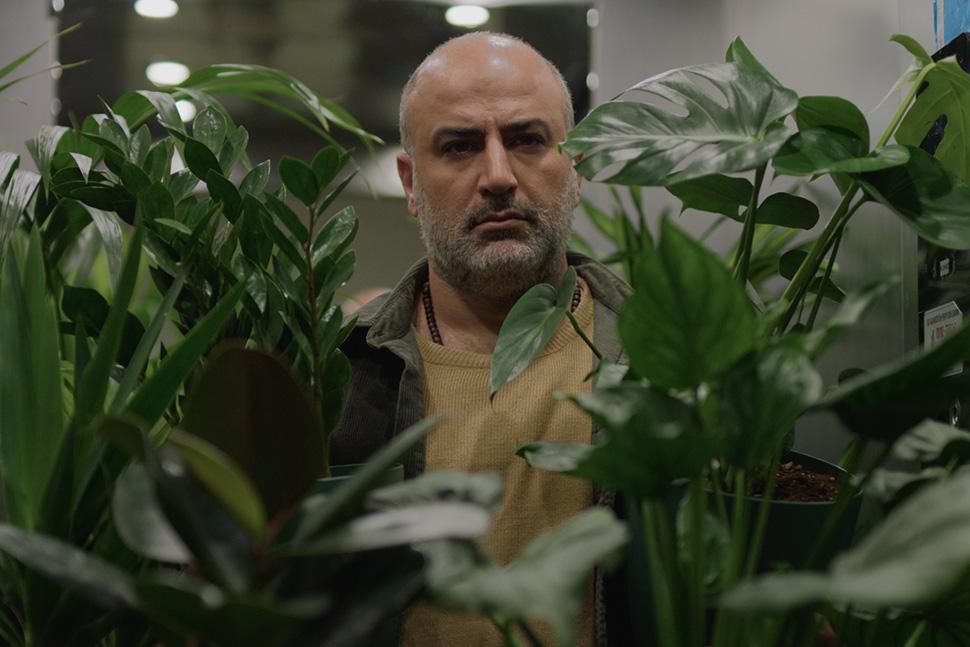
VERDICT: Ali Asgari’s delicate exploration of living and suffering provides a viewpoint from today’s Iran looking out, in his spot-on snapshot of life in times of uncertainy, ‘A Bit of Light’.
“Trump is threatening to bomb us; he wouldn’t lie!” asserts the doorman of a fancy Tehran apartment building as he, like other characters in A Bit of Light (Kami Nour), applies adhesive tape to large picture windows in a hopeless attempt to ward off the worst.
Ali Asgari’s drama is wonderfully simple yet deeply affecting. It centers around about a middle-aged doctor who decides to kill himself after a traumatizing incident costs him his medical licence. Searching for the true value of life, the screenplay by Asgari and Shadmehr Rastin gently but firmly draws the viewer into the minds of its characters. Its topicality should ensure it a busy festival life, along with distribution through the six-country coproduction between Iran, Switzerland, Italy, Canada, Turkey and France.
Best known for the satirical Terrestrial Verses of 2023, which he codirected with Reza Khatami, and last year’s Divine Comedy about an Iranian filmmaker who has been censored his entire career, Asgari has had his greatest success directing comedies. But Iranians in particular are not living through funny times, and he takes a very different tack in A Bit of Light. Characterized by a subdued, even somber shooting style in which the camera appears too tired and depressed to move through the tasteful, washed-out interiors of Tehran’s middle class, the film relies heavily on fixed frame shots to express Doctor Arash’s (Misagh Zareh, The Seed of the Sacred Fig) funereal state of mind.
He is making the rounds of his brother, two sisters and mother to tell them of his decision to end his life, and rather pathetically to offload his cat and collection of potted plants before he goes. The inevitable scenes of driving around Tehran in his car are made humorously jarring by his passengers’ need to share space with his huge house plants. His brother sobs openly when he hears of Arash’s decision, and offers to hook him up with some girls so he’ll feel less lonely (Arash is oddly without a wife or kids). His little sister Masah (Sadaf Asgari) is a yoga teacher and reincarnationist who warns him he’ll just have to face his demons in the next life. The other sister Massi (Forouzan Jamshidnejad) boils with silent resentment.
But these are light scenes compared to the very real suffering Arash is going through. During a political protest in which the police fired on demonstrators, Arash opened his office to a group of seriously wounded young people. While he and his assistant were treating them, the police burst in, beat them up and arrested them. Arash went to prison and lost his medical practice.
One of the hardest goodbyes he has to deliver is to the distraught mother of a badly injured protestor, who Arash is visiting in secret, since the boy would be arrested, or worse, if he was taken to a hospital. This wrenching, succinct scene tells us all we need to know about the doctor’s humanity and dedication to his work. To help another desperate patient, he breaks the police seal and briefly returns to his office, to find it upside down and stained with blood.
The long final sequence unfolds at his mother’s home, where the whole family reunites for one last meal together. Arash is still determined to exit a world of pain and injustice, with economic uncertainty and the threat of imminent war hanging over his head. Yet perhaps there is something that still makes life worth suffering through. Misagh Zareh lends the disillusioned doctor a convincing gravitas and compassion that become riveting as the final words are said, or left unsaid. It is another remarkable example of how Iranian cinema holds a mirror to an ever-changing society in a way everyone can understand.
Director: Ali Asgari
Screenplay: Ali Asgari, Shadmehr Rastin
Cast: Misagh Zareh, Sadaf Asgari, Forouzan Jamshidnejad, Ramtin Daghigh, Mina Rahimzadeh
Producers: Milad Khosravi, Afshin Salamian, Lorenzo Cioffi, Giorgio Giampà, Sholeh Alemi Fabbri, Sara Nasrabadi, Francesco Melzi d’Eril, Gabriele Moratti, Avantika Singh Desbouvries
Cinematography, editing: Iman Tahsin
Costume design: Atena Daremi
Music: Navid Divan
Sound: Sara Nasrabadi, Vahid Moghadasi
Production companies: Seven Springs Pictures (Iran), Sunny Independent Pictures (Switzerland), Zoe Films (Italy), Good Measure Productions (Canada), Haurvatat Film (Turkey), MeMo Films (Italy), Salt for Sugar Films (France)
World Sales: Salaud Morisset
Venue: Venice Film Festival (Competition)
In Persian
87 minutes