
Sometimes Sadness, Sometimes Rebellion
A veces me entra tristeza, otras veces rebelión
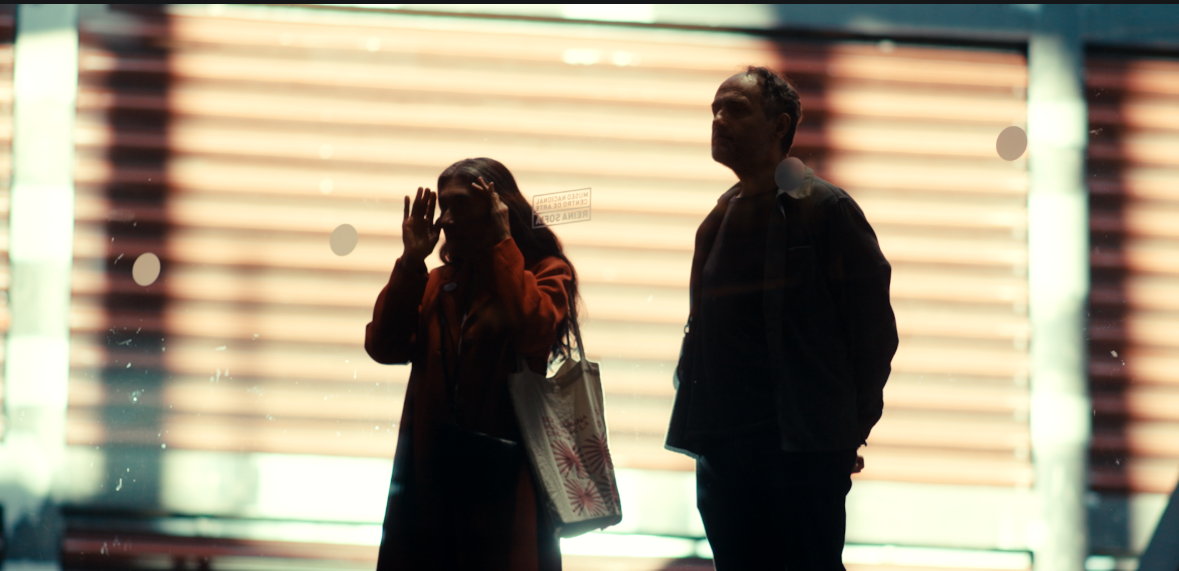
VERDICT: María Aparicio mixes sadness, nostalgia, curiosity and rebellion in a film empathic and subtly political
Sometimes Sadness, Sometimes Rebellion, shot while its director María Aparicio was on an academic leave in Madrid, is in itself an act of resilience, given the withdrawal of any kind of support for Argentine cinema by the government of her country. The writer-director worked with a minimal team, photographing most of the film in natural light, and finished a quality personal work. The film looks set to make a good run through festivals and could draw audiences in Argentina, a country that has been very prolific in political and activist cinema. A welcome change in genre, it’s above all empathetic, subtle and very current.
Eva (Eva Bianco), an Argentinian director, spends a few days in Madrid, after attending a festival in France. She wanders around the city without any plans.By chance, she meets Dante (Roger Koza), a man from her city, Cordoba, in a museum. He has seen her before in Cordoba movie theater. Dante is living temporarily in Madrid thanks to a research grant. He is obsessed with Juan Bialet Massé, a Catalan writer of the early twentieth century who traveled to Argentina to study the conditions of workers. Over several meetings, Eva and Dante share their love for cinema and concern about the political situation.
Sometimes Sadness does not have the romantic lightness of Richard Linklater’s Before Sunrise (1995) or the political urgency of Peter Weir’s The Year of Living Dangerously (1982). It moves to the rhythm of its protagonists, slowly but curiously. The encounters staged in the museum, in cinemas and parks, are attractive without being touristy. The tone is relaxed but intriguing. There is much political talk, even a monument to Karl Marx, but thye film’s interest is broader. It is related to a historical comparison and the ethics of studying other people, whatever their economic situation.
Eva Bianco acts very naturally as an older alter ego of the director. For Dante´s role Aparicio has chosen a non-actor, but still a very cinephile option: the respected Argentine critic Roger Koza, who had a cameo in Magallanes by Lav Díaz. His Dante is a perfect historian, a little autistic, focused on his object of study rather than on his surroundings. It is clear that Eva and Dante are wary of starting new relationships despite their obvious affinities and María Aparicio avoids any physical approach between them. It works almost all the time because it avoids a stereotypical romance, but also makes some scenes awkward, such as when the protagonists talk about the state of the world sitting on a beach for ten minutes without looking at each other even once.
This is María Aparicio’s fourth film, premiered a few weeks ago in Giornate degli Autori at the Venice Film Festival, where she won a directing award. Its only major fault is a useless and impertinent out-of-frame voice.
The narrative of the film leads to a documentary part, where Dante does a series of talking-head interviews with workers of different ethnicities, who speak of resistance and despair. He looks for similarities in the working conditions studied by Bialet Masei in 1908 in Argentina and those of migrants in today’s world. As the film ends, an African woman, Anita Flore, sings Misty for us.
Director, screenplay: María Aparicio
Producers: Ana Apontes, Rodrigo Guerrero, Ramiro Sonzini, María Aparicio
Cast: Eva Bianco, Roger Koza
Cinematography: Ezequiel Salinas
Editing: Ramiro Sonzini
Sound: Federico Disandro
Production companies: The Good Hour (Argentina), Las Flores (Spain) in co-production with Mordisco Films (Spain), Pyewacket Films, Cosabona Films, Brava, Pifostio Films, Pasajes Invisibles, Zampano Producciones
International Sales: Paper Moon
Venue: San Sebastian International Film Festival (Zabaltegi)
In Spanish
93 minutes