
My Sad Dead
Mis muertos tristes
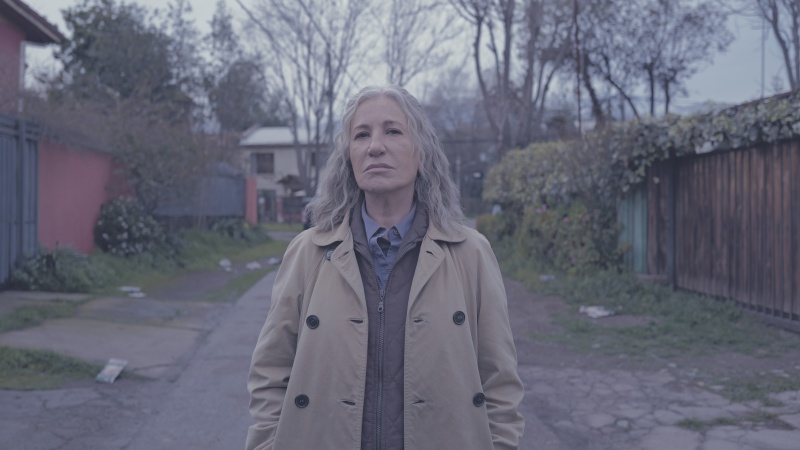
VERDICT: Grotesque, trippy psychological horror abounds along with redundancies in the feature film of Pablo Larrain’s ‘My Sad Dead’, a mixed bag of ghost stories set in contemporary Buenos Aires and an angry guide to Argentina’s social ills, laced with funeral humor.
Setting aside his glam biopics (Jackie, Spencer and Maria) of women famous enough to be known by one name, Chilean filmmaker makes a welcome return to Latin America and the social themes of his early work in My Sad Dead (Mis muertos tristes), but keeping female protags on center stage. The version that premiered at San Sebastian was a 3-hour movie reduction of the four-episode Netflix miniseries, and its small-screen origins dominate the storytelling like an irritating handicap or a persistent ghost. But the characters shine with originality and unexpected sarcastic humor and should give their best in the TV version.
The story of a retired doctor who has the ability to see and talk to dead people has been adapted by Larrain and his cowriter Guillermo Calderon from the short stories of Mariana Enriquez, an acclaimed Argentinian author, and although these tales weave together seamlessly, for a film marketed as psychological horror it is seriously lacking in a compelling narrative arc. Instead we follow a string of phantoms not zombies (they are certifiably dead) full of moaning, groaning and complaints. Because the one thing they have in common is that they died tragically, violently or painfully, and want the living to know it.
All the hauntings take place in Piedrabuena, a charming old neighborhood in Buenos Aires that has become violent and crime-ridden following the development of a vast housing project. In a legacy two-story house with garden which could just pass as haunted, a very old lady is breathing her last on her deathbed. Assisting her is her daughter Emma (Mercedes Morán), now an older woman herself, a well-liked hospital physician who has been recently forced into retirement. Her reaction to the surprise farewell party her colleagues organize for her is a typical blast of acerbic wit and piercing obscenities.
Emma’s long unstyled white hair and pale makeup underline the witchy side of a compassionate, socially conscious woman who has devoted her life to others, only to find herself jobless and waiting for a pension, attacked by her grown daughter Caro (Dolores Fonzi) for not caring enough, and accused by her crazy neighbors on the Piedrabuena community action committee of having killed her COVID patients and euthanized her mother.
Into Emma’s already complicated and chaotic life arrives her sister Lidia (Alejandra Flechner) with her husband Tomas and their grossly obese daughter Julie (an unforgettable Carolina Alvarez). They immigrated to the US decades ago (cue Tomas’s admiration for the American police as an indicator of his cluelessness) and they now return to B.A. on a fearsome mission: to institutionalize Julie and come back for her “when she’s well”. The poor girl has already submitted to every therapy available in America and escaped from 20 hospitals. Alvarez brings a down-to-earth humor to the character that makes it no less creepy when Emma finds her in bed having sex with naked, disembodied “friends”. But Julie’s escape in the rain and her tragic end climbing on top of a water tower achieve true pathos and horror, for all their Frankenstein and King Kong vibes.
The other tale that resonates sickeningly well involves three girls from the housing project who have modeled in a ghetto-style photo shoot under Caro’s direction. Thus we know this trio of junior beauty queens when they fall victim to gang violence. Their tragedy is repeated over and over in the parking lot where they died, because they dead want the living to remember the injustice they suffered. Only now, for some magical reason, it is not just Emma who can hear their heart-breaking cries, but a growing number of residents who have been drinking the Koolaid – i.e., the poisoned water from the community tank.
In a sea of horror and inhumanity, perhaps the film’s most positive message is what Emma tells a boy being chased by a pack of murderous drug dealers, who screams for help at the closed doors of houses. “Keep beating on the doors so they can hear you.”
Director: Pablo Larrain
Screenplay: Pablo Larrain, Guillermo Calderon based on Mariana Enriquez’s short stories
Cast: Mercedes Morán, Dolores Fonzi, Alejandra Flechner, Carolina Alvarez
Producers: Juan de Dios Larraín, Pablo Larraín, Ángela Poblete
Cinematography: Sergio Armstrong
Editing: Sofia Subercaseaux
Production design: Rodrigo Bazaes :
Music: Francisco Duran, Mauricio Duran
Sound: Miguel Hormazabal, John Warhurst, Mauricio López
Production companies: Fabula (Chile)
World Sales: Netflix (UK)
Venue: San Sebastian Film Festival (Competition)
In Spanish
187 minutes