
Pray for Us
Ruega por nosotras
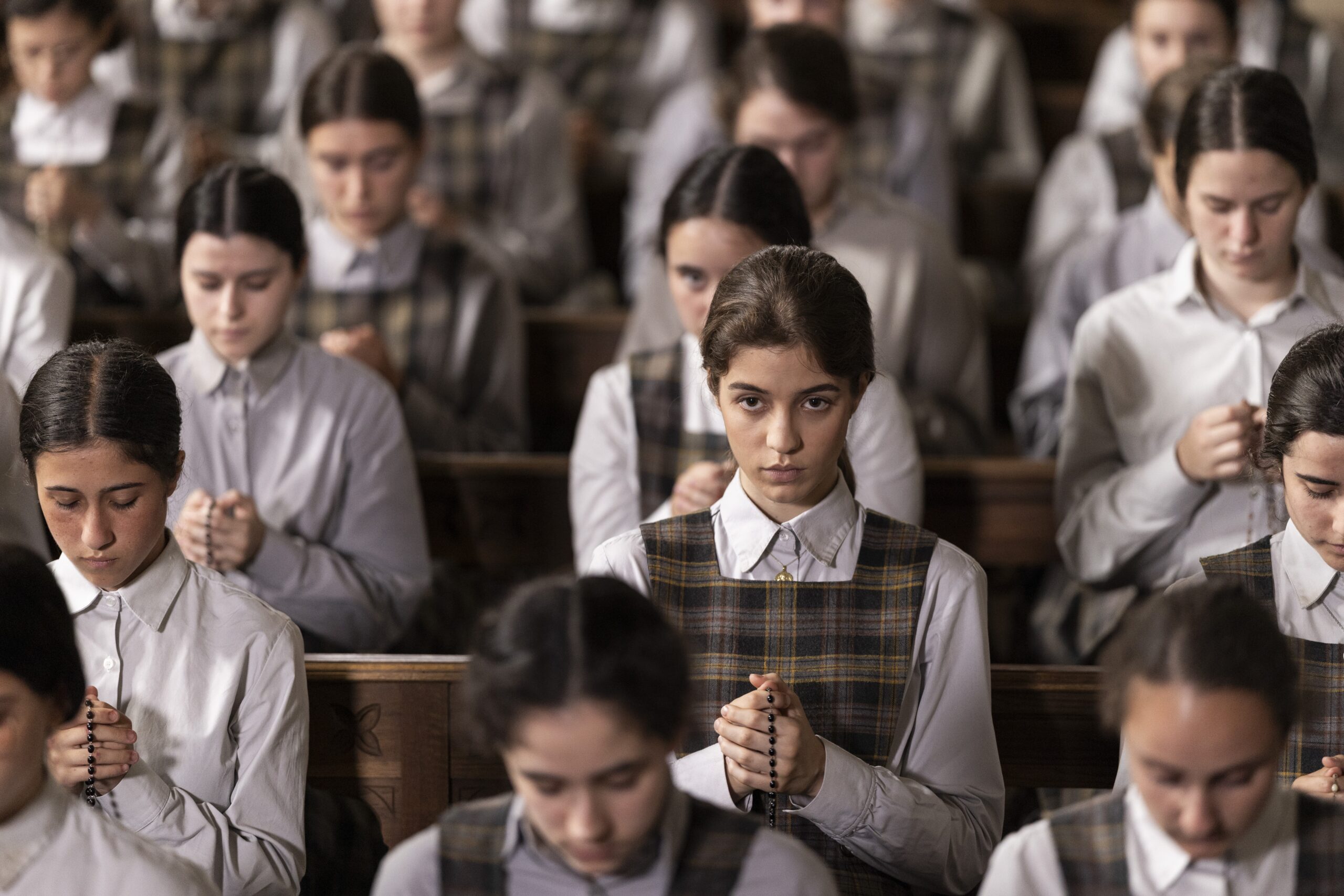
VERDICT: Religion, patriarchy and dictatorship make a dangerous, sometimes fatal formula for young women in a melodramatic contestant for the Golden Shell.
Pray for Us could have been entitled Prey on Us, since young women were at their most vulnerable during Franco’s dictatorship with the complicity of the Women’s Welfare Board, managed by the Catholic Church with the blessing, pun intended, of the State.
Ana María (a very charming Zoe Bonafonte), a spirited 19-year-old girl, just wants to have fun, dance at the local fair, date and flirt. Not an easy task when her very traditional Catholic family considers everything a mortal sin and losing her virginity before marriage a crime punishable by either prison, an asylum, a convent, or a house of forced labor. It doesn´t help that in 1974 Francoist Spain, adulthood began at 21 (the law only changed in 1978.)
So Ana is sent to a reformatory in another city. Her mother has no empathy for her suffering and doesn’t even trust her word, which is the most hurtful betrayal. And as cinema has shown before, true grit is most penalized when somebody is institutionalized. Like Frances Farmer and Randle McMurphy, Ana is punished constantly. Sorority is yet to be discovered, but friendship is possible, and soon she finds solidarity and solace in her mates.
As is clear in the well-written and carefully researched screenplay (based on true stories) by director Daniel Monzón and Jorge Guerricaechevarría, this type of criminal abuse of women came not only from a Catholic order or even the Church itself, but from the society complicit with a state that never considered a woman a full citizen. And the most crushingly , from the brainwashed families who privileged patriarchy over their daughters. Not to mention the nuns vowed to chastity, as portrayed in the creepy stare of the Mother Superior when she tells Ana, “You are a temptation to anybody”.
Daniel Monzón is a very well-known Spanish director with lots of Goyas on his shelves. Here he has a less than subtle handle on the direction and imparts a melodramatic tone; maybe he felt as angry and impotent as the audience while documenting the abuses. The atmosphere is rife with the heavy aesthetics of the day: dark wood, heavy drapes.
The film brings up memories of the influential Magdalene Sisters (2002) by Robert Mullan, also about innocent teenagers labeled “fallen women” by the Catholic Church in Ireland. These are today´s reconstructions of the theme, however, because in Spanish films of the time when a teenager ran away from home, she could find a safe haven with an all-male family dedicated to painting Nativity scenes, as in Tengo 17 años (1964) by José María Forqué. As I remember the focal point of the plot was to find a perfect vermillion hue, and the girl was received back home with open arms at Christmas.
Pray for Us, dedicated to all the women retained in institutions against her will up until 1982, provides much-needed testimony not only for historical memory purposes, but for the reborn fanatics of many religions in the present.
Direction: Daniel Monzón
Screenplay: Jorge Guerricaechevarría, Daniel Monzón
Producers: Sandra Tapia Díaz, Ibon Cormenzana,
Ignasi Estapé, Ángel Durandez
Cast: Zoe Bonafonte, Manuela Calle,
Adelfa Calvo, María Cerezuela,
Shiara Fernández, Carla Domínguez,
María Gandiaga, Malena Gutíerrez,
Belén Cruz, Bea Segura, Xavi Sáez
Photography: Carles Gusi
Music: Roque Baños
Edition: Mapa Pastor
Sound: Tamara Arévalo
Artistic Direction: Balter Gallart
Production Companies: Arcadia Motion Pictures SL (Spain), in coproduction with Amalur Pictures (Spain) and Noodles Production SARL (France)
International Sales:Film Factory (Spain)
Elastica Film (Spain)
Running time: 136 min.