
The Harvester
Sacamantecas
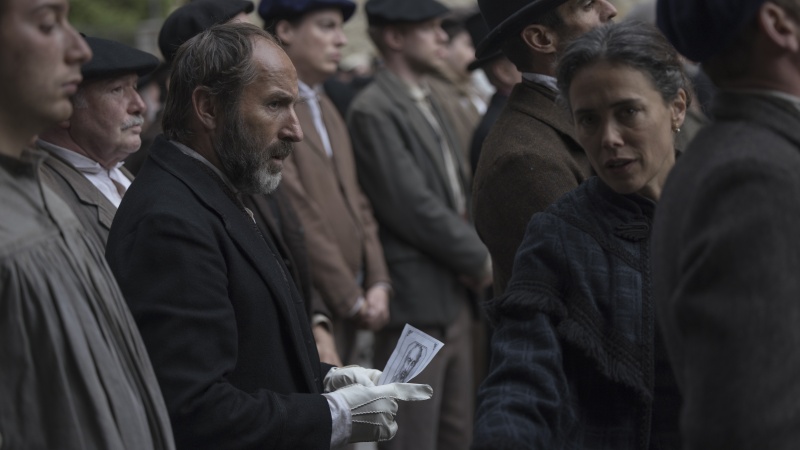
VERDICT: David Pérez Sañudo returns to San Sebastián with ‘The Harvester’, an engrossing fact-based period piece revolving around a serial killer in the Basque Country.
A major promise among emerging Spanish and Basque talents, David Pérez Sañudo – twice selected in the New Directors strand at San Sebastián – is now ready to paint on his biggest canvas yet with The Harvester, a gala event at the festival’s 2026 edition. Already primed for great media attention at home, thanks to Disney’s Buena Vista International handling the domestic theatrical rollout, it could also travel efficiently as a result of its period and thriller elements, as this is an Iberic take on the classic serial killer story.
Based on true events, the film is set in 19th century Alava, during the final stages of the Third Carlist War. Angela Berrostequieta (Patricia López Arnaiz), who has arrived in the region to pay her respects to her recently departed sister (from whom she was estranged for years), is shocked to learn the death was a homicide. In fact, multiple women have been strangled in the area, but authorities haven’t really bothered connecting the dots. Pío Pinedo (Josean Bengoetxea), head of the constabulary, is her lone ally, especially as it becomes clear the police are more concerned with closing the case expeditiously than with actually bringing the killer to justice.
(Initially) unbeknownst to them, but not the audience, the culprit is one Juan Díaz de Garayo (Antonio de la Torre), an illiterate farmer who struggles to get by on account of unspecified personal issues, as well as his language skills being limited to Spanish (which will prove to be a key detail when the wrong man gets arrested for the crimes). As he comes across a benefactor and is finally allowed to live undisturbed, the clock starts ticking in the event he strikes again, since Angela, who had a nearly fatal run-in with the killer of her own, is determined to end the cycle of violence once and for all.
So yes, this is a serial killer film, although the acts themselves are not the focus (the first on-screen murder is filmed from afar). The reason for this is perhaps to be found in the final title cards, which suggest the movie exists in part to remind people of the victims, whose names have all but disappeared over time. Thus, there’s no mystery as to who did it – his identity will be no surprise to Spanish audiences. What matters is the other plot strand, the one concerning Angela’s fight for justice in a society that doesn’t want to draw too much attention to the case.
Elegantly photographed, the picture paints a vivid portrait of times past, where privilege was not just a matter of class and gender, but also of regional identity (given the history of the area, it is not irrelevant that a high-profile Basque-speaking production features a villain who is an outsider and doesn’t understand the language). But, as the ending reminds us, those times are not as bygone as one might think: to paraphrase Fred Cavayé’s Les Misérables, as long as women get killed and the police don’t do much about it, stories like this will never be useless.
Director: David Pérez Sañudo
Screenwriters: David Pérez Sañudo, Sergio Granda
Cast: Antonio de la Torre, Patricia López Arnaiz, Josean Bengoetxea, Eneko Sagardoy, Haizea Carneros
Producers: Olmo Figueredo González-Quevedo, David Pérez Sañudo, Carlos Rosado Sibón, Robin Kerremans
Cinematography: Kenenth Oribe
Costume design: Elixabet Nuñez
Music: Beatriz López-Nogales
Sound: Miguel De Oliveira, Abraham F. Apresa
Production companies: La Claqueta PC, Amania Films, La Cruda Realidad, Caviar
World sales: Latido Films
Venue: San Sebastián International Film Festival (Official Selection – Out of Competition)
In Basque, Spanish
109 minutes