
Hinotama: Ball of Fire
Hinotama o mita
VERDICT: This precisely shot family drama has a hint of the mystical and mysterious as it creates a suffocating milieu of detachment that is strangely compelling.
Takenoshin Yaza’s debut feature, Hinotama: Ball of Fire, is likely to be an acquired taste.
Set around the collapse of an unremarkable family unit in contemporary Japan, the 24-year-old director’s film – which he also wrote and edited – is pervaded by a beguiling but odd atmosphere. Slow in its pacing and ardent in the ambiguity surrounding its characters and their action and interactions, it has unique and almost ethereal tone. Making its bow in the Vision: Asia strand at the current edition of Busan International Film Festival, it’s methodical in its construction and offers a clear calling card for its young director’s ability, even for those audience members who might struggle to tune in to its unearthly frequency.
The narrative – though expecting a linear causal storyline might not be the best approach here – concerns a couple and their two children. Kumiko (Mari Kusu) and Hideki (Tomomitsu Adachi) are married and live in their reasonably-sized suburban home with their two sons, the older, Takeshi (Riku Onishi), and the younger, Kento (Koe Odani). From the film’s opening scenes in the house, there is a slight tension, an underlying silence that seems to leave their words to one another echoing in a strange limbo. A shopping trip to a clothing store sees both Takeshi and Kento make presumptions of their mother, who bears them with a pointed remark and an eye roll. Their father, meanwhile, seems to struggle to gain a foothold in the house, half-ignored by everyone and fed up after long days at work which he feels unappreciated for.
The dissolution of the family – or, at least, Kumiko and Hideki’s marriage – is on one hand the main story of Hinotama and, on the other hand, the setting against which the main story takes place. The other story is the one that gives the film its title and is mostly concerned with Takeshi bumping into a girl from his past, Akari (Himena Irei), and a subsequent longing to seek out a mysterious ball of fire that she tells him about. In Japanese folklore, hinotama are like the equivalent to the western will-o’-the-wisp and are often associated with ghost stories and kitsune. Here, this fiery ball becomes something Takeshi searches for, a MacGuffin that allows him to largely ignore the family fracturing around him.
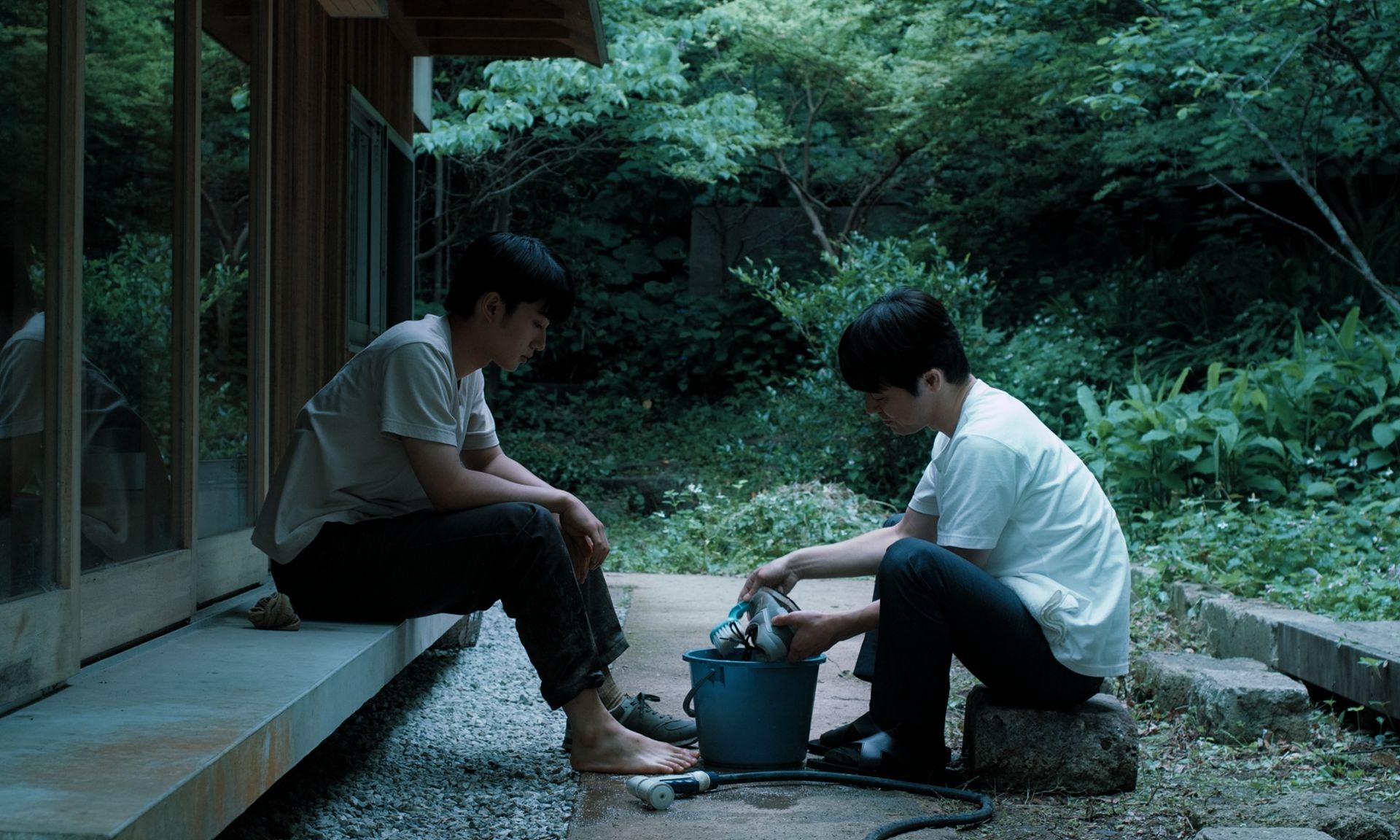
The immaculately framed and blocked sequences within the home – first the family home and then a smaller apartment that Kumiko moves to with the boys – play into a tradition of Japanese cinema that utilises the presentation of the domestic space to convey emotion and drama. The four players are somehow dislocated from one another, their interactions mannered as they are observed through doorways or windows, in a graceful dance that often creates ever-widening distance between them. Yoshio Kitagawa’s compositions make use of the structure to form separate spaces in the home and imply intimacy or fissures where the performances remain somewhat more implacable. The homes themselves are spartan and clean – conveying both fastidiousness but also a sterility that bleeds into the marriage.
The images are no less rigorously constructed when outside the home, though there they perhaps convey a similarly specified element of Takeshi’s mind. An early sequence in which he trades classroom notes with a friend is framed like Wes Anderson might have shot it, and a later scene sees Takeshi in art class where rather than sketching a sitting model, he has drawn an intricate and perfect cube. There comes to be something about the hinotama, this unexplainable and combustible myth, that draws Takeshi away from the proscriptions of his everyday world. As he becomes less present with his family, Kento is forced to take on more of the emotional burden of the divorce.
There are also scenes and sequences that seem to repeat, recur or appear out of time. As Takeshi is drawn further into his research about the ball, his friend Akari – who may or may not really be there – posits the idea that hinotama cannot be seen in real time, only recalled with hindsight. Suddenly the disintegration of both linear time and the family unit intertwine and Takeshi is given a way to interpret his family, and his parents divorce, that gives new meaning to memories he had all but forgotten. We in the audience are thus, perhaps, given our own license to revisit and reinterpret. Whether such a search for meaning will be enough for those viewers who have found Hinotama ponderous is hard to say, but it remains a peculiar and arresting debut.
Director, screenplay, editor: Takenoshin Yaza
Cast: Riku Onishi, Koe Odani, Himena Irei, Mari Kusu, Tomomitsu Adachi
Producer: Tomohisa Ishii
Cinematography: Yoshio Kitagawa
Music: Gabriel Brady
Sound: Masato Komaki, Yuki Yaei
Production design: Shusaku Tsukamoto
Production company: Lamp. K.K. (Japan)
Venue: Busan International Film Festival (Vision: Asia)
In Japanese
112 minutes
Read more of our coverage of Busan International Film Festival.